The Digital Exodus: Why Global Scientists Are Moving Climate Data to Protect It From Political Interference

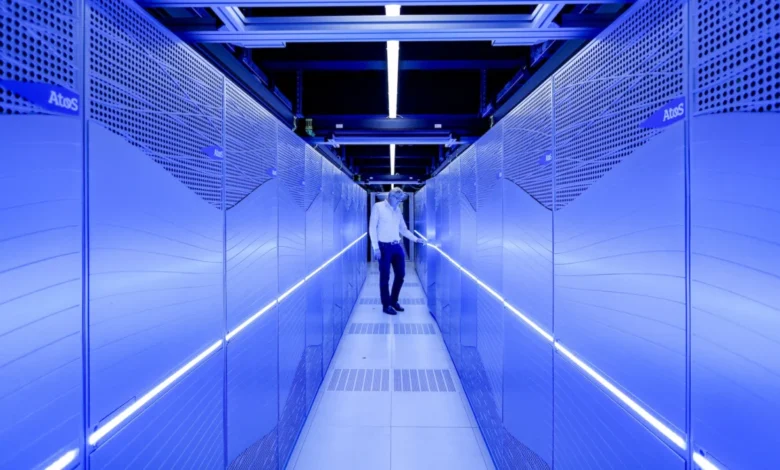
In a nondescript, five-story facility in the heart of Hamburg, Germany, technicians are methodically installing rows of high-capacity server racks. This is the German Climate Computing Center (DKRZ), a premier global hub for climate modeling. However, the current expansion is not merely for German research. These racks are being configured to host a massive, secure archive of climate simulations originating from the United States. This "digital sanctuary" project represents a profound shift in the global scientific community’s approach to data security, driven by the unprecedented move to shield empirical evidence from political erasure and ideological censorship.
The initiative, supported by a $35 million grant from the German Research Foundation (DFG), marks a departure from the traditional model of scientific autonomy. Historically, data produced by national institutions was considered permanent, public, and safe. Today, however, that assumption has collapsed. The effort to move, host, and preserve US-generated climate datasets in Europe is a direct response to a series of administrative actions in Washington that have targeted environmental research programs, shuttered long-standing observatories, and removed climate-related content from federal web portals.
A Chronology of Scientific Disruption
The erosion of trust in US scientific infrastructure did not happen overnight, but the pace of change accelerated significantly in early 2025. Following the installation of a new administration, the federal government initiated a systematic review of environmental programs.
- January 2025: The United States officially withdrew from the UN Intergovernmental Panel on Climate Change (IPCC) and the UN Framework Convention on Climate Change. This formal exit severed the primary bridge between US research and global climate assessment frameworks.
- February 2025: Federal agencies began the process of downsizing climate-related satellite operations, leading to concerns about gaps in global weather and atmospheric monitoring.
- April 2025: In a move that sent shockwaves through the academic world, the Department of Government Efficiency—led by Elon Musk—authorized the removal of roughly 300 datasets maintained by NASA’s Socioeconomic Data and Applications Center (SEDAC). These datasets, which linked remote sensing data with social science metrics, were deemed non-essential, resulting in the sudden deletion of decades of work.
- May–July 2025: A frantic, decentralized effort by international academic institutions allowed researchers to scrape these datasets from servers before they were fully wiped. This "data rescue" operation successfully transferred the archives to the Harvard Dataverse Repository, but it served as a wake-up call regarding the fragility of digital infrastructure.
- Late 2025: The German Research Foundation launched its formal data resilience initiative, recognizing that the threat to scientific integrity was not limited to individual studies but extended to the entire foundational infrastructure of climate science.
The Vulnerability of Empirical Science
At the heart of the crisis is the physical nature of digital information. While "the cloud" is often perceived as an ephemeral, omnipresent entity, scientific data is actually housed on physical hard drives, magnetic tapes, and server farms at specific, vulnerable locations.
According to data management experts, these repositories require dedicated personnel, consistent funding, and protection from both physical disaster and human interference. The SEDAC incident proved that even long-term, federally funded repositories are susceptible to sudden administrative purges. For researchers, the loss of these datasets is equivalent to the burning of a library; it resets the clock on longitudinal studies that require decades of consistent observation.
"The data repositories, digital asset management services, and systems that ensure research remains open are often overlooked until they disappear," noted Jennifer Gibson, a leading researcher in digital preservation. The current situation in the US has highlighted that data is only as secure as the political stability of the nation hosting it.
Global Reactions and the Data Resilience Project
The scientific community’s response has been one of calculated, international cooperation. The American Geophysical Union (AGU), representing over 60,000 Earth and space scientists, has transitioned from a professional society into a protective advocate for scientific data. By forming the US Academic Alliance for the IPCC, the AGU has ensured that American voices are still heard in global assessments, despite the government’s withdrawal.
In March 2026, the AGU convened a major summit in Berlin, bringing together experts to address the "data resilience" gap. The consensus was clear: the era of relying on a single national host for critical global datasets is over. The new standard, according to participants, must be a distributed network where multiple copies of essential data are held in geographically and politically diverse jurisdictions.
"We have engaged in triage efforts to ensure data remains usable," stated Ben Zaitchik, the AGU president-elect. "But we have arrived at a moment where we must fundamentally reimagine data organization for long-term viability."
The Multi-Front Threat: War, Cybercrime, and Politics
While the focus has been on the US, the broader threat to scientific data is global. The war in Ukraine has provided a grim preview of what happens when science is caught in the crosshairs of conflict. The destruction of research universities and the targeting of data centers by Russian forces have forced Ukrainian scientists to rely on international partners to digitize and store their national records in places like Germany and Poland.
Furthermore, the rise of sophisticated, state-sponsored cyberattacks has added another layer of complexity. Institutions in Croatia and Germany have recently faced "ransomware" attacks, where access to vital research was blocked in exchange for payments. In this climate, the risk is not just political suppression, but also criminal exploitation.
Long-Term Implications for Global Research
The move to relocate data is not without its challenges. The logistics of moving petabytes of information—where a single petabyte can hold 200 million high-resolution images—is an immense technical undertaking. High-speed fiber optic cables are costly, and the "sneakernet"—the physical transport of hard drives—remains a common, if slow, alternative.
However, the implications of this digital exodus extend far beyond climate science. It suggests a future where scientific infrastructure is managed by global coalitions rather than individual nations. For researchers like Frank Oliver Glöckner of the University of Bremen, the current crisis serves as an unintentional catalyst for progress. "President Trump has, to a certain extent, done science a favor by making it clear how important it is to not just hoard data in one place but to truly share it with the global scientific community," he said.
The Future of Scientific Sovereignty
The DKRZ’s expansion in Hamburg is a physical manifestation of this new philosophy. By creating a backup for American climate data, they are not only protecting the past but also securing the future. The project aims to provide a safe harbor for data that is currently in the public domain, ensuring that it remains accessible for the next major U.N. assessment in 2029.
Yet, there is a lingering sense of unease. As researchers point out, the political landscape is shifting globally. With the rise of far-right, climate-skeptical parties in various European nations, the idea that any country is permanently "safe" is being reconsidered.
"We don’t know what political shifts may occur in Germany," says a representative from the DKRZ. "We aren’t completely protected from risks like those in the U.S. either."
The long-term goal for the scientific community is to build a "digital pipeline" that connects data repositories across the globe. By creating a system where data can be automatically mirrored and secured in multiple, independent locations, scientists hope to ensure that the march of knowledge remains uninterrupted, regardless of who occupies the halls of power in any single nation. The current crisis has transformed data preservation from a quiet, back-office task into a high-stakes, geopolitical necessity. As the racks in Hamburg continue to fill with the hard drives of American climate history, one thing is certain: the scientific community has learned that for data to be truly open, it must first be resilient.
Related posts: