Brazil presidential election heads to runoff after Bolsonaro and Lula fail to win majority vote

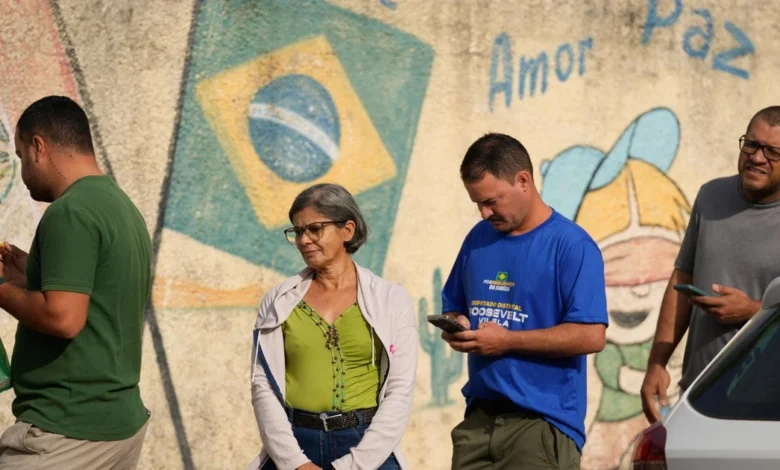
The electoral landscape of Latin America’s largest economy remains deeply fractured following the first round of voting, where neither the 80-year-old veteran leader, Luiz Inácio Lula da Silva, nor the 45-year-old challenger, Senator Flávio Bolsonaro, managed to secure the 50% plus one vote threshold required for an outright victory. With 99.8% of the ballots counted, Brazil’s Superior Electoral Court confirmed a razor-thin margin: Senator Bolsonaro led the count with approximately 56 million votes, while Lula followed closely with 53.7 million. This outcome sets the stage for a contentious three-week sprint as both candidates vie for the support of moderate voters and those who backed unsuccessful third-party candidates.
A Chronology of the 2026 Election Cycle
The path to this runoff has been marked by heightened political tension and significant international scrutiny. The election cycle officially kicked off earlier this year, characterized by intense debates over economic policy, environmental protection, and Brazil’s position on the global stage.
- Early 2026: Candidates began filing for candidacy, with Lula seeking a non-consecutive fourth term, positioning himself as the defender of social welfare programs.
- Mid-2026: Political tensions rose as the U.S. administration, led by President Trump, signaled a preference for the Bolsonaro camp, leading to friction in diplomatic relations.
- September 2026: Final campaigning reached a fever pitch, with accusations of external interference and domestic corruption dominating the headlines.
- October 4, 2026: Election Day proceeds with high voter turnout. By late evening, the Superior Electoral Court declares a runoff, citing the failure of either candidate to achieve an absolute majority.
- October 25, 2026: Scheduled date for the decisive runoff election.
- January 5, 2027: The inauguration of the newly elected President of Brazil.
Electoral Data and Voter Demographics
The data from the first round reveals a country split not only by policy preferences but by regional and social lines. Senator Bolsonaro’s performance outperformed initial polling expectations, buoyed by a base that prioritizes economic reform, religious freedom, and a desire to dismantle the long-standing influence of the Workers’ Party (PT). Conversely, Lula maintains a loyal following among the working class and those who credit his past administrations with significant poverty reduction.
However, the "middle ground"—voters who supported candidates like Ronaldo Caiado and Renan Santos—remains the ultimate prize. Neither of these moderate candidates has signaled an endorsement for the runoff, leaving their constituencies as the key electoral swing vote. Analysis suggests that voter turnout in the runoff will be influenced heavily by these moderate voters, who are currently weighing their dissatisfaction with both the incumbent’s economic struggles and the challenger’s ties to the controversial presidency of his father, Jair Bolsonaro.
Diplomatic Friction and International Influence
The 2026 election has become a focal point for international geopolitics. Lula has frequently criticized the current U.S. administration, alleging that Washington has engaged in a campaign of economic pressure—including tariffs and visa restrictions—to sway the election in favor of the Bolsonaro family. These allegations have cast a shadow over U.S.-Brazil relations, a partnership historically critical to the stability of the Western Hemisphere.
In contrast, Senator Bolsonaro has campaigned on the promise of strengthening ties with the United States, specifically through a "special partnership" in the rare minerals sector, which he argues is essential for Brazil’s economic sovereignty and its ability to compete with China. Should the Senator succeed, analysts predict a significant pivot in Brazilian foreign policy, moving closer to the U.S. orbit. A victory for Lula, meanwhile, would likely see Brazil maintain a policy of strategic autonomy, continuing to foster deep economic ties with Beijing and other emerging markets, effectively keeping the United States at a diplomatic distance.
The Domestic Landscape: Corruption and Economic Crisis
The primary narrative of this election is a struggle between two distinct visions for the future of the state. The incumbent, Lula, is currently battling a decline in approval ratings linked to persistent inflation and the rising cost of living, which has hit Brazil’s lower-middle class particularly hard. His administration has also been plagued by corruption allegations, which have provided ammunition for the Bolsonaro campaign.
Senator Bolsonaro, for his part, faces the challenge of shedding the baggage of his father’s administration. While his father remains a polarizing figure—with a significant portion of the population holding negative views of the family legacy—the Senator has attempted to pivot toward a platform of "change." His campaign has focused heavily on cracking down on organized criminal groups and implementing a more aggressive market-based economic strategy.
Institutional Integrity and the Voting System
Despite the fierce political rhetoric, the integrity of Brazil’s electronic voting system remains a point of relative stability. Since the adoption of electronic balloting in the 1990s, no evidence of systemic fraud has been verified. The Organization of American States (OAS) observation mission reported that the October 4 voting process was smooth and secure.
Kassio Nunes Marques, president of the Superior Electoral Court, reaffirmed the transparency of the process, noting that the rapid tabulation of votes is a key safeguard against conspiracy theories. "Everything is proceeding with the greatest possible transparency," he stated, dismissing concerns regarding international interference in the mechanics of the vote itself. The majority of the electorate appears to share this confidence, viewing the electronic system as a reliable tool that prevents the protracted delays seen in other nations, which often serve as a catalyst for political instability.
Implications for the Future
The next three weeks are expected to be the most intense of the campaign. Both candidates must navigate the delicate balance of mobilizing their core bases while appealing to the moderate, undecided voter. For the Bolsonaro camp, the strategy will likely involve emphasizing the "failure" of the Workers’ Party and framing the election as the only chance for a fundamental systemic overhaul. For Lula, the strategy is likely to pivot back to his track record of social safety nets and a warning against the potential instability of a new, right-leaning administration.
Regardless of the outcome on October 25, the winner will inherit a nation with deep internal divisions, an economy in need of structural reform, and a complex set of international obligations. With a population of 214 million and a vital role in global environmental and economic security, the leadership of Brazil remains one of the most consequential positions in the hemisphere. As the country prepares for the final stage of the electoral knockout, the eyes of the world remain fixed on Brasilia, waiting to see whether the nation will choose a return to its recent past or a bold, potentially volatile, shift into a new political era.