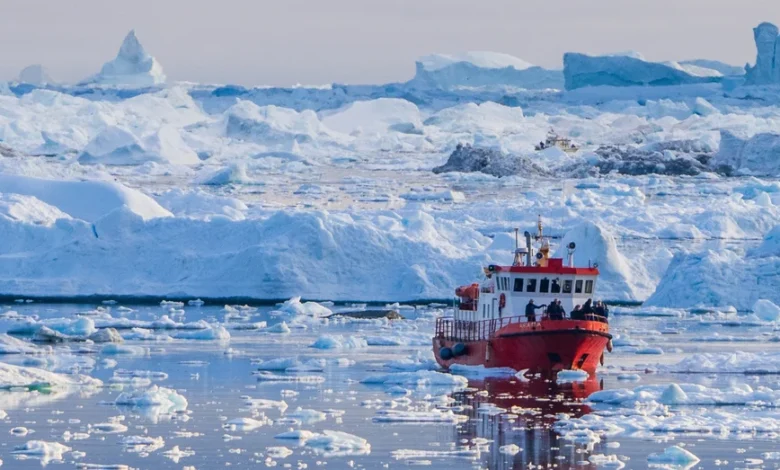
Beneath a massive sheet of ice that blankets more than eighty percent of its total landmass, Greenland holds a treasure trove of resources capable of reshaping global trade, defense technology, and energy markets. While the world has long viewed the autonomous Danish territory through the romanticized lens of Arctic wilderness, geopolitical strategists and global superpowers increasingly recognize the island as one of the most critical parcels of real estate on Earth. Spanning over 836,000 square miles between North America and Europe, the world’s largest island sits directly atop vital shipping channels, missile trajectories, and untapped mineral wealth.
These high-stakes geographical and economic realities have driven President Donald Trump’s persistent focus on enhancing American influence in the region. Culminating years of strategic diplomatic maneuvering and public overtures, the Trump administration recently secured a landmark security and military framework agreement with Denmark and the Greenlandic government. Signed on the sidelines of the United Nations General Assembly, the pact expands the United States’ strategic military footprint on the island while carefully preserving Danish sovereignty and local territorial integrity.
The agreement marks a watershed moment in Arctic geopolitics, balancing Washington’s urgent national security imperatives with European and local sensitivities. To understand why Greenland has ascended to the pinnacle of American foreign policy and economic strategy, analysts point to three primary pillars: critical mineral independence, emerging Arctic energy reserves, and unmatched military positioning.
The Quest for Critical Mineral Independence
As global supply chains face unprecedented strains from ongoing international conflicts and protectionist trade policies, the United States remains acutely vulnerable to foreign monopolies on critical minerals. Modern technology, advanced defense systems, renewable energy infrastructure, and electric vehicle batteries all rely heavily on rare earth elements, nickel, copper, palladium, and cobalt. Currently, the processing and extraction of many of these essential inputs are heavily dominated by adversarial nations, primarily China and Russia.
"We don’t want to be dependent on China for our rare earth minerals, and we don’t want to be dependent on Russia for them either," noted Robert Price, CEO of Greenland Energy Company and president of USFM Corporation, in a recent interview.
Price’s corporation has been at the forefront of private sector exploration, targeting substantial deposits of nickel, copper, palladium, and cobalt centered around Disko Island in western Greenland. Geological surveys and exploratory drilling suggest that this region shares mineral signatures that could eventually rival Russia’s famously productive Norilsk district. Although commercial extraction remains in nascent stages and requires substantial, multi-year capital investment, the potential yield has caught the attention of both Wall Street and the Pentagon.
The urgency to diversify mineral portfolios has accelerated significantly over the last decade. As Beijing leverages its near-monopoly on rare earths as a geopolitical weapon, Washington views Greenland’s subterranean riches not merely as a commercial opportunity, but as a matter of absolute national security. By encouraging domestic and allied mining ventures in the Arctic, Western economies hope to insulate themselves from future embargoes or supply shocks.
Unlocking New Arctic Energy Reserves
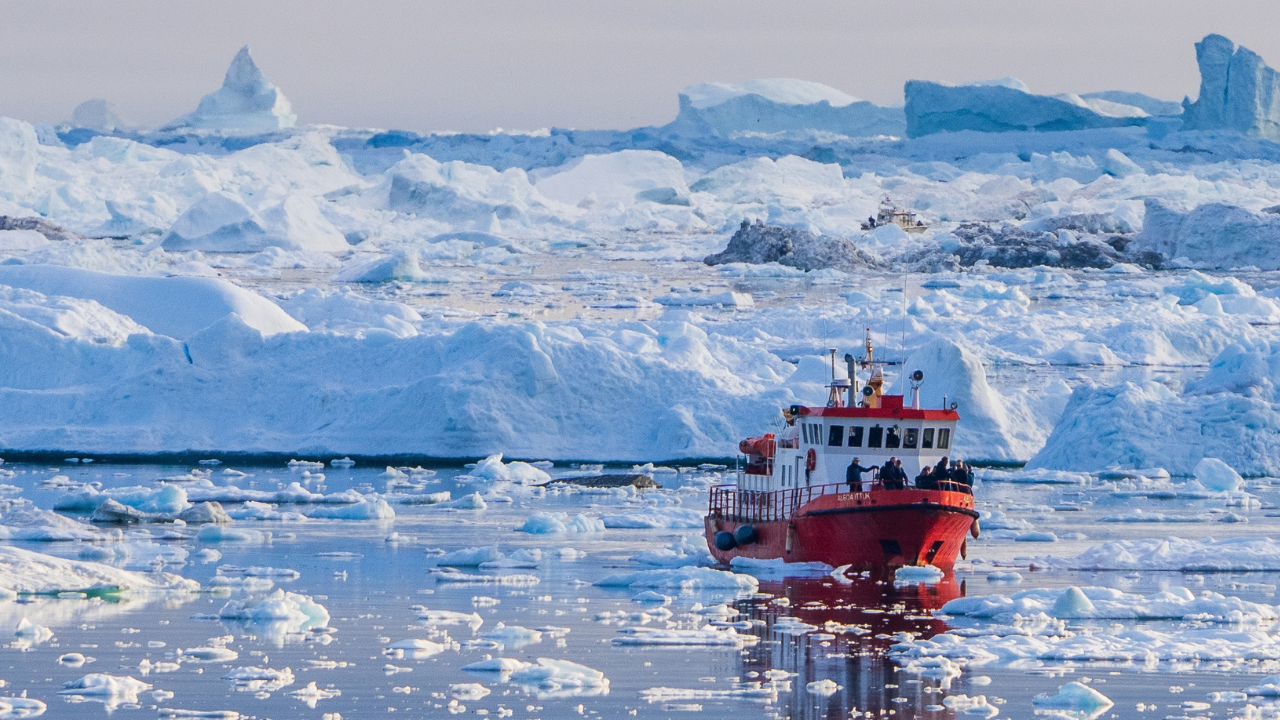
Beyond hard minerals, Greenland’s geological profile hints at vast reserves of oil and natural gas. As climate patterns cause the island’s ice sheet to recede along its coastal margins, previously inaccessible maritime zones are opening up for scientific and commercial evaluation.
Greenland Energy Company is currently pursuing permits to drill an exploratory oil well scheduled for 2027 off the island’s eastern coast. According to industry experts, the underlying petroleum systems in this sector bear striking geological similarities to the highly lucrative North Sea basin. Preliminary core sampling has already identified traces of oil both on and directly below the surface, signaling a potentially lucrative energy frontier.
This pursuit of Arctic energy coincides with severe disruptions in traditional global supply routes. The ongoing conflict involving Iran and persistent security crises in the Middle East have repeatedly threatened maritime traffic through the Strait of Hormuz—a narrow chokepoint through which a massive percentage of the world’s daily petroleum supply flows.
"One of the reasons that we are exploring for oil in Greenland is because of what’s going on in the Strait of Hormuz right now," Price explained.
The strategic imperative to secure alternative, friendly energy supplies has given new momentum to Arctic drilling advocacy. Nevertheless, commercial energy development in Greenland remains a complex proposition. Extracting oil and gas in the extreme Arctic environment demands cutting-edge engineering, rigorous environmental safeguards, and billions of dollars in upfront capital. While unproven at a commercial scale, the mere prospect of Greenland emerging as a major European and North American energy supplier alters the long-term calculus of global fuel markets.
A Crucial Military and Strategic Foothold
While minerals and energy provide a powerful economic incentive, Greenland’s geographic coordinates offer irreplaceable military utility. Positioned strategically in the North Atlantic between the North American continent and Northern Europe, the island serves as a natural watchtower overlooking the shortest air and missile routes between the United States and Russia.
The United States military has maintained a continuous physical presence on the island since the Cold War era. The crown jewel of this defense infrastructure is the Pituffik Space Base—formerly known as Thule Air Base—located far above the Arctic Circle in the island’s northwest corner. As the Department of Defense’s northernmost installation, Pituffik plays an indispensable role in ballistic missile early warning systems, space surveillance, and satellite tracking.
In recent years, the geopolitical competition in the Arctic has intensified dramatically. Both Russia and China have aggressively expanded their northern capabilities, building new icebreakers, establishing military outposts along the Siberian coast, and pushing for commercial dominance along the Northern Sea Route. For Washington, maintaining robust, unimpeded access to Greenland is non-negotiable for maintaining strategic deterrence and projecting power across the polar regions.
Background Context and Chronological Evolution
The path toward the current U.S.-Greenland-Denmark security agreement has been marked by decades of quiet military cooperation punctuated by periodic diplomatic friction.
Following World War II and the onset of the Cold War, the strategic importance of Greenland became immediately apparent to Washington. In 1951, the United States and the Kingdom of Denmark signed a defense agreement authorizing the U.S. to establish military facilities on the island, laying the groundwork for the establishment of Thule Air Base. For decades, operations at the base remained largely out of the public eye, save for Cold War-era incidents involving nuclear-armed aircraft.
As the 21st century progressed, the melting of Arctic ice transformed the region from a frozen expanse into a hotly contested geopolitical arena. The emergence of China as a self-declared "Near-Arctic State" and Russia’s militarization of its northern coastline prompted a reassessment of Arctic security in Western capitals.
The issue burst into prominent public view during President Trump’s first term in 2019, when he openly floated the concept of the United States acquiring Greenland. While the proposal was initially met with diplomatic pushback and public skepticism from Danish and Greenlandic officials—who firmly asserted that the island was not for sale—it successfully forced a high-level strategic reassessment among Western allies.
Over the subsequent years, diplomatic channels worked diligently to transform a controversial concept into a functional partnership. The establishment of a U.S. consulate in Nuuk, Greenland’s capital, in 2020 signaled a permanent deepening of diplomatic engagement. This steady diplomatic groundwork ultimately culminated in the landmark framework signed by President Trump, Denmark, and Greenland, which institutionalizes permanent security rights while respecting local governance.
Official Responses and Diplomatic Balancing Acts
Navigating the delicate tri-party relationship between Washington, Copenhagen, and Nuuk requires careful diplomatic choreography. Greenland operates as an autonomous territory within the Kingdom of Denmark, meaning that while Copenhagen retains constitutional responsibility for foreign affairs and defense, Greenlandic leaders exercise substantial control over domestic resources, economic policy, and environmental regulations.
Following the announcement of the new security pact, leadership in both Denmark and Greenland emphasized that the agreement strictly preserves their sovereignty and territorial integrity. Danish officials underscored that the framework strengthens collective North Atlantic Treaty Organization (NATO) security without altering the constitutional status of the island.
Local leaders in Greenland have similarly sought to balance economic development with environmental stewardship. While many Greenlanders welcome the prospect of foreign investment, job creation, and the eventual path toward complete economic self-sufficiency—and potentially full independence from Denmark—they remain vigilant about protecting their fragile ecosystems and traditional indigenous ways of life.
Proponents argue that the framework agreement acts as a vital stabilizing force. According to industry stakeholders, the official blessing of a major security pact provides essential regulatory and political predictability for international investors.
"What it does is it shores up long-term investment in Greenland, and that’s what our projects are," Price emphasized. "They’re long-term investments from oil, gas, and minerals."
Broader Economic and Geopolitical Implications
The integration of Greenland into a more secure, Western-aligned economic and military orbit carries profound implications for global trade and international security.
Economically, the successful development of Greenland’s mineral and energy sectors could fundamentally alter global supply chains over the next several decades. If exploratory ventures in nickel, copper, rare earths, and offshore petroleum bear commercial fruit, Western economies will possess a vital alternative to current supply dependencies. This diversification could stabilize commodity pricing, secure green energy transitions, and insulate democratic nations from economic coercion by authoritarian states.
Geopolitically, the enhanced U.S. military footprint reinforces the northern flank of Western defense architecture. As climate change continues to render Arctic waters more navigable, the region is poised to become a major commercial shipping thoroughfare connecting Asia, Europe, and North America. By locking in strategic access today, the United States and its allies ensure that the Arctic remains secure, stable, and open to free trade, rather than falling under the exclusive hegemony of revisionist powers.
Ultimately, what began as a controversial diplomatic talking point has matured into one of the most consequential geopolitical alignments of the 21st century. As the ice recedes, Greenland is stepping out of the shadows of the Arctic Circle and into the center stage of global commerce, energy, and defense.