The Silent Epidemic: Why Thousands of Coal Miners Are Trapped in a Decadelong Battle for Black Lung Benefits

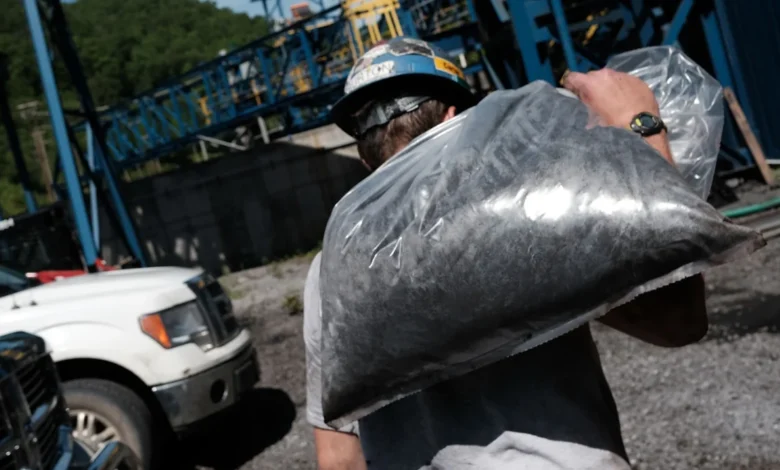
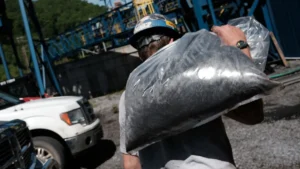
For 38 years, Josh Armes descended into the earth, spending his career working the coal seams of West Virginia and Virginia. Today, at 74, he lives in Grundy, Virginia, tethered to an oxygen tank and a daily regimen of inhalers, his lungs irreversibly scarred by the very substance that defined his working life. His diagnosis—coal workers’ pneumoconiosis (CWP), colloquially known as black lung disease—is a terminal condition that has become the center of an agonizing, 12-year legal struggle.
In 2014, the federal benefits that Armes relied on for his medical care were abruptly challenged by his former employer. What followed was not a swift administrative process, but a grueling, decade-long ordeal of appeals and medical re-examinations. The Armes family’s plight is not an isolated incident; it is a systemic symptom of a broken benefits pipeline that leaves thousands of disabled miners in a state of perpetual limbo while their health steadily declines.
A Surge in Respiratory Disease
The struggle for compensation is intensifying against a backdrop of a public health crisis. Recent data published in the American Journal of Respiratory and Critical Care Medicine confirms that black lung disease is reaching a nearly 50-year high among veteran underground coal miners. In Central Appalachia, roughly 32.5 percent of veteran miners are now afflicted with the disease, a prevalence rate not seen since the late 1970s.
The rise is largely attributed to the changing nature of the mining environment. Modern coal seams often contain higher concentrations of silica dust, which is significantly more toxic and faster-acting than traditional coal dust. When miners inhale these fine, crystalline particles, the resulting scarring—progressive massive fibrosis—can destroy lung tissue in a fraction of the time it took for older generations of miners to develop the disease. Between 2020 and 2023 alone, more than 1,700 miners lost their lives to complications directly related to this inhalation, a stark indicator that the industry has not kept pace with the evolving occupational hazards.
The Anatomy of a Broken System
The federal black lung benefits program, established in 1969, was designed as a social contract: a promise that those who sacrificed their health to power the nation would be provided for in their twilight years. However, the reality of the program has shifted, particularly over the last decade.
According to a May 2026 report by the Government Accountability Office (GAO), approximately 40 percent of all approved claims filed between 2013 and 2024 were disputed by coal operators. The legal architecture of the program allows companies to contest claims at multiple levels of the judiciary, often requiring miners to undergo repeated, costly medical tests to prove their disability.
The emotional and financial toll on families is profound. "The burden of proof lies on the coal miner to prove that he has black lung," says Crystal Armes, Josh’s daughter, who has spent the last decade navigating the bureaucracy on her father’s behalf. "We have appealed it and appealed it. He does have black lung. It’s insane that they can get a different judge and strip away your benefits after they were already awarded."
The GAO report corroborates this systemic frustration, noting that miners frequently express the belief that mine operators are simply "waiting for them to die" or "waiting for them to give up" to avoid the long-term financial obligation of medical compensation. Among the 53,000 claims closed in the last 11 years, 11 cases dragged on for more than a decade, a period during which the applicant remains without the necessary funds for critical medical care.
A Timeline of Regulatory Stagnation
The legislative history of black lung protection is characterized by high hopes followed by deep frustration:
- 1969: The Coal Mine Health and Safety Act is passed, establishing the federal black lung benefits program.
- 2013–2024: A period marked by increased litigation; 40 percent of approved claims are challenged by operators.
- April 2024: A new federal silica dust rule is passed, aimed at mandating modern ventilation and engineering controls to reduce exposure.
- June 2024: Congress blocks the funding necessary to implement and enforce the new silica rule.
- April 2026: The Trump administration’s Mine Safety and Health Administration (MSHA) announces it will "indefinitely delay" the enforcement of the rule, citing pending judicial review.
- September 2026: Advocacy groups and the United Mine Workers of America (UMWA) continue to demand the unfreezing of the rule as death rates among miners hit a modern peak.
Official Responses and Political Friction
The current administration’s stance on these regulations has sparked intense backlash from labor advocates. While the MSHA maintains that it is "vigorously enforcing" the existing, older limit of 100 micrograms per cubic meter of silica dust, experts argue this standard is dangerously outdated and insufficient for modern mining conditions.
Rebecca Shelton, policy director for the Appalachian Citizens’ Law Center, has been vocal about the delay, characterizing it as a calculated maneuver. "If the administration actually cared about protecting coal miners from black lung, we’d have a strong silica rule in place right now," she said. "Instead, they are hiding behind a ridiculous legal process to delay action while miners get sick and die."
On the other side of the aisle, Democratic senators—including Mark Warner, John Hickenlooper, Tim Kaine, and John Fetterman—have been pushing for legislative reform to close the loopholes that allow companies to engage in decade-long appeals. Their proposed legislation aims to shift the burden of proof and limit the ability of operators to endlessly contest claims once they have been medically validated.
Broader Implications for the Workforce
The failure to secure benefits for miners like Josh Armes has broad societal implications. It creates a vacuum of accountability where the long-term health costs of energy production are offloaded onto the individual and their family, rather than being internalized as a cost of business. When miners are forced to pay out-of-pocket for legal counsel and medical diagnostics—costs that can run into the thousands of dollars—the program ceases to function as a safety net and instead becomes a barrier to entry.
The UMWA has warned that the "deadly delay" in implementing the silica rule is actively costing lives. Brian Sanson, president of the UMWA, stated that "a company’s profit margin cannot take precedence over a miner’s right to draw a breath."
As the legal and political battles continue, the reality on the ground remains unchanged. For the 22,500 beneficiaries currently in the system, and the thousands more waiting for their claims to be processed, the clock is not a metaphor. It is a measurement of the time left before their lungs fail. The case of the Armes family serves as a poignant reminder that while policies and regulations are debated in the halls of Washington, the consequences of those decisions are measured in breaths, in oxygen tanks, and in the lives of those who worked the coal seams of Appalachia. Without a fundamental shift in how these claims are adjudicated and how worker safety is enforced, the surge in black lung disease is unlikely to subside, leaving a new generation of miners to face the same fate as their predecessors.