The Price of Influence: How a Defense Contractor’s Pay-to-Play Scheme Exposed the Fragility of Congressional Ethics

In the waning months of 2019, as the political climate in Washington grew increasingly volatile, a high-stakes encounter took place at a Corner Bakery near the U.S. Capitol. Scott Reed, the director of a super PAC supporting Senator Susan Collins, sat across from executives representing Navatek, a Hawaii-based defense contractor. The meeting was not merely a discussion of policy or procurement; it was a negotiation over access and influence. With Senator Collins facing the most difficult reelection campaign of her two-decade career, Navatek—a company that had previously secured millions in federal funding through Collins’ influence—was seeking to guarantee further appropriations. The resulting agreement, characterized by investigators as a textbook example of "pay-to-play" corruption, has since become the focal point of a sprawling, albeit now defunct, federal inquiry into how private capital is leveraged to steer the machinery of the U.S. military budget.
The Mechanics of the Navatek Method
Navatek, historically a small engineering firm founded by Steven Loui, underwent a radical transformation under the leadership of Martin Kao. Kao, who joined the firm in 2008, recognized that the traditional earmark system—which allowed lawmakers to direct funds to specific projects—had been officially curtailed by Congress in 2011. However, the vacuum created by this ban did not stop the flow of money; instead, it forced contractors to adopt more sophisticated, often clandestine, methods to secure government spending.
Kao’s strategy, internally dubbed "the method," relied on a three-pronged approach: forming strategic partnerships with universities in states represented by powerful members of the House and Senate Appropriations Committees, hiring well-connected lobbyists to navigate the Pentagon’s labyrinthine budget process, and providing consistent, often bundled, campaign contributions to the legislators capable of inserting specific, tailor-made line items into the annual National Defense Authorization Act (NDAA).

Internal records and emails reviewed during federal investigations indicate that Navatek successfully inserted language into congressional reports so specific that the firm became the only logical recipient for the resulting contracts. This effectively bypassed the competitive bidding process, allowing the company to thrive in what executives termed the "valley of death"—the bureaucratic stage where research projects languish without reaching production. By 2020, Navatek’s annual revenue had surged from $10 million to nearly $40 million, fueled by a taxpayer-funded cycle of political influence.
A Chronology of the Influence Campaign
The relationship between Navatek and Senator Collins began to formalize in 2018, as the firm sought to establish a foothold in Maine.
- 2018: Navatek engages lobbyists to secure access to Senator Collins. Following a series of campaign contributions, Collins secures $8 million in research funding for a Navatek-led boat hull project.
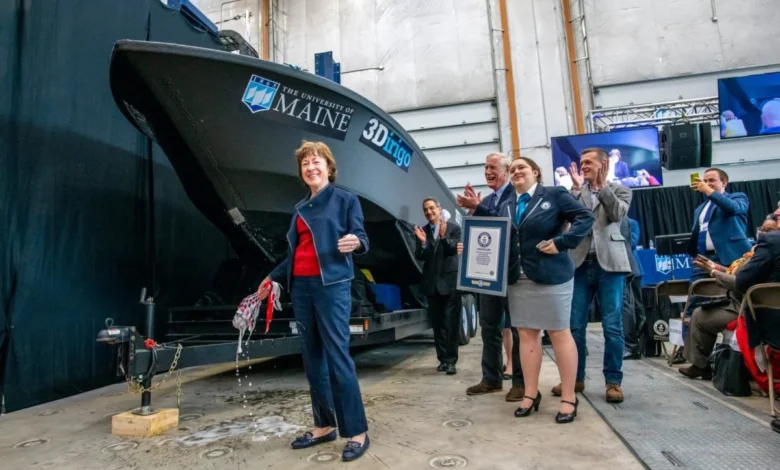
- August 2019: Senator Collins appears at a high-profile publicity event at Navatek’s Maine headquarters. Leading up to this, Kao orchestrates over $40,000 in contributions, including the use of straw donors, to bypass federal campaign finance limits.
- Late 2019: Facing low approval ratings, the Collins campaign turns to the 1820 PAC to bolster fundraising. During the Corner Bakery meeting, Kao proposes a $500,000 donation to the super PAC in exchange for guaranteed future funding.
- February 2020: Following a $150,000 payment to the PAC, internal Navatek emails confirm the company expects $32 million in new naval contracts, thanks to the senator’s influence.
- September 2020: Federal authorities raid Navatek’s offices. Martin Kao is arrested on charges related to defrauding the Paycheck Protection Program (PPP) and violating federal campaign finance laws.
- 2022: Kao pleads guilty to multiple charges. Following his conviction, he begins a series of intensive debriefings with FBI agents, providing a 50-page dossier detailing the involvement of various lawmakers and lobbyists.
- 2024–2025: FBI agents from the elite CR-15 unit conclude that the evidence warrants a broader probe into bribery. However, the subsequent political transition results in the purging of these units, effectively stalling the investigation.
Data and The "Shell Game"
The scale of Navatek’s operation was significant. Between 2018 and 2020, the company and its associates funneled nearly $900,000 to dozens of political candidates. The use of a shell company, the "Society of Young Women Scientist and Engineers," was a critical component in the effort to obscure the true source of the $150,000 contribution to the 1820 PAC.
Financial analysts note that the return on investment for such expenditures was immense. By spending hundreds of thousands in lobbying and campaign contributions, Navatek secured tens of millions in federal contracts. The fact that much of this research never resulted in deployable military hardware highlights a systemic issue in federal appropriations, where "research" can be used as a front for political patronage.

Official Responses and Legal Defenses
The fallout from the investigation has prompted varied responses from those involved. Annie Clark, deputy chief of staff for Senator Collins, has consistently denied any wrongdoing, describing the allegations of a pay-to-play scheme as "outlandish." The senator’s office maintains that they cooperated fully with the FBI and that the Collins campaign disgorged the illegal contributions as soon as they became aware of their origin.
FBI spokesperson Ben Williamson stated that the agency’s previous investigation into the senator found no evidence of criminal conduct, asserting that "any suggestion otherwise is totally false." However, this statement notably sidesteps the more recent evidence gathered by the FBI in 2024, which relied on the direct testimony of Kao—a witness who, despite his criminal background, provided internal company records that corroborated his claims of transactional politics.
Scott Reed, the chair of the 1820 PAC, has distanced himself from the specifics of the meeting, stating in an email, "I never had any communications with Senator Collins or her staff about Martin Kao and/or Navatek."
The Erosion of Anti-Corruption Oversight
The collapse of the investigation into Navatek and its political beneficiaries serves as a case study in the shifting priorities of the Department of Justice. The agents who spearheaded the probe—Michelle Ball and Kevin Gounaud—were recognized for their expertise in handling politically sensitive, high-level corruption cases. Their removal from the FBI, and the subsequent dissolution of the Public Integrity Section’s mandate, has created a regulatory void.

Former government officials argue that the effective abandonment of these cases signals a departure from traditional norms, where investigations into public corruption were pursued regardless of the political affiliation of the subjects. With the "Navatek method" documented in thousands of pages of emails and financial records, the cessation of the probe leaves fundamental questions about congressional ethics unanswered.
Broader Implications for Democracy
The Navatek affair highlights the ease with which private entities can navigate the blurred lines between legitimate lobbying and criminal bribery. While the Supreme Court has significantly narrowed the legal definition of bribery, making it increasingly difficult for prosecutors to secure convictions—specifically requiring proof of a clear "quid pro quo"—the evidence gathered in the Navatek case suggests that the spirit of the law is routinely circumvented.
The case further illuminates the role of super PACs in the current political landscape. By providing a vehicle for unlimited, often opaque, contributions, these organizations act as a pressure valve for contractors seeking to bypass the restrictions placed on direct candidate contributions. As the 2026 election cycle approaches, the precedent set by the closure of the Navatek investigation may embolden further attempts to trade federal appropriations for political capital.
Ultimately, the Navatek story is one of systemic vulnerability. When a company can treat the federal budget as a venture capital fund and treat elected officials as service providers for private profit, the integrity of the legislative process is fundamentally compromised. While the specific investigation into Senator Collins and her associates may be dead, the documents and testimonies uncovered during the inquiry provide a chillingly clear map of how the business of government is being transacted in the 21st century.