CNN MS NOW and Politico sue the Trump administration over the revocation of White House press credentials

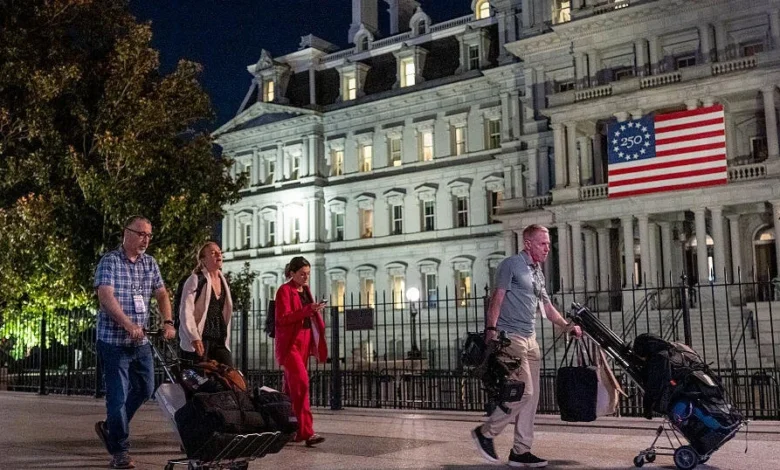
In a significant legal confrontation that underscores the deepening friction between the executive branch and the news media, CNN, MS NOW, and Politico filed a joint lawsuit on Monday challenging the Trump administration’s decision to revoke their White House press credentials. The legal action, which seeks an immediate emergency injunction to restore access, argues that the administration’s ban constitutes a direct violation of the First and Fifth Amendments of the U.S. Constitution.
The conflict erupted late last week when President Trump utilized his Truth Social platform to announce that the three news organizations would be barred from White House grounds. This move, which resulted in the revocation of permanent and temporary press passes, represents the most aggressive effort to date by the administration to marginalize specific media outlets it deems hostile to its political agenda.
A Chronology of the Escalation
The administrative decision to exclude the outlets did not follow traditional protocols for security screening or credentialing. Instead, the move appears to be a reactive policy decision based on the content of the reporting produced by the three organizations.
- Friday, September 18, 2026: President Trump posts to Truth Social, announcing the ban of CNN, MS NOW, and Politico, characterizing them as purveyors of "fake news."
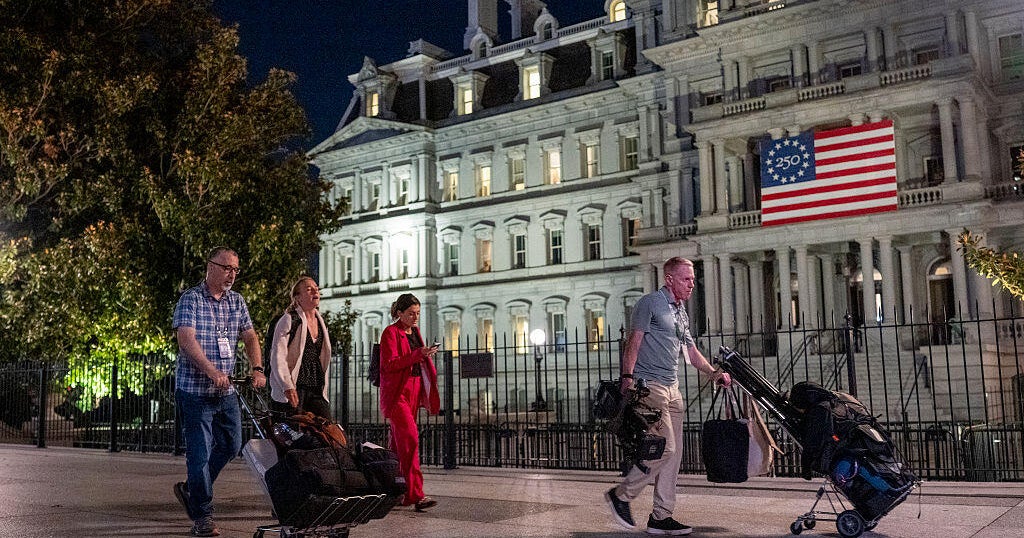
- Saturday, September 19, 2026: Journalists from the affected outlets are denied physical entry to the White House complex; their credentials are deactivated.
- Monday, September 21, 2026: The three news organizations file a formal complaint in the U.S. District Court for the District of Columbia.
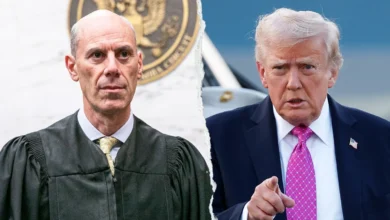
- Monday, September 21, 2026 (Afternoon): The case is assigned to Judge Timothy Kelly, a jurist appointed by President Trump during his first term.
The urgency of the filing is compounded by the practical realities of the White House press pool. CNN was scheduled to provide the television network pool coverage for the President’s travel on Monday. Because the administration has effectively removed the network from the rotation, the White House is currently operating without a standard television broadcast pool, a development without modern precedent in the history of the executive press office.
Legal Precedents and the Role of the Courts
The assignment of Judge Timothy Kelly to this case is noteworthy, as he previously presided over the 2018 litigation involving former CNN reporter Jim Acosta. In that instance, the Trump administration had revoked Acosta’s credentials following a contentious press conference. Judge Kelly ruled that the White House had violated the reporter’s due process rights, ordering the restoration of his access.
Legal scholars suggest that the current administration is testing the boundaries established by the appellate courts in recent years. While the First Amendment generally protects against viewpoint-based discrimination in public forums, the White House has argued that certain areas—such as the Oval Office or exclusive travel pools—are not traditional public forums.
The administration’s strategy appears to rely on the precedent set during the dispute with The Associated Press over the "Gulf of America" naming controversy. In that case, an appeals court permitted the administration to restrict access to certain high-security areas, even while affirming that the White House could not ban journalists from the general briefing room based on their political leanings. The plaintiffs in the current case, however, contend that this is not a limited restriction on specific events but an institutional ban designed to silence institutional critique.
Official Responses and Administrative Justification
President Trump has doubled down on his position, framing the ban as a necessary defense of the integrity of the institution. In a series of social media posts, he explicitly rejected the notion that he is assaulting the Free Press, arguing instead that he is attacking "fake news," which he described as a "cancer" on the nation.
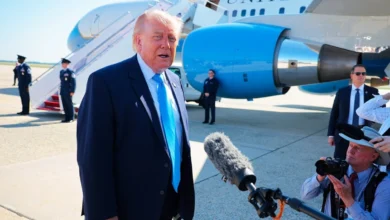
"I don’t think somebody should be allowed to come and write fake stories," the President stated during an impromptu briefing on Friday. "If they want to write them, that’s fine, but I don’t have to let them into my—into the people’s house."
White House Chief of Staff Susie Wiles, along with spokesperson Steven Cheung and Secret Service chief Sean Curran, have been named as defendants in the suit. The administration has yet to file a formal legal response in court, but spokespeople have indicated that the White House maintains the prerogative to determine who is granted access to the complex, citing broad executive authority over administrative logistics.
Broader Implications for Media Freedom
The legal action comes at a time of record-low public trust in institutional media, a climate that has emboldened the administration to bypass traditional press norms. The Reporters Committee for Freedom of the Press, among other advocacy groups, has characterized the move as "textbook viewpoint discrimination."
This event is the latest in a series of restrictive measures aimed at the media. Over the past two years, the administration has systematically curtailed access to various government agencies. Notably, the Department of Defense faced intense scrutiny last year for implementing a policy that required reporters to sign restrictive agreements regarding the solicitation of information. While that policy was partially struck down by the courts, the Department transitioned to an escort-based system, which remains in effect today.
The implications of this lawsuit extend beyond the three affected outlets. If the courts rule that the administration can unilaterally revoke credentials based on the perceived "credibility" of a news outlet, it would set a precedent that could allow future administrations to fundamentally alter the composition of the White House press corps. By hand-selecting which organizations are granted physical access to the President and his staff, the administration effectively manages the narrative flow in a manner that historically occurred only in non-democratic regimes.
Data on Press Pool Functionality
The White House press pool is a critical mechanism for the American public. It ensures that regardless of the President’s personal relationship with a specific outlet, there is a consistent, verified record of executive actions.
- Pool Size: Typically consists of 13 members representing various media sectors (print, television, radio, digital).
- Rotation Frequency: Outlets rotate daily to ensure impartiality.
- Impact of Absence: The removal of major television networks and investigative news outlets limits the volume of raw footage and eyewitness reporting available to the broader public.
As the litigation proceeds, the case will likely hinge on whether the court views the White House press area as a "limited public forum." If the court holds that the administration’s action is motivated by the content of the reporting rather than legitimate security or logistical concerns, the legal threshold for the administration to justify its actions will be exceptionally high.
Conclusion: A Constitutional Crossroads
As the nation watches, the judiciary once again finds itself in the position of refereeing the tension between executive privilege and the constitutional mandate of the press. The outcome of this case will not only determine the immediate future of the White House press corps but will also serve as a foundational test for how the American government treats the role of the Fourth Estate in the digital age.
For now, the plaintiffs are seeking an expedited hearing, citing the immediate and irreparable harm caused by their inability to cover the President’s movements. With the administration firm in its refusal to comment further on the litigation, the battleground has shifted from the podium of the White House briefing room to the courtrooms of Washington, D.C., where the definition of "the people’s house" and the reach of the First Amendment will be subject to intense legal scrutiny in the coming weeks.