Tripadvisor Reverses Course and Separates Core Experiences Divisions in Strategic Organizational Shakeup

Tripadvisor has officially unwound a major organizational restructuring implemented just months prior, separating its core core-site attractions and sightseeing division from its primary tours and activities marketplace, Viator. According to sources close to the company’s internal operations, the two distinct business units have returned to independent operational structures, echoing the corporate hierarchy that existed prior to a strategic pivot initiated in late 2024.
The reversal marks a notable tactical shift for the travel planning and review giant as it navigates a hyper-competitive global tourism landscape. Under the newly reinstated framework, Tripadvisor’s native attractions and "things to do" discovery segment will operate under a dedicated, standalone team. This division primarily functions as a high-volume lead generator for Viator, which remains the enterprise’s flagship experiential brand and the principal beneficiary of its capital allocation and growth investments. Simultaneously, Viator’s robust booking and operational units have been re-established with their own autonomous teams to drive execution.
This structural about-face follows a turbulent period of executive transitions, strategic re-evaluations, and shifting market demands within the tours, activities, and attractions sector—a segment widely considered the final high-growth frontier in online travel.
Chronology of the Restructuring: From Integration to Reversal
The genesis of the brief integration dates back to the autumn of 2024. During a company-wide all-hands meeting held in November, then-Chief Executive Officer Matt Goldberg announced a comprehensive corporate restructuring aimed at streamlining operations and maximizing synergies across the portfolio.
Following that gathering, Tripadvisor President Kristen Dalton detailed the vision in an internal memorandum distributed to global employees on November 4, 2024. In the communication, Dalton emphasized a streamlined focus, writing, "Experiences will be singularly focused on the Viator and Bokun brands with a focus on growth."
Under that late-2024 model, the company sought to merge the traffic-driving power of the legacy Tripadvisor domain with the transactional prowess of Viator and Bokun—Tripadvisor’s back-end software-as-a-service (SaaS) provider for tour operators. The logic at the time relied on breaking down organizational silos to accelerate cross-selling, reduce overhead, and unify product roadmaps under a single leadership umbrella.
However, the unified structure proved short-lived. By early 2025, internal friction, operational complexities, and differing strategic imperatives between top-of-funnel consumer discovery (Tripadvisor) and bottom-of-funnel transactional conversion (Viator) prompted leadership to reconsider. By decoupling the units once more, Tripadvisor has tacitly acknowledged that the operational synergies anticipated from the merger did not translate into the expected efficiencies, prompting a return to specialized, decentralized focus areas.
Understanding the Ecosystem: Tripadvisor, Viator, and Bokun
To fully grasp the implications of Tripadvisor’s organizational pivot, one must examine the distinct yet interdependent roles played by the company’s core experiential assets.
Tripadvisor, historically known as a user-generated review platform for hotels and restaurants, evolved into a massive discovery engine for attractions. Millions of global travelers use the platform daily to read reviews, compare itineraries, and plan vacations. While a significant portion of this traffic monetizes through hotel metasearch advertising, the "things to do" category represents a critical engagement vector.
Viator, acquired by Tripadvisor in 2014 for approximately $200 million, operates as a massive business-to-consumer (B2C) marketplace connecting travelers with local tour guides, excursion operators, and ticket-sellers. Over the past decade, Viator has transformed from a secondary asset into the primary growth engine of the entire corporate portfolio, outpacing legacy segments in gross booking value (GBV) growth.
Complementing Viator is Bokun, a software platform acquired by Tripadvisor in 2018. Bokun provides inventory management, channel management, and booking engine technology to small- and medium-sized tour and activity operators. By integrating Bokun directly into the Viator ecosystem, Tripadvisor established a powerful B2B2C loop: supplying operators with the software to run their businesses while simultaneously listing their inventories on Viator and exposing them to the vast traffic of the main Tripadvisor site.
In the integrated 2024 structure, these three pillars were managed collectively under a unified leadership team. Under the current, separated model, while the commercial and technological ties between Bokun, Viator, and the Tripadvisor discovery engine remain intact, the day-to-day operational execution is handled by distinct teams tailored to the unique demands of each business model.
Financial Context and Market Pressures
Tripadvisor’s structural oscillation occurs against a backdrop of intense financial scrutiny and shifting dynamics in the post-pandemic travel economy.
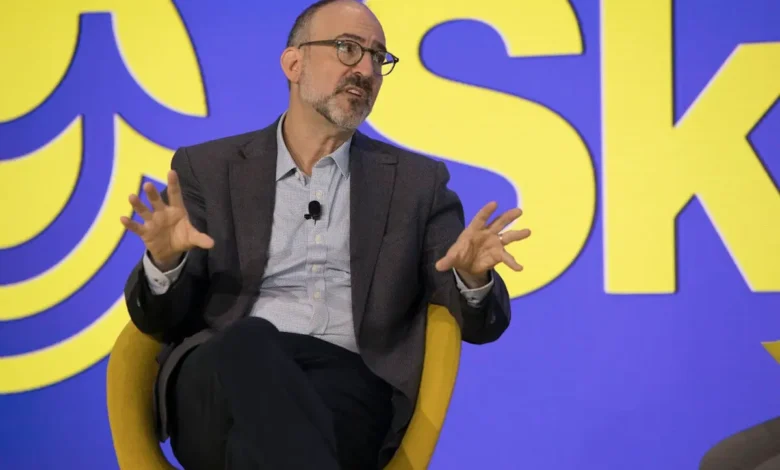
During the Skift Global Forum held on September 19, 2024, Matt Goldberg—then at the helm—participated in a high-profile keynote interview with Skift Research’s Seth Borko. Goldberg discussed the strategic imperative of pivoting Tripadvisor from a traditional review site into a trusted, personalized trip-planning companion. He highlighted the rapid acceleration of the experiences sector as a primary driver of the company’s future valuation.
However, despite strong top-line revenue growth in the experiences segment, Tripadvisor as a whole has faced persistent challenges in its core hotel metasearch business and broader profitability margins. Public market investors have increasingly demanded clear paths to sustainable margin expansion, forcing leadership to continuously tweak organizational designs to find optimal cost structures.
The tours and activities market is estimated to be a more than $150 billion global industry, yet it remains highly fragmented. Unlike flights and traditional chain hotels, which are heavily consolidated through global distribution systems and major online travel agencies (OTAs) like Expedia and Booking Holdings, the vast majority of local tour operators are small, independent businesses. Capturing this market requires massive investments in supplier acquisition—a role filled by Viator and Bokun—alongside efficient customer acquisition, a role historically dominated by Tripadvisor’s organic search traffic.
Splitting the teams suggests that leadership realized that managing the top-of-funnel media and discovery dynamics of Tripadvisor requires a fundamentally different operational skill set and cadence than managing a high-frequency, performance-marketing-driven transactional marketplace like Viator.
Industry Implications and Strategic Analysis
The decision to reverse the restructuring carries several important implications for competitors, suppliers, and industry observers alike.
1. Specialization Over Centralization
The modern
online travel sector has oscillated between centralization—where conglomerates attempt to build super-apps or unified business units to capture every phase of the travel journey—and specialization, where distinct brands operate with high autonomy to move with speed and agility. Tripadvisor’s retreat to a separated structure validates the latter approach within its specific ecosystem. Discovery platforms require deep content, SEO expertise, and consumer trust, whereas booking marketplaces demand relentless performance marketing, conversion rate optimization, and supplier relationship management.
2. Doubling Down on Viator’s Growth
By insulating Viator and its supporting technology arm, Bokun, from the broader complexities of the legacy Tripadvisor domain, management is signaling that Viator remains the undisputed crown jewel of the company. With independent teams, Viator leadership can maintain a laser-like focus on capturing market share from rivals such as GetYourGuide, Klook, and Expedia Experiences without being bogged down by corporate reorganizations affecting the broader review site.
3. Maintaining the Lead-Gen Funnel
Crucially, separating the teams does not mean severing the commercial pipeline. The Tripadvisor "things to do" team will retain its core mandate: feeding high-intent travelers directly into the Viator booking engine. This symbiotic relationship remains Tripadvisor’s ultimate competitive moat. While standalone OTAs must acquire consumers primarily through expensive paid search channels on Google and Meta, Tripadvisor leverages its massive, organic traffic footprint to funnel users seamlessly into Viator’s checkout flow.
Outlook for Tripadvisor’s Leadership and Operations
As Tripadvisor stabilizes its internal organization following this reversal, the company faces the ongoing task of executing its long-term vision in a dynamic technological environment. With travel demand remaining resilient globally, particularly in experiential travel categories where consumers increasingly prioritize spending on memories and activities over material goods, operational execution will be paramount.
The reversion to separate teams for Tripadvisor’s discovery assets and Viator’s booking marketplace underscores a pragmatic willingness by executive leadership to correct course when internal strategies fail to deliver anticipated results. For tour operators who rely on Bokun and Viator for distribution, and for millions of travelers who consult the platform for itinerary inspiration, the structural reset is designed to ensure sharper focus, faster innovation, and more reliable service across every touchpoint of the journey.