San Diego Coastal Communities Grapple with Environmental and Economic Fallout of Chronic Tijuana Sewage Crisis

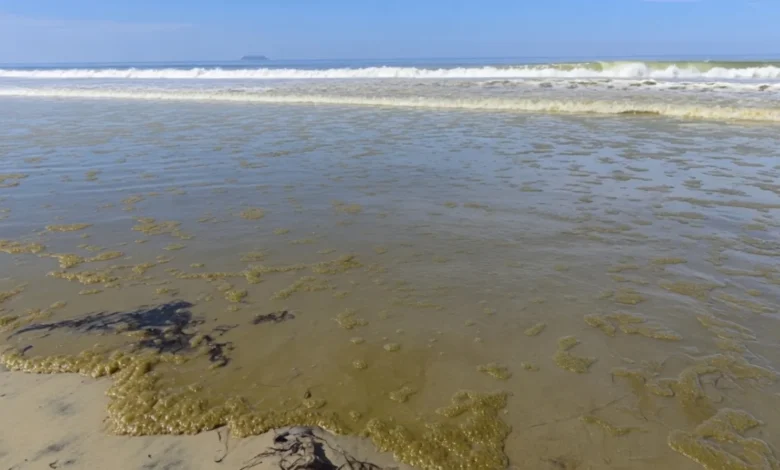
The juxtaposition of luxury and environmental degradation has reached a breaking point in Southern California as the long-standing Tijuana sewage crisis transcends its status as a localized nuisance to become a full-scale public health and economic emergency. While tourists continue to pay premium rates exceeding $700 per night for a stay at the historic Hotel del Coronado, they are increasingly met with red flags and "no swimming" signs, warning of water contaminated by millions of gallons of raw effluent. Simultaneously, just a few miles to the south, the crisis has moved from the water into the very air that residents breathe, prompting San Diego County officials to distribute thousands of high-tech air purifiers to households plagued by the noxious stench of hydrogen sulfide.
This environmental catastrophe, rooted in decades of infrastructure neglect and rapid urban growth in Tijuana, Mexico, has created a stark geographic divide. In the affluent enclave of Coronado, the impact is primarily economic and recreational, threatening the reputation of one of the nation’s most iconic resorts. In the working-class communities of Imperial Beach, San Ysidro, and Nestor, the impact is visceral and physiological, as residents cope with air quality levels that far exceed state safety standards. The crisis has reached a level of absurdity that has drawn national attention, with public figures and local activists questioning how one of the wealthiest regions in the world can find itself unable to secure the basic safety of its coastline and atmosphere.
The Public Health Crisis and the AIRE Program
The most recent escalation in the county’s response is the Air Improvement Relief Effort (AIRE) program. This initiative, managed by the San Diego Air Pollution Control District (SDAPCD), represents an unprecedented admission by the government that the sewage crisis is no longer confined to the Pacific Ocean. The program was established to provide up to three free air purifiers and replacement filters to households in the communities most severely impacted by the Tijuana River Valley’s toxic fumes. These areas include Imperial Beach, San Ysidro, Otay Mesa West, Egger Highlands, Nestor, and the immediate river valley.
The necessity of the AIRE program is underscored by alarming data from a study conducted by the University of California, San Diego (UCSD) and the Scripps Institution of Oceanography. Researchers recorded hydrogen sulfide (H2S) levels—the gas responsible for the "rotten egg" smell of decomposing organic matter—at concentrations that defy standard safety protocols. While California’s air quality standard for hydrogen sulfide is 30 parts per billion (ppb) averaged over one hour, the Scripps study documented peak one-minute concentrations of up to 4,500 ppb and one-hour concentrations of 2,100 ppb near the river.
Hydrogen sulfide is more than an olfactory irritant; it is a potent neurotoxin. Prolonged exposure at the levels detected in the South Bay can lead to headaches, nausea, respiratory distress, and long-term neurological impacts. The distribution of air purifiers is a desperate stopgap measure intended to allow residents to breathe safely within their own homes, a situation that Chef Andrew Gruel characterized as "far beyond an environmental nuisance."
However, even the relief effort has been mired in administrative and legal hurdles. An initial rollout of 400 units had to be recalled after it was discovered they lacked the necessary activated carbon and potassium permanganate filters required to neutralize gases like hydrogen sulfide. Following this error, the county awarded a $26.8 million contract for approximately 30,000 specialized machines. This contract is currently being challenged in court by a losing bidder, alleging that the county failed to verify performance claims, further delaying the delivery of clean air to thousands of vulnerable families.
Economic Dichotomy: The "Shit Island" Narrative
While South County residents fight for clean air, the tourism industry in Coronado is fighting a battle of perception. The Hotel del Coronado, a National Historic Landmark, remains a crown jewel of California’s hospitality industry. Despite the ongoing sewage issues, the hotel continues to charge premium rates and maintain high occupancy. However, the reality for guests has changed. The beach, once a primary draw for international travelers, is frequently closed or under advisory.
Data from San Diego County’s beach water quality monitoring program paints a grim picture. Bacteria levels at Coronado North Beach and the Coronado Lifeguard Tower have repeatedly tested positive for Enterococcus concentrations far exceeding health benchmarks. In some instances, testing revealed concentrations as high as 288,232 per 100 milliliters, nearly 200 times the health limit of 1,413. South of the main resort area, the Silver Strand State Beach is often under a full closure due to what officials describe as an "imminent health threat."
The term "shit island" has begun to circulate on social media, reflecting a growing frustration among both locals and visitors. The economic risk is significant; if the Coronado brand becomes synonymous with sewage pollution, the long-term impact on San Diego’s multibillion-dollar tourism economy could be catastrophic. Critics have pointed out the irony of the hotel’s "resort fees"—which can be among the highest in the country—being charged even when the primary resort amenity, the ocean, is inaccessible and potentially hazardous.
A Legacy of Infrastructure Failure
The root of the crisis lies in the Tijuana River watershed, a 1,750-square-mile area that drains northward across the international border. The city of Tijuana has experienced explosive population growth over the last three decades, now housing more than two million people. Unfortunately, the city’s wastewater infrastructure has not kept pace with its expansion.
The system is plagued by aging pipes, inadequate pumping stations, and a lack of redundant systems. In May 2026, the situation worsened when two major sections of the Parallel Gravity Line, a primary sewer artery in Tijuana, suffered catastrophic failures. This resulted in millions of gallons of undiluted sewage, industrial chemicals, and urban trash flowing directly into the Tijuana River and, subsequently, the Pacific Ocean. Because of the northward-flowing currents along the California coast, this plume of pollution frequently travels past Imperial Beach and settles along the shores of Coronado.
The international nature of the problem complicates the solution. While the United States and Mexico have signed various minutes under the 1944 Water Treaty, funding and execution have historically lagged behind the rate of deterioration.
Progress and Future Projections
Despite the current dire circumstances, there is a multi-year plan in place to address the infrastructure deficit. The United States, through the International Boundary and Water Commission (IBWC), has begun a phased expansion of the South Bay International Wastewater Treatment Plant (SBIWTP). In 2025, the plant’s capacity was increased from 25 million to 35 million gallons per day (mgd). A second, more ambitious expansion aims to bring the capacity to 50 mgd, which engineers believe is the minimum required to handle the consistent transborder flow during dry weather.
On the Mexican side of the border, there has been a renewed commitment to infrastructure rehabilitation. The Mexican government recently reopened the San Antonio de los Buenos treatment plant, a facility that had been offline for years, contributing significantly to the volume of raw sewage entering the ocean. Additionally, Mexico has committed to a series of emergency repairs on river gates, collectors, and damaged sewer lines.
However, experts warn that these projects are not an immediate fix. The timeline for the full expansion of the South Bay plant and the stabilization of Tijuana’s internal grid spans several years. In the interim, the region remains at the mercy of the weather; even moderate rainfall can overwhelm the current system, triggering massive "bypass" events where millions of gallons of untreated waste are diverted directly into the ocean to prevent the treatment plants from being destroyed by debris.
Analysis of Implications
The Tijuana sewage crisis is a case study in the failure of binational environmental governance. It highlights the vulnerability of coastal economies to transboundary pollution and the disproportionate health burdens placed on lower-income communities. The distribution of air purifiers, while necessary, represents a reactive "band-aid" approach to a systemic failure.
From a legal perspective, the ongoing lawsuits regarding air purifier contracts and the potential for litigation against the IBWC by local municipalities suggest that the crisis will continue to play out in the courts. From a political perspective, the crisis has unified local leaders across the partisan divide, with San Diego County supervisors and congressional representatives calling for a federal "State of Emergency" declaration to unlock more substantial funding and bypass bureaucratic red tape.
For the residents of the South Bay and the guests at the Hotel del Coronado, the wait for a permanent solution continues. The "rotten egg" smell in the air and the red flags on the sand serve as daily reminders that until the fundamental infrastructure on both sides of the border is modernized and maintained, the Pacific graveyard of sewage will remain a blight on the California dream. The transition from an "environmental nuisance" to a "public health emergency" is complete; the question now is whether the current multibillion-dollar investments will be enough to outpace the continued growth and decay of a system on the brink.