The Odyssey Sets Box Office Ablaze: Christopher Nolan’s Epic Adaptation Shatters Records and Redefines Blockbuster Storytelling

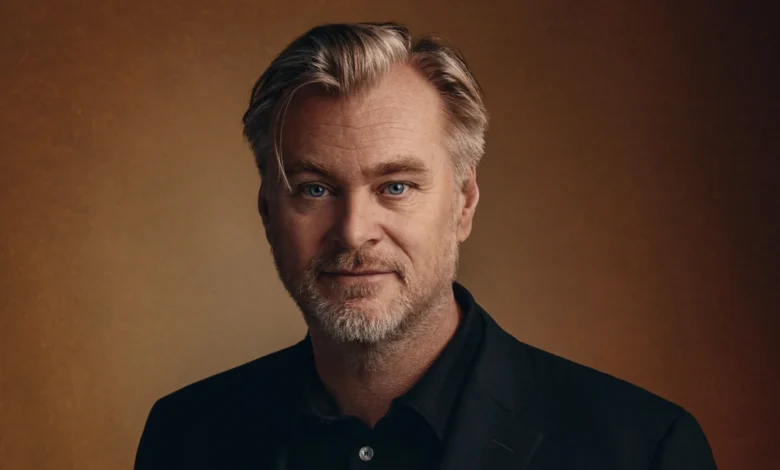
Christopher Nolan, a filmmaker synonymous with intellectually stimulating blockbusters and unparalleled visual artistry, has once again captivated global audiences with his latest magnum opus, The Odyssey. Fresh on the heels of Oppenheimer‘s seven Academy Award victories, including Best Picture and Best Director, Nolan’s thirteenth feature film has not only achieved critical acclaim but has also etched its name in box office history. Shot entirely in IMAX, The Odyssey has debuted to a staggering $264 million worldwide, establishing a new personal best for the director’s global opening weekend and further cementing his legacy as a master storyteller. Domestically, the film garnered an impressive $124 million, marking Nolan’s highest opening outside of his acclaimed Batman trilogy, with a significant 23.8 percent of this sum originating from IMAX screens, underscoring the format’s powerful draw for his cinematic visions.
A Long-Awaited Vision: From Childhood Inspiration to Cinematic Triumph
Nolan’s fascination with Homer’s ancient Greek epic poem, The Odyssey, dates back to his childhood. The tale of Odysseus’s arduous decade-long journey home following the Trojan War first captured his imagination during a grade school play. This early exposure foreshadowed a much deeper connection to the material. Nolan nearly brought Homer’s hero to the screen during a brief involvement with the development of the 2004 film Troy. His early conceptualization for that project included the iconic image of Odysseus’s deceptive gift, the Trojan Horse, a haunting visual that he masterfully integrates into the opening moments of his Odyssey, setting a somber and epic tone within the first 30 seconds.
However, it was during the arduous process of writing his own adaptation that Nolan discovered the profound and perhaps unconscious influence of The Odyssey on his entire filmography. This realization led to a unique narrative approach, weaving threads of his previous works into the fabric of his latest epic. The result is a film that is both a faithful, yet distinctly Nolan-esque, interpretation of the ancient poem and a meta-commentary on his own cinematic journey.
Interweaving Narratives: Nolan’s Filmography Reflected in The Odyssey
The genius of Nolan’s The Odyssey lies in its intricate tapestry of characters and thematic resonances drawn from his celebrated career. The film is populated by echoes of his past protagonists and narrative structures, creating a rich, layered experience for devoted fans. Viewers will recognize the tormented magician Alfred Borden (Christian Bale) from The Prestige, the introspective architect Cobb (Leonardo DiCaprio) from Inception, and the desperate Allied soldiers from Dunkirk all yearning for home.

Furthermore, the spectral presence of a figure observing their own home, reminiscent of Cooper (Matthew McConaughey) in Interstellar and Bruce Wayne (Christian Bale) in The Dark Knight Rises, adds a layer of existential introspection. The theme of a leap of faith to escape a metaphorical prison, a hallmark of Nolan’s narratives, is also powerfully present. Odysseus’s struggle with fragmented memories and his quest for identity mirrors the plight of Leonard Shelby (Guy Pearce) in Memento, highlighting the film’s exploration of perception and reality. Even the formidable archery skills of a reclusive character, reminiscent of Selina Kyle/Catwoman’s prowess in The Dark Knight Rises, makes an appearance, embodied by an Anne Hathaway character.
Perhaps the most striking thematic parallel is drawn between The Odyssey and Nolan’s recent apocalyptic explorations in Tenet and Oppenheimer. The Trojan Horse, a symbol of ingenuity leading to destruction, mirrors the atomic bomb’s impact in Oppenheimer. Both Odysseus and J. Robert Oppenheimer (Cillian Murphy) grapple with the profound fear that their extraordinary creations have not only redefined the rules of conflict but have also irrevocably altered the course of civilization.
Thematic Depth: Law, Morality, and the Nature of Civilization
Beyond the visual spectacle and intricate narrative connections, The Odyssey delves into profound thematic territory, most notably the concept of "Zeus’s law," an ancient articulation of the Golden Rule: "treat others as you wish to be treated." This moral imperative serves as a guiding principle throughout Odysseus’s journey, a stark contrast to the often brutal realities of war and the human capacity for exploitation.
Nolan, known for his deliberate ambiguity and avoidance of overt moralizing, acknowledges the thematic resonance between his recent works. He states, "Now that I look back on it after finishing The Odyssey, there are interesting parallels [to Oppenheimer]. I try to leave each film I do with thematic concerns and questions that stay a little bit open for me and hopefully the audience too. They are things that I want to explore further without being too self-conscious about it." This approach allows the film to resonate on multiple levels, inviting audiences to ponder the enduring relevance of ancient moral codes in the modern world.
While the film concludes with a cautionary note about heeding historical warnings, Nolan expresses an underlying optimism about humanity’s innate capacity for good. He elaborates, "The fact that we have mutual respect is what, to some extent, defines civilization. I don’t think that’s something that can be entirely imposed by, for example, a religious framework. I think it has to be innate in us for that to be as prevalent and as effective as it has been over thousands of years." This perspective suggests that while societal structures play a role, the foundation of civilization rests on an intrinsic human desire for connection and reciprocity.

Technological Prowess: The IMAX Revolution Continues
The Odyssey represents a significant milestone in cinematic technology, being the first narrative feature film shot entirely in IMAX. This ambitious undertaking was made possible by advancements in IMAX camera technology, specifically the development of a "sound blimp" that effectively silences the typically noisy camera. Nolan, a long-time advocate for the immersive power of IMAX, has been instrumental in pushing the boundaries of its application in feature filmmaking.
His journey with IMAX began with subtle integrations on The Prestige and gained significant momentum with The Dark Knight, where he championed the use of IMAX cameras, previously relegated to documentary filmmaking, within the Hollywood studio system. This partnership with IMAX and Panavision has led to continuous innovation, including the development of specialized lenses and improved focus control systems tailored for the demands of narrative cinema.
Cinematographer Hoyte van Hoytema and his team played a crucial role in testing and refining the new Keighley IMAX camera and blimp system during the production of The Odyssey. This hands-on approach to technological evolution underscores Nolan’s commitment to utilizing cutting-edge tools to deliver unparalleled audience experiences. "Camera systems are an evolutionary process," Nolan notes, "and that’s generally why the leading companies have been doing it for so long. It’s tough to know how to improve something unless you go into the field with it."
Artistic Collaboration: A Symphony of Talent
Nolan’s creative process is characterized by a blend of long-standing collaborations and the deliberate infusion of fresh perspectives. While he has a history of working with trusted artisans, the transition to Hoyte van Hoytema as his Director of Photography following Wally Pfister’s move to directing marked a significant evolution. This openness to new talent has extended to other key creative roles in The Odyssey.
The film boasts a stellar ensemble of artisans, including composer Ludwig Göransson, editor Jennifer Lame, and production designer Ruth De Jong. Nolan emphasizes the importance of striking a balance between the ease of familiarity with long-term collaborators and the necessity of new ideas and fresh insights. "I’ve always tried to strike that balance in different ways at different times," he explains. "I’ve been very fortunate with all the crew members I’ve worked with… But it’s always a balance, and I think we had an excellent balance on this movie." This approach ensures that each project benefits from both established synergy and innovative approaches.

A Nod to the Past: The Prestige Re-Release and Enduring Actor Relationships
In an era where blockbuster filmmaking often faces scrutiny for its production timelines and budget overruns, Nolan’s consistent ability to deliver films on time and under budget stands as a testament to his meticulous planning and disciplined approach. His philosophy, as he explains, is rooted in minimizing external interference by adhering to budgetary and scheduling constraints. "What I realized early on is that if I stayed on budget and on schedule, I got less interference," he reveals. "I didn’t give people a reason to panic. That’s when you find people breathing down your neck and questioning everything you’re doing." This strategic approach allows him greater creative freedom to execute his artistic vision.
Adding to the buzz surrounding Nolan’s current success, the 20th-anniversary re-release of his 2006 film The Prestige is slated for next year. This re-release will feature 70-millimeter blow-ups, a testament to the enduring visual quality of Wally Pfister’s cinematography and Nathan Crowley’s production design. The re-release also reignites discussions about potential future collaborations with his frequent leading man, Christian Bale. Nolan expresses his admiration for Bale, calling him "one of the great actors of his generation," and expresses his enthusiasm for bringing The Prestige to new audiences.
Nolan’s loyalty extends beyond his marquee stars. He acknowledges the vital contributions of supporting actors like Josh Stewart, Sean Avery, and the late Larry Holden, attributing their consistent presence to the talent identification skills of his long-time casting director, John Papsidera. Papsidera, who has worked with Nolan since Memento, has consistently introduced him to exceptional performers capable of delivering impactful performances in smaller roles, even under the demanding conditions of large-scale productions. This deep appreciation for all levels of talent is a hallmark of Nolan’s filmmaking philosophy.
The cinematic landscape is continually shaped by visionary directors like Christopher Nolan, and The Odyssey stands as a powerful testament to his enduring ability to blend grand spectacle with profound thematic exploration, pushing the boundaries of storytelling and technological innovation. As the film continues its record-breaking run, audiences are left not only entertained but also deeply engaged with the timeless questions of humanity, morality, and the epic journey of life.