The Legislative Legacy of Senator Alan Armstrong: A Case Study in Industry Influence and Permitting Reform

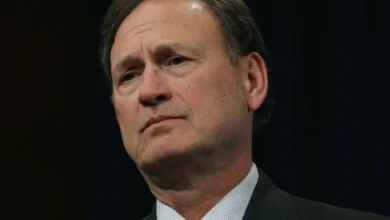
Alan Armstrong entered the United States Senate in March 2026 under a unique political mandate, appointed by the Governor of Oklahoma to fill a vacancy left by the departure of Markwayne Mullin. A veteran petroleum executive who spent 15 years as the chief executive and chairman of the Williams Companies, Armstrong arrived in Washington with a singular, high-stakes objective: the wholesale overhaul of federal infrastructure permitting. As he prepares to depart the Senate, his legislative efforts have culminated in a bipartisan permitting bill that stands on the precipice of a floor vote. If passed, the legislation would significantly alter the regulatory landscape for energy projects, offering substantial financial and operational tailwinds for his former employer, the Williams Companies, and raising complex questions about the intersection of private wealth and public policy.
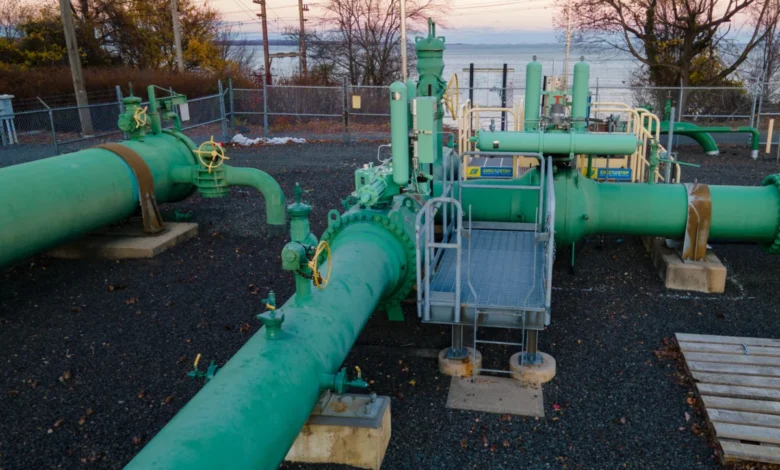
The proposed Bipartisan American Affordability and Jobs Act seeks to streamline the federal approval process for energy infrastructure, a goal long championed by the oil and gas industry. However, critics point to specific provisions that appear surgically designed to revive the stalled Constitution pipeline—a project that has been mired in legal and regulatory limbo for over a decade. The pipeline, which would span 125 miles from Pennsylvania into upstate New York, was effectively blocked in 2016 when New York regulators denied a vital water quality certification. By narrowing the scope of state authority under Section 401 of the Clean Water Act, the new bill would limit the ability of states and tribal nations to block similar projects in the future, potentially clearing the path for Williams to move forward with the Constitution line and other infrastructure developments.
A Chronology of the Constitution Pipeline Struggle
The history of the Constitution pipeline serves as a bellwether for the modern energy regulatory environment. In 2016, the project faced a rare and significant setback when the New York Department of Environmental Conservation (DEC) denied the necessary Section 401 water quality certification. State regulators argued that the pipeline’s construction—which involved trenching across 251 streams and clearing significant swaths of vegetation—posed an unacceptable threat to trout habitats and water purity.
The subsequent decade saw a flurry of litigation. Following the initial denial, Williams continued to push for federal approval from the Federal Energy Regulatory Commission (FERC), leading to a series of court battles. By 2020, citing the protracted regulatory uncertainty, Williams formally announced it would cease pursuit of the project. However, the political landscape shifted dramatically with the election of the current administration. In late 2025 and 2026, the company began a concerted effort to revive both the Constitution and the Northeast Supply Enhancement (NESE) projects. This pivot was supported by the Department of Energy, which pledged $42 million in funding for permitting costs, and an administration seemingly committed to overriding state-level environmental protections.

The Financial Nexus: Stock Holdings and Staffing
The controversy surrounding Senator Armstrong’s tenure is rooted in his substantial financial ties to the industry he regulates. As of October 2026, disclosures indicate that Armstrong maintains a portfolio of Williams stock valued at tens of millions of dollars. Upon his appointment to the Senate, the Williams board of directors granted him accelerated stock awards, ensuring he was not penalized for his transition into public service—a move worth approximately $2.8 million at the time.
Beyond his personal holdings, the Senator’s staffing choices have drawn scrutiny. Armstrong brought in former colleagues from Williams, including T. Lane Wilson, the company’s senior vice president and general counsel. Wilson served as Armstrong’s chief of staff from mid-April through July 2026. While the company maintains that Wilson complied with all ethics requirements, including an organizational separation from the Williams Government Affairs team, the presence of a sitting corporate executive in the Senator’s office underscores the close relationship between the industry and the current legislative push for permitting reform.
Analyzing the Section 401 Revisions
At the heart of the bipartisan bill is a fundamental shift in the burden of proof for water quality certifications. Currently, under the Clean Water Act, developers must demonstrate that their projects will not degrade water quality. The proposed bill would flip this requirement: state regulators would have to prove that a project would cause harm, while simultaneously meeting a significantly higher standard of evidence. Furthermore, the legislation restricts states to considering only "direct discharges" during the review process, effectively barring them from evaluating the broader ecological impacts of construction, such as bank erosion or temperature fluctuations in streams.
Industry proponents, including the American Petroleum Institute, argue that these changes are necessary to provide a "tech-neutral" and predictable framework for national energy security. They contend that the current system is characterized by "political vetoes" that allow states to arbitrarily halt projects of national significance. Conversely, environmental legal experts, such as Nancy Stoner of the Environmental Law & Policy Center, argue that the provisions are explicitly designed to dismantle state-level safeguards. Data from the Association of Clean Water Administrators supports the notion that denials are exceedingly rare—historically occurring in less than 3.5 percent of cases—suggesting that the push for reform is driven by a desire to remove even the most remote barriers to fossil fuel infrastructure.
The Ethical Debate: "Not Illegal, but Corrupt?"
The case of Senator Armstrong highlights the tensions within the current federal ethics regime. Watchdog groups like Citizens for Responsibility and Ethics in Washington (CREW) have pointed out that because Armstrong’s legislation benefits the entire energy sector rather than just one company, it technically navigates around conflict-of-interest prohibitions. However, the lack of an election cycle for the appointee means that the public had no opportunity to vet his financial ties or his agenda before he gained the power to influence federal law.

"Just because something isn’t illegal doesn’t mean it’s not corrupt," noted Donald Sherman, CEO of CREW. This sentiment captures the frustration among environmental advocates and transparency experts who believe that the legislative process has been captured by the very interests it is meant to oversee. For his part, Armstrong has remained steadfast, arguing that the nation’s regulatory system is "broken" and that his role in the Senate has been to ensure that energy infrastructure projects are treated as priorities rather than hurdles.
Broader Implications for Energy and Governance
The outcome of the vote on the Bipartisan American Affordability and Jobs Act will have long-term consequences for both the energy sector and the role of state governments in environmental oversight. If passed, the bill will likely trigger a new wave of legal challenges. Already, the state of New York, represented by the office of Governor Kathy Hochul, is engaged in ongoing litigation against federal efforts to bypass state permitting processes. The tension between federal energy goals and state-level environmental mandates is poised to remain a central conflict in American governance.
Furthermore, the involvement of the Department of Energy in providing federal funds to cover the permitting costs of private infrastructure projects marks a departure from traditional public-private boundaries. By leveraging the Defense Production Act to support the Constitution pipeline, the administration has signaled a willingness to use executive authority to achieve energy infrastructure goals regardless of local opposition.
As the Senate prepares for the final vote, the influence of Senator Armstrong remains a focal point. Whether he casts a deciding vote or departs just prior to the final tally, his brief tenure has already left an indelible mark on the legislative history of energy policy. By bridging the gap between corporate executive leadership and federal lawmaking, he has facilitated a shift that prioritizes infrastructure development at the potential expense of local environmental control. For the residents of upstate New York and environmental advocates across the country, the potential passage of this bill represents a significant erosion of the mechanisms that have, for years, provided a check on the expansion of interstate fossil fuel projects.