Texas Democrats Secure Historic Upset in Stunning Midterm Sweep, Inheriting a Deeply Divided Statehouse and Urgent Healthcare Crisis

In a seismic political shift that reverberated across the United States, Texas Democrats captured the governor’s mansion and key statewide offices this Election Day, breaking a three-decade Republican stranglehold on top executive leadership. The decisive upset was fueled in large part by mounting voter fury over skyrocketing healthcare costs, pervasive administrative barriers to medical access, and the precarious state of the Texas healthcare safety net.
With the swearing-in ceremonies slated for January, the newly elected Democratic administration faces a daunting, compressed timeline. Leaders have a mere two months before the legislative session commences on January 12 to translate campaign rhetoric into actionable policy. They must navigate these murky political waters while contending with fierce opposition from a Republican-controlled state Senate determined to act as an institutional roadblock.
The unexpected electoral breakthrough occurred within a broader national context. Texas found itself at the crest of a nationwide blue wave that ultimately reshaped control of the U.S. Congress. Defying heavily gerrymandered district maps engineered by state Republicans—and despite a staggering financial infusion exceeding $225 million from billionaire Elon Musk aimed at bolstering GOP candidates—Texas voters elected James Talarico to the U.S. Senate and flipped an additional seat in the U.S. House of Representatives.
Yet, for the nearly 32 million residents of the Lone Star State, the most immediate and profound policy transformations will likely stem from the state-level victories finalized on November 3. The stakes could scarcely be higher. Texas routinely languishes near the bottom of national health outcome rankings and simultaneously bears the dubious distinction of housing the highest uninsured rate in the United States.
A Historic Power Shift in Austin
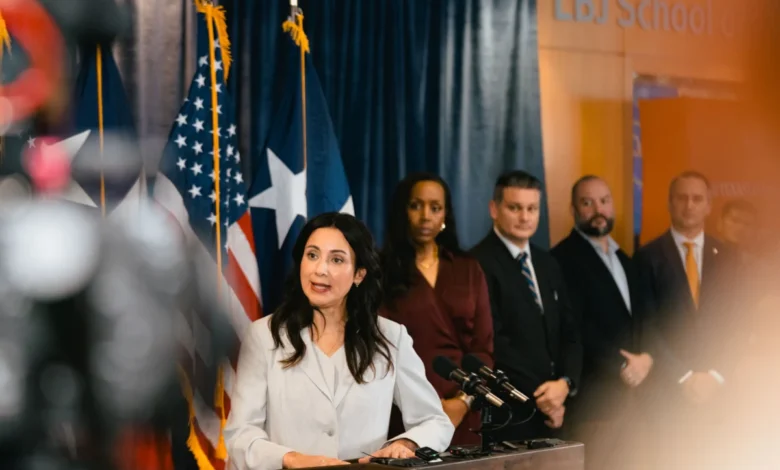
Governor-elect Gina Hinojosa and Lieutenant Governor-elect Vikki Goodwin—both seasoned state lawmakers—are scheduled to take the oath of office on January 19, precisely one week after the 140-day legislative session opens its doors. Hinojosa’s victory marks a watershed moment in Texas political history, making her the first Democrat to occupy the governor’s mansion since Ann Richards departed in January 1995. Hinojosa achieved this milestone by defeating incumbent Republican Governor Greg Abbott, a formidable, heavily financed politician who had maintained an unblemished electoral record prior to this cycle.
For three consecutive terms, Abbott, alongside outgoing Lieutenant Governor Dan Patrick, steadfastly steered Texas conservative policy. Their administrations aggressively fought against federal Medicaid expansion, waged multi-front legal battles to dismantle the Affordable Care Act, oversaw the implementation of some of the nation’s strictest abortion bans, and systematically weakened state vaccine mandates.
During the heated campaign trail, Hinojosa and Goodwin placed healthcare reform at the absolute center of their platforms. Their primary objectives included expanding healthcare coverage, reining in runaway medical costs, and revitalizing women’s healthcare services. Goodwin advanced a particularly ambitious proposal to establish a government-funded statewide health insurance program, financed by drawing upon the state’s legendary $24 billion “rainy day fund.”
As state House members, both women actively introduced legislation addressing these exact concerns. Goodwin filed comprehensive bills aimed at expanding Medicaid and restoring abortion access, while Hinojosa sponsored measures to broaden medical exemptions to state abortion restrictions and integrate doulas into the state maternal mortality review committee. Historically, these legislative initiatives routinely died in committee or failed to secure crucial floor votes under the previous conservative leadership.
As the political establishment in Austin absorbs the reality of the election results, lobbyists and political analysts acknowledge that the incoming administration’s legislative trajectory remains opaque. Key questions persist regarding executive appointments to powerful state agencies and the strategic maneuvers Democrats will employ to bypass a hostile state Senate.
Political scientists emphasize that this upcoming legislative sprint represents a uniquely narrow window of opportunity. Following the mandatory adjournment of the regular session at the end of May, the Texas legislative calendar dictates that lawmakers will not reconvene for another regular session until January 2029. That subsequent session will immediately follow the 2028 presidential election—a cycle in which the entire membership of the state House will once again face the voters.
The Grimmer Realities of the State’s Health Landscape
To understand the urgency driving the electorate, one must examine the baseline metrics of public health in Texas. Approximately 5 million residents—roughly 15 percent of the state’s population—currently live without any form of health insurance. This uninsured population includes nearly 1 million children. Furthermore, Texas remains one of only 10 states that stubbornly refused to adopt the Affordable Care Act’s Medicaid expansion framework, leaving millions of impoverished adults in a coverage gap. Maternal mortality indicators remain troubling, with new mothers in Texas dying at rates significantly higher than the national average.
This domestic crisis has been further exacerbated by federal policy shifts. Over the past year, Congress opted not to renew enhanced premium subsidies for Affordable Care Act plans, passed federal budget legislation imposing stringent work and eligibility restrictions on public assistance programs, and trimmed overall federal health expenditures.
Lynn Cowles, director of health and food justice at the progressive policy advocacy organization Every Texan, noted that a toxic combination of rising consumer costs and cumbersome administrative enrollment glitches has stripped health coverage from hundreds of thousands of Texans in recent months.
This affordability crisis transcends traditional partisan lines. Rachel Elsberry, an Austin-based insurance broker managing client portfolios across more than a dozen states, observed that financial strain is a universal complaint among her customer base.
"Whether you voted red or blue, every client I talk to, regardless of where they are on the political spectrum, says healthcare costs are too high," Elsberry stated. She added that she frequently has to turn away prospective Texas clients who earn too much to qualify for ACA subsidies yet earn too little to afford private market rates without financial assistance. "It’s heartbreaking," she admitted.
Despite the legislative hurdles ahead, advocacy groups are already finding a receptive audience in the incoming administration. Cowles reported that her organization has already met with Hinojosa’s transition staffers, who reportedly expressed strong interest in a dozen administrative steps the governor could execute independently to streamline enrollment and retention in public health programs.
"It’s an incredibly different world," Cowles remarked. "It’s amazing to say these things out loud."
Navigating the Legislative Labyrinth
Despite executive turnover, enacting structural reform will require extraordinary political dexterity. Expanding Medicaid would immediately bring healthcare coverage to an estimated 1 million low-income Texans. Although the federal government would absorb 90 percent of the resulting financial burden, securing legislative approval for the expansion remains a steep uphill battle.
"To thread that needle even after dramatic changes like last night is going to be challenging," observed John Henderson, president and CEO of the Texas Organization of Rural & Community Hospitals.
Compounding the difficulty is the notorious structural inefficiency of the Texas Statehouse. Charles Miller, director of health and economic mobility at Texas 2036, a nonpartisan policy research organization, emphasized the severe constraints of the legislative calendar. During the state’s most recent regular session in 2025, lawmakers filed an overwhelming 11,503 bills, of which only 3,534 ultimately became law.
"The clock is ticking," Miller warned, noting that incoming leaders must ruthlessly prioritize legislation to achieve tangible results before the clock runs out in late May.
Anticipating this battle, Republican leaders in the state Senate have already sounded the alarm. State Senator Charles Schwertner, a physician who chairs the powerful Senate Business and Commerce Committee, made his party’s defensive posture clear on social media immediately following the election results.
"Texas stands as long as the Texas Senate Republican caucus holds the line," Schwertner wrote. "We will."
Faced with this institutional firewall, policy analysts suggest that Democratic lawmakers must pursue incremental, bipartisan measures that command broad consensus. Potential avenues include increasing healthcare price transparency, cracking down on anti-competitive healthcare monopolies, and maximizing federal funding inflows without expanding the footprint of the state budget. A bipartisan interim committee on healthcare affordability, which convened throughout the past year, is expected to release a comprehensive package of recommendations just prior to the legislative session.
Meanwhile, institutional power dynamics within the Capitol are also subject to speculation. Historically, the office of the lieutenant governor functions as one of the most potent positions in state government, wielding unilateral authority over committee assignments, chair appointments, and the legislative calendar. Outgoing Lieutenant Governor Dan Patrick aggressively expanded this authority, lowering the procedural debate threshold in the Senate to ram through partisan conservative priorities without requiring Democratic votes.
However, persistent rumors circulate in Austin that Senate Republicans are quietly exploring procedural rule changes designed to strip power from the lieutenant governor’s office precisely to neuter Goodwin’s capacity to unilaterally steer the chamber.
"The rumors are flying in Austin," noted James Henson, director of the Texas Politics Project at the University of Texas-Austin, describing the current political atmosphere as a classic "dog catches car" scenario where Democrats must rapidly pivot from perpetual opposition to effective governance.
Legal Frontiers and Consumer Pressures
Beyond legislative battles, executive agencies will undergo profound shifts. Nathan Johnson, a Democratic state senator poised to assume the role of Texas Attorney General, signaled a sharp departure from his Republican predecessors. Johnson stated publicly that while he cannot unilaterally invalidate existing state abortion statutes, he will refuse to deploy the resources of the attorney general’s office to prosecute or sue out-of-state physicians who mail safe medication abortion pills to patients within Texas borders.
For everyday citizens caught in the grinding gears of the healthcare system, however, political maneuvering matters less than immediate financial relief. Dorcaus Robinson, a 46-year-old publisher living in Houston with her two younger sons, noted that changes cannot materialize quickly enough. Robinson voted for Hinojosa and the broader Democratic ticket, though she split her ballot in other localized contests.
This year, Robinson’s monthly premium for an Affordable Care Act health insurance plan jumped from $500 to $730. Managing multiple sclerosis, Robinson relies entirely on her insurance plan to cover a specialized therapeutic injection that carries an unassisted retail price tag of $10,000 per month.
When her insurance provider contacted her shortly after the election to inform her that premiums would climb yet again next year, her initial reaction encapsulated the anxious optimism of the moment: "Is it too late for me to benefit from this blue tsunami?"
Comparing the political transition to professional sports, Robinson emphasized that voters expect immediate, decisive leadership from the officials they elevated to power.
"It’s like football: The next man is up," she said. "Let’s go in and get this done. I hope they have their plan and they are ready."
Yet, reflecting the deep-seated skepticism born of decades of political stagnation, she added: "Is it realistic? Can it be done? I don’t know."