The Illusion of Control: Inside the High-Stakes World of Sports Betting Platforms and Problem Gambling

It was late May, the French Open was in full swing, and my smartphone was a relentless conduit for DraftKings’ promotional machine. A notification pinged, promising to boost my returns if I placed wagers on the clay courts of Paris. I was already two hours into a compulsive betting spree, firing off 64 separate wagers from my office in New York City. The bets were erratic: $75 on a single point in a tiebreak, $300 on the outcome of a single game. These were not calculated moves based on athletic insight; they were the desperate, reflexive actions of a user caught in a feedback loop designed by one of the most profitable sectors of the modern digital economy.

Over the course of ten weeks, I conducted an investigation into the guardrails of the American online sports betting industry. What began as a $40-a-week hobby quickly devolved into a high-stakes experiment in self-destruction. I transformed from a cautious bettor into a "degen"—industry slang for a degenerate gambler—casually risking $1,500 on single games, chasing losses through obscure international table tennis matches, and doubling down at virtual blackjack tables. By the end of my descent, I had lost $12,500, a sum equivalent to half a year of mortgage payments, all while testing the limits of the industry’s supposedly robust "responsible gaming" protocols.
The Anatomy of an Industry Explosion
Since the Supreme Court’s 2018 decision to strike down the federal ban on sports betting, the landscape of American gambling has shifted with seismic velocity. Today, sports wagering is legal in 39 states and the District of Columbia. The result has been an unprecedented flow of capital, with Americans putting more than $600 billion into play. This growth, however, has outpaced the development of consumer protections, sparking a fierce debate among lawmakers and health advocates regarding the societal cost of ubiquitous, mobile-first gambling.

According to a 2026 report from the Siena Research Institute, roughly 25% of active sportsbook users reported that their betting losses had compromised their ability to meet essential financial obligations. This data point highlights a growing tension: sportsbooks are heavily reliant on the "whale" or "problem gambler" segment. A 2024 study conducted in Connecticut found that just 1.8% of problem gamblers accounted for more than 50% of the state’s total sports betting revenue. This creates a perverse incentive structure where the most profitable customers are, by definition, the most vulnerable.
The Mechanics of Engagement and the VIP Loop
To sustain this revenue, major operators like DraftKings employ advanced data science and machine learning. These systems monitor user behavior in real-time to identify "losing" customers and target them with personalized promotions designed to prevent them from logging off. This strategy mirrors the engagement-maximization techniques used by social media giants like Meta, which are designed to keep users in a state of continuous interaction.

My own trajectory into the VIP program was a testament to the efficiency of these systems. After a series of heavy losses on NBA playoff games, I was formally invited to the "DraftKings VIP Showcase." My "loss chasing" was not flagged as a behavioral red flag by the company’s automated systems; rather, it was rewarded with a personal concierge and exclusive access to bonuses.
The industry argues that these loyalty programs are standard business practice, comparable to airline or credit card rewards. However, when combined with "dark patterns"—interface designs that make depositing money and placing bets frictionless—the danger is amplified. My app interface frequently updated my "quick-tap" deposit buttons to reflect higher amounts, moving from $200 to $950 with minimal warning, effectively removing the mental pause required to reconsider a large financial transaction.

Responsible Gaming or Corporate Optics?
When I reached out to DraftKings, Lori Kalani, the company’s chief responsible gaming officer, emphasized that the firm is committed to educating users and monitoring for problematic patterns. She noted that the company proactively closes accounts that exhibit excessive red flags. Yet, when pressed on the specific metrics or frequency of these interventions, the company declined to provide concrete data, citing internal policy.
The "responsible gaming" prompts I received during my experiment felt largely cosmetic. A standard, state-mandated notification would appear after I deposited $2,500, but a single click on an "I Understand" button was sufficient to dismiss the warning and continue betting. On May 7, I received a pop-up video advising me to "take a beat" after a significant loss. Within hours, however, the app pushed a promotion offering a 20% profit boost on unlimited microbets, essentially encouraging me to immediately resume the exact behavior that led to the initial loss.

Anthropologist Natasha Schull, author of Addiction by Design, argues that microbetting—wagering on the outcome of a single pitch or tennis point—is the digital equivalent of a slot machine. The brevity of the event and the immediacy of the result prevent the user from developing any real analytical distance, leading to a state of flow that is highly conducive to compulsive behavior.
Regulatory Challenges and the Path Forward
The fundamental issue, according to gambling reform advocates like Brianne Doura-Schawohl, is that the current regulatory framework relies on the user to police themselves. In many states, sportsbooks are required to submit "problem-gaming plans," but the specifics of these plans remain shielded from public view under proprietary or trade-secret protections.

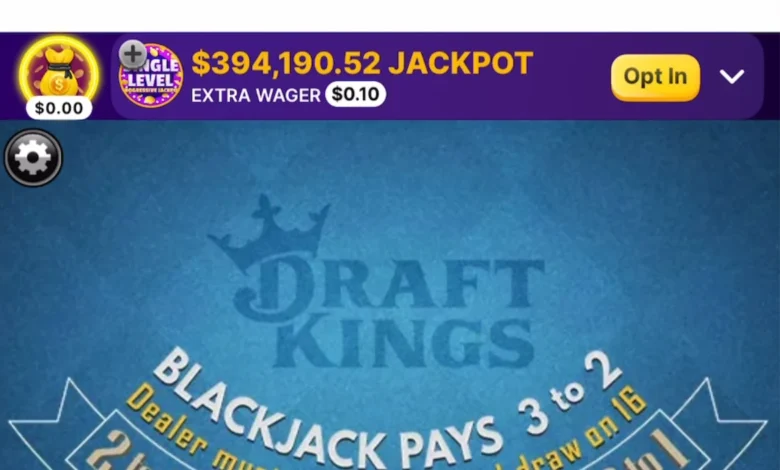
As the industry pushes to legalize "iGaming"—online casino games like slots and blackjack—in more states, the potential for harm increases. My experience in New Jersey, where iGaming is legal, showed how easily a sports bettor can be funneled into high-frequency casino games. I was served "sports-themed" blackjack games while betting on the NBA, blurring the line between fan engagement and pure gambling.
While the companies maintain that their systems are effective, the current model places an unfair burden on the consumer. Critics argue that until regulators mandate "opt-out" rather than "opt-in" protections—such as default deposit limits and a mandatory cooling-off period for users who hit specific loss thresholds—the system will continue to prioritize shareholder growth over public health.

The Conclusion of the Experiment
By mid-June, my experiment reached a surreal conclusion when the New York Knicks secured a championship. My own betting account, bolstered by a $10,000 wager on the outcome, turned a profit. For a moment, the narrative of the "losing gambler" was interrupted by a stroke of statistical luck. Yet, as my advisors—including recovering addicts and policy experts—noted, this win only deepened the danger. It provided a false sense of validation that encouraged me to keep playing.
In the final week of my study, I lost over $10,000, ultimately concluding that the system is designed to absorb and profit from the user’s inability to stop. When I asked my VIP rep if he could provide a match for a hypothetical $25,000 deposit, he did not inquire about my financial health or mention responsible gaming; he simply offered to "see what is available to add in."

This response encapsulates the central contradiction of the modern sports betting era: a business model that relies on the very volatility it claims to help its users manage. As long as the financial success of the platform is tied to the volume of wagers, the "guardrails" will remain, by necessity, secondary to the goal of keeping the user in the game.