The High Cost of the Dominican Dream: How Exploitation and Predatory Lending Have Hollowed Out the Future of Major League Baseball Prospects

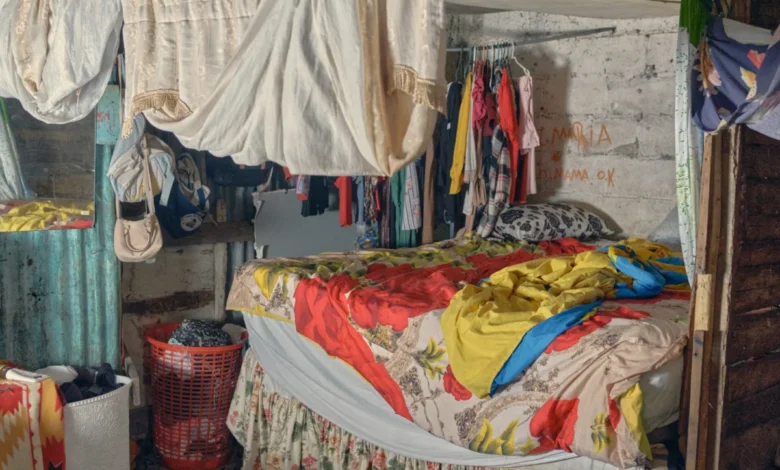
On a late evening in 2021, inside a modern, pristine baseball complex in Santo Domingo, 14-year-old outfielder Belfi Rivera sat before a computer screen, physically present but mentally overwhelmed. Flanked by his longtime trainer and surrogate guardian, John Carmona, the teenager was on a video call with executives from the Arizona Diamondbacks. While the meeting was framed as a celebration of his future, the reality was far more calculated: the team had agreed to a $1.8 million signing bonus, contingent on the boy reaching his 16th birthday. This handshake agreement, known as a preacuerdo, was negotiated entirely behind closed doors, bypassing official Major League Baseball regulations that strictly prohibit signing prospects before they turn 16. For Rivera, a boy who grew up in a shanty in Pedro Brand where meals were often little more than watered-down cornmeal, this sum promised an escape from generational poverty. However, the deal would eventually become a vehicle for his financial ruin.

The case of Belfi Rivera is not an anomaly; it is a symptom of a deeply entrenched, systemic crisis in the Dominican Republic. For four decades, the nation has served as the primary pipeline for Major League Baseball, supplying roughly 10% of all active big-league players. With a population roughly equivalent to that of Ohio, the country functions as a massive, high-stakes industrial factory for talent. Yet, beneath the veneer of burgeoning signing bonuses and the rise of superstars like Juan Soto and Vladimir Guerrero Jr., a shadow economy has flourished. This industry, fueled by trainers known as buscones and high-interest moneylenders called prestamistas, siphons hundreds of millions of dollars from the very players it claims to develop.

A Chronology of Financial Erosion
The financial exploitation of Rivera followed a well-documented trajectory. After the promise of his $1.8 million bonus was established, he became a target for Santo Caraballo, one of the most prolific and influential moneylenders in the Dominican baseball circuit. Caraballo, who has frequently leveraged his close personal association with Hall of Famer David “Big Papi” Ortiz to gain the trust of desperate families, moved quickly.

In 2022 and 2023, Rivera’s parents, Eduardo Rivera and Rita Muñoz, were persuaded to take out high-interest loans against their son’s future earnings. They sought to repair their leaking, tin-roofed home and pay off debts, but the loans—often provided without clear documentation or transparent terms—quickly spiraled. By the time Rivera officially signed his contract in January 2024, the promised $1.8 million was no longer his to command. A 35% commission went to his trainer, John Carmona, and hundreds of thousands more were absorbed by Caraballo as repayment for loans and exorbitant interest, which reached effective annual rates as high as 150%.

When the first installment of his bonus arrived, Rivera left the bank with nothing. Despite having theoretically secured a life-changing fortune, the family found themselves in a cycle of debt, with the parents eventually opening a low-margin food stall to survive as the promised dividends from Caraballo’s "investments" never materialized.

The Anatomy of an Unregulated Market
The current landscape of Dominican baseball is defined by a lack of oversight. While MLB has long been aware of the prevalence of preacuerdos, it has failed to implement effective deterrents. The league’s own data reveals that from 2012 to early 2026, it signed over 12,700 international rookies, with half hailing from the Dominican Republic. The total international spending for this period topped $1 billion, yet analysts estimate that as much as $500 million of that total was siphoned off by predatory third parties before it ever reached the players or their families.

In the United States, professional baseball is governed by a strict draft system where signing bonuses are tied to draft slots and agent commissions are capped at roughly 5%. In the Dominican Republic, it remains a "Wild West" environment. Because the league has refused to mandate an international draft—a move largely blocked by the Major League Baseball Players Association (MLBPA)—the power remains with the trainers and the lenders who control the access to these young athletes.

Institutional Inaction and the Role of Influencers
The inaction from both the league and the players union has created a vacuum filled by individuals like Santo Caraballo. His influence is not merely commercial; it is political and social. His partnership with David Ortiz—documented in social media posts and corporate records—provided him with a level of credibility that made it nearly impossible for struggling families to say no to his terms.

Ortiz has maintained that his involvement in the business was limited to financing trainers and that he was unaware of Caraballo’s predatory practices toward parents. In a statement provided through legal counsel, Ortiz noted that he began distancing himself from Caraballo once he noticed inappropriate conduct. However, the evidence of his previous endorsements, including photos of the two in matching apparel and joint business ventures, suggests that the partnership was foundational to Caraballo’s rise.

Furthermore, when the league and the union approached a potential agreement for an international draft during the 2022 lockout, it was an intervention from Ortiz—who circulated a "red alert" message to Dominican players—that helped torpedo the reform. By framing the draft as a threat to the nation’s cultural identity and economic stability, Ortiz and other influential figures effectively preserved the current, flawed system.

Broader Implications: A Generation at Risk
The long-term impact of this system is a hollowed-out middle class of former prospects. Thousands of boys leave school as early as age 10 to train full-time at academies, sacrificing their education for a less than 10% chance of making the major leagues. Those who fail to make the cut are left with no diploma, no savings, and often, significant debt owed to the same lenders who facilitated their entry into the sport.

Legal experts and human rights advocates have long compared the Dominican pipeline to a form of human trafficking. The "boatload mentality" adopted by teams—where they sign dozens of players for small bonuses in the hope that one will eventually succeed—has created a Darwinian environment where the failures are essentially subsidized by the future earnings of the rare success stories like Rivera.

The Path Forward: Reform or Status Quo?
As of 2025, Belfi Rivera remains in the Dominican Summer League, struggling to maintain his focus while carrying the weight of his family’s financial distress and his own mounting debt. He is no longer considered a top-tier prospect, and his path to the United States remains uncertain. His story highlights a fundamental failure in the oversight of international professional sports.

Major League Baseball has expressed that it is "long past time to reform" the system, yet for the thousands of families currently caught in the web of preacuerdos and high-interest loans, those words offer little comfort. Without a fundamental restructuring—potentially including an international draft that standardizes the path to the pros and eliminates the reliance on unofficial agents—the system will continue to prioritize the volume of talent over the well-being of the human beings behind the jerseys.

For the Rivera family, the "Dominican Dream" has become a cautionary tale of how institutional neglect can transform a young athlete’s greatest opportunity into his most profound vulnerability. As long as the current incentive structures remain, the cycle of exploitation will continue to turn, fueled by the hopes of families who are promised a fortune but are left with nothing more than the memory of what might have been.