The Life and Stolen Years of Fred Steese A Story of Wrongful Conviction and the Fight for Redemption

The death of Fred Steese this past August at the age of 62 marks the quiet end to a saga that exposed profound fractures within the American criminal justice system. Steese, who spent over two decades behind bars for a murder he did not commit, died of stage 4 cancer just 13 years after his release from prison. His passing serves as a somber coda to a life defined by systemic failure, a controversial legal mechanism that prioritized finality over truth, and a resilient, if ultimately truncated, quest for autonomy.
Steese’s journey through the legal system began in 1995, following the murder of Gerard Soules, a former trapeze artist and entertainer who operated a dancing poodle act in Las Vegas. Despite substantial evidence suggesting Steese was hundreds of miles away from the crime scene at the time of the incident, he was convicted and sentenced to life in prison. For 21 years, Steese remained incarcerated, his pleas for exoneration met with bureaucratic inertia and prosecutorial resistance.
A Chronology of Injustice
The timeline of Steese’s ordeal reflects a systemic reluctance to acknowledge error. In 1995, the initial investigation led to his arrest and subsequent conviction for the killing of Soules. Despite the presence of alibi evidence that should have precluded a conviction, the state proceeded to secure a guilty verdict.
It was not until 2012, after years of advocacy and the emergence of new legal scrutiny, that a judge finally declared Steese "factually innocent." However, this victory was short-lived. Rather than clearing his name and initiating a path toward compensation and restoration, the Las Vegas district attorney’s office challenged the ruling. Prosecutors insisted that no error had occurred and threatened a retrial, effectively forcing Steese into a corner.
Under the threat of returning to prison to face a second trial for a crime he did not commit, Steese was presented with an "Alford plea." This legal mechanism, stemming from the 1970 Supreme Court case North Carolina v. Alford, allows a defendant to maintain their innocence while acknowledging that the prosecution possesses enough evidence to potentially secure a conviction. By accepting this deal, Steese secured his immediate release but left a tainted legal record that would haunt his transition back to civilian life.
The Mechanism of the Alford Plea
The use of the Alford plea in cases of potential innocence has become a subject of intense debate among legal scholars and civil rights advocates. Critics argue that the plea is often used as a tool by district attorney offices to avoid admitting prosecutorial misconduct or to prevent the state from being held liable for damages following a wrongful conviction.

By forcing exonerated individuals to accept a guilty plea to walk free, the system effectively closes the door on the possibility of a clean slate. For Steese, the choice was between the uncertainty of an unpredictable trial—which could have resulted in the loss of his remaining life—and the moral compromise of an Alford plea. The prevalence of such pleas in innocence cases remains a significant concern, as it allows agencies to circumvent the accountability mechanisms intended to protect the wrongfully accused.
Economic and Personal Fallout
Following his release in 2012, Steese struggled to adapt to a world that had moved on without him. Having spent the better part of his adult life in the rigid, dehumanizing environment of a prison, he faced significant hurdles in securing stable employment and housing. His transition was further complicated by the stigma of a criminal record, which, despite the Alford plea, continued to label him a convicted murderer.
It was not until 2017, through the tireless work of pro bono counsel and heightened public interest, that Steese received a full and unconditional pardon from the state of Nevada. This pardon was a rare instance of institutional acknowledgement. Following the pardon, the state reached a settlement, providing Steese with $1.4 million in compensation for his wrongful imprisonment.
However, the transition from institutional life to financial independence proved difficult. Without the benefit of financial literacy training or structured support systems often required for those who have spent decades in the state’s care, Steese faced challenges in managing his settlement. He pursued his lifelong dream of becoming a long-haul trucker, purchasing a big rig and vehicles that represented the freedom he had been denied for 21 years. Yet, he also became a target for fraud and struggled with substance use, issues that often stem from the trauma of prolonged, unjust incarceration.
Systemic Implications and Reflections
The life of Fred Steese underscores a broader, uncomfortable truth about the American justice system: the burden of proving innocence is often placed entirely on the individual, while the institutions responsible for the error face minimal, if any, consequences.
Research from the National Registry of Exonerations suggests that thousands of people have been wrongfully convicted in the United States, with many spending decades in prison before being cleared. The factors contributing to these errors—prosecutorial misconduct, flawed eyewitness testimony, and the suppression of exculpatory evidence—remain persistent threats to the integrity of the judicial process.
For those like Steese, the "remedy" of a pardon or compensation often arrives too late to restore the years stolen. The fact that Steese spent more time fighting for his name than he spent living as a free man after his exoneration is a stinging indictment of the speed at which justice travels.

A Legacy of Resilience
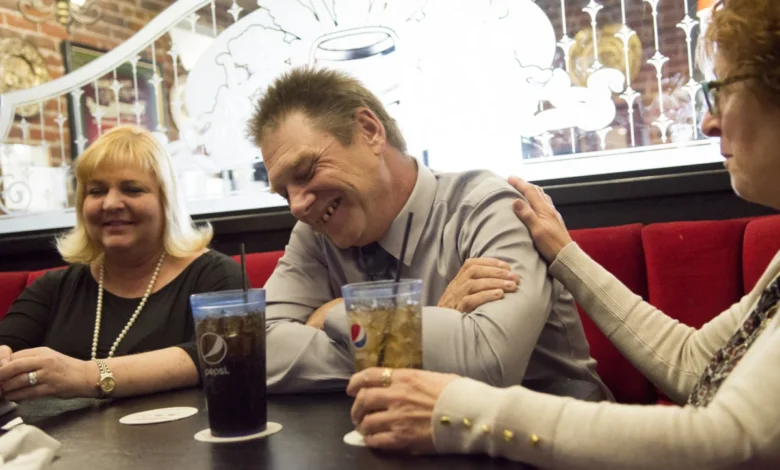
In the final years of his life, those who knew Steese described a man defined by a remarkable capacity for forgiveness and a cheerful disposition that defied his circumstances. His sister, Lynn Myers, noted that he remained a person who would offer his last possession to someone in need, despite having so little himself.
Federal public defender Ryan Norwood, who was instrumental in the final stages of proving Steese’s innocence, reflected on the brevity of Steese’s freedom. "He got to live his dream of being a truck driver and to live his life on his own terms for better or worse," Norwood observed.
Steese’s death from cancer in August serves as a reminder that the harm of a wrongful conviction does not end upon release. The physical, emotional, and social toll of 21 years in prison creates a deficit that money cannot fully address. While his story concluded with a rare formal pardon and a measure of financial restoration, the overarching narrative remains one of profound loss.
As his family prepares to lay his ashes to rest, the legal community continues to grapple with the issues his case brought to light. The use of Alford pleas to avoid accountability, the difficulty of post-release reintegration for the long-term wrongfully incarcerated, and the glacial pace of the appellate process are all areas requiring urgent reform. Fred Steese’s life was an exercise in endurance; his death is an invitation to ensure that no one else is forced to sacrifice their entire life to the machinery of an imperfect justice system.
The story of the man who dreamt of the open road, and who spent his final years finally claiming his own path, stands as a testament to the human spirit’s ability to survive even the most crushing weight of systemic injustice. While the state of Nevada eventually acknowledged his innocence, the true measure of his life was found in the small, hard-won moments of autonomy he claimed before his time ran out.