Extreme heatwaves are breaching human survival limits more frequently than previously recognized

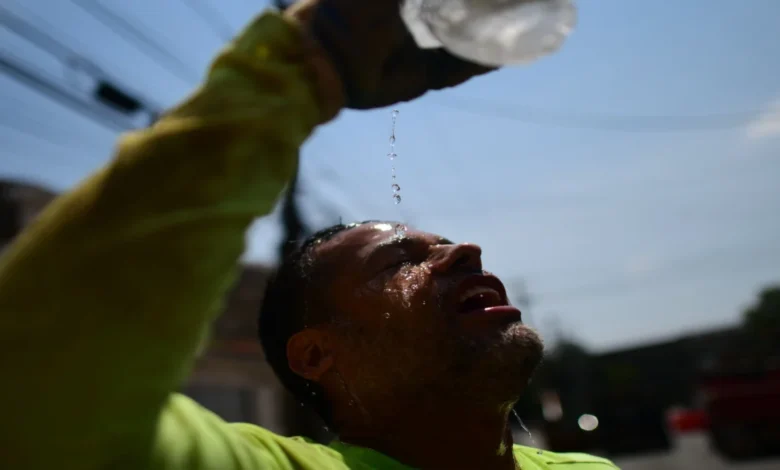
New scientific research indicates that extreme heat is already creating nonsurvivable conditions for human populations, leading to thousands of fatalities in recent years and suggesting that the human body is significantly more susceptible to rising global temperatures than earlier models predicted. The study, published in the journal Nature Communications, re-examined six of the most intense heatwaves recorded between 2003 and 2024. By integrating temperature data with humidity levels and the physiological limits of human cooling mechanisms, researchers determined that all six events reached thresholds that were potentially lethal, particularly for older demographics.
For years, the scientific community operated under the assumption that the absolute limit for human survival was a six-hour exposure to a "wet-bulb" temperature of 35°C (95°F). A wet-bulb temperature is a metric that combines dry air temperature with humidity to measure the potential for evaporative cooling. At a 35°C wet-bulb reading, the air is so saturated with moisture that sweat can no longer evaporate from the skin, preventing the body from shedding heat and leading to a fatal rise in core temperature. While this specific 35°C threshold has rarely been recorded on Earth, the new research suggests that the actual "danger zone" for human life begins at much lower levels when biological factors and age are taken into account.
Redefining the Threshold of Human Survivability
The study, led by Sarah Perkins-Kirkpatrick, a climate scientist at the Australian National University and a global expert on extreme heat, utilized a sophisticated new model of human survivability. Unlike previous metrics that relied heavily on ambient temperature alone, this model accounts for how the body functions and maintains homeostasis under stress. It specifically considers the diminishing ability of the heart and sweat glands to regulate temperature as people age.
The researchers applied this model to six major heat events: the 2003 heatwave in Seville, Spain; the 2015 heatwave in Larkana, Pakistan; the 2019 event in Mount Isa, Australia; the 2023 record-breaking heat in Phoenix, United States; and the 2024 heatwaves in Bangkok, Thailand, and Mecca, Saudi Arabia.
The findings were stark. Despite none of these events strictly reaching the theoretical 35°C wet-bulb limit, all six produced conditions that were nonsurvivable for periods of time. Specifically, for individuals over the age of 65 who could not access climate-controlled environments or shade, these heatwaves were biologically insurmountable. Even more concerning was the finding that in Larkana and Phoenix, conditions became so extreme that they were nonsurvivable for older adults even if they remained in the shade. In the case of the Larkana heatwave, the intensity was such that even healthy individuals between the ages of 18 and 35 would have faced lethal heatstroke if exposed to full sun for six hours.
A Chronology of Lethal Heat Events
The timeline of these six events illustrates a trend of increasing frequency and intensity in global heat extremes.
- Seville, Spain (2003): Part of a broader European heatwave that resulted in an estimated 70,000 deaths across the continent. The new model confirms that the conditions in Seville crossed the survivability threshold for the elderly, explaining the high mortality rates among the city’s senior population during that summer.
- Larkana, Pakistan (2015): This event stands out as one of the most physiologically demanding on record. Temperatures in the Sindh province soared to 49°C (120°F). The combination of extreme dry heat and periods of high humidity created an environment where even the young and healthy were at risk of organ failure within hours of exposure.
- Mount Isa, Australia (2019): Located in the arid interior of Queensland, Mount Isa experienced a prolonged period where the body’s ability to recover overnight was compromised. The study highlights that "nonsurvivable" does not always mean immediate death, but rather a state where the body can no longer prevent a rise in core temperature, leading to heat exhaustion and eventual heatstroke.
- Phoenix, United States (2023): Phoenix saw a record-breaking 31 consecutive days with temperatures at or above 110°F (43.3°C). The research found that the persistent "heat island effect" in the city, combined with rising humidity, created periods that were lethal for older residents, even those attempting to stay out of direct sunlight.
- Bangkok, Thailand (2024): In early 2024, Bangkok and much of Southeast Asia faced a "historic" heatwave. The high humidity of the region meant that even moderate temperatures became deadly because the "real feel" or heat index surpassed the body’s ability to sweat effectively.
- Mecca, Saudi Arabia (2024): During the Hajj pilgrimage, temperatures exceeded 50°C (122°F). Over 1,300 pilgrims died, many due to heat-related illnesses. The study confirms that the environmental conditions during the pilgrimage were beyond the physiological limits of human endurance for sustained periods.
The Biological Mechanics of Heatstroke
To understand why these findings are so significant, it is necessary to examine how the human body responds to thermal stress. The primary mechanism for cooling is the evaporation of sweat. When the ambient temperature exceeds the body’s core temperature (typically 37°C or 98.6°F), the body can no longer lose heat via radiation or conduction. At this point, it relies entirely on sweating.
However, the efficiency of sweating is dictated by the humidity of the surrounding air. In high-humidity environments, the air is already saturated with water vapor, meaning sweat remains on the skin rather than evaporating. When evaporation fails, the core temperature rises. Once the core temperature reaches approximately 40°C (104°F), the body enters a state of heatstroke. This triggers a systemic inflammatory response, leading to the breakdown of proteins, organ failure (particularly the kidneys and heart), and eventually death.
Ollie Jay, a co-author of the study and director of the University of Sydney’s Heat and Health Research Centre, emphasized that age is a critical factor. As humans age, their sweat glands become less productive, and their cardiovascular systems become less efficient at pumping blood to the skin for cooling. For those over 75, the ability to tolerate even moderate heat combined with humidity is drastically reduced compared to younger adults.
Data Analysis and Underreporting
One of the most significant implications of the study is the suggestion that heat-related deaths are "undoubtedly and seriously underreported." In many developing nations and densely populated urban areas, deaths during heatwaves are often attributed to underlying conditions such as heart disease or respiratory failure rather than the heat itself.
Perkins-Kirkpatrick and her colleagues argue that by focusing on the physiological limits of the body rather than just ambient temperature, a more accurate picture of the toll of climate change emerges. The researchers estimate that hundreds of millions of people are already living in regions where these "nonsurvivable" thresholds are being crossed.
Supporting data from the World Health Organization (WHO) indicates that heat stress is the leading cause of weather-related death globally. However, the Nature Communications study suggests that current mortality statistics may only be capturing the tip of the iceberg, as the biological tipping points are being reached more often than official records reflect.
Expert Reactions and Global Implications
The scientific community has reacted with concern to the study’s findings. Steve Sherwood, a climate scientist at the University of New South Wales who pioneered early research into human temperature limits, noted that this new work provides a more accurate, albeit grimmer, map of human vulnerability.
"The fact we are so close to physiological limits means that mitigating higher temperatures is essential to humans still being able to live and thrive in the hottest and most humid places," Sherwood stated. He highlighted that regions including the tropics, India, the Middle East, and northern Australia are at the greatest risk. "Much of the world’s population lives in these places. Global warming will really hurt if it goes too much further just due to the extreme temperatures and humidity."
The study’s lead author, Perkins-Kirkpatrick, expressed personal shock at the results. "My first thought was, ‘Oh shit!’ I really didn’t expect to see that, especially when you zoom in to individual cities," she said. She warned that if these conditions are occurring at current levels of global warming, a future that is two or three degrees warmer could render vast swaths of the planet seasonally uninhabitable for humans without constant, high-energy cooling infrastructure.
Analysis of Future Challenges
The implications of this research extend beyond public health into the realms of urban planning, economics, and international migration. As "nonsurvivable" conditions become more frequent, cities will need to radically rethink their infrastructure. This includes the expansion of "cool roofs," increased urban canopy cover to mitigate the heat island effect, and the establishment of 24-hour cooling centers.
Furthermore, there is a clear socio-economic divide in heat vulnerability. Wealthier populations can often retreat to air-conditioned environments, while outdoor laborers, the homeless, and those in developing nations remain exposed. The Larkana and Phoenix cases demonstrate that shade is not a universal solution; when the combination of heat and humidity reaches a certain point, only active mechanical cooling can prevent the core body temperature from rising to lethal levels.
As global temperatures continue to rise, the "wet-bulb" limit is no longer a distant theoretical concern but a looming reality. The study serves as a critical reminder that climate change is not merely an environmental issue but a fundamental challenge to human biological survival. The findings underscore the urgency of global efforts to limit warming to 1.5°C, as every fraction of a degree increases the duration and frequency of periods where the air itself becomes a threat to life.