Representative Jimmy Gomez Announces Resignation Following Damning House Ethics Committee Report on Sexual Misconduct

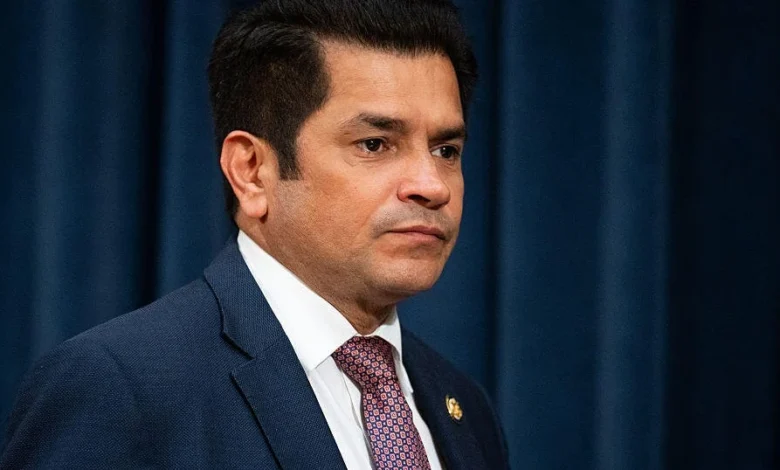
Representative Jimmy Gomez announced on Monday that he will resign from Congress effective December 1, a decision that follows the release of a scathing report by the House Ethics Committee detailing allegations of sexual misconduct. The report, which contains graphic details, concluded there is "substantial evidence" that the California Democrat engaged in nonconsensual sexual contact and unwanted advances toward a House staffer during his tenure.
The announcement comes at a period of transition for the lawmaker, who had already been slated to leave office in early January after an unsuccessful reelection bid. While Gomez stated in a formal release that he harbors "strong disagreements" with the committee’s findings, he acknowledged that he sees no alternative but to vacate his seat early to allow his staff time to finalize critical constituent casework before his official departure.
Chronology of the Investigation and Allegations
The scrutiny surrounding Representative Gomez began in August 2026, when the bipartisan House Ethics Committee officially launched an investigation into his conduct. The probe focused on two distinct incidents involving a former female congressional staffer, identified in the report as "Witness 1."
According to the committee’s findings, the first incident took place in February 2024. The staffer recounted meeting Gomez at a birthday celebration hosted by another member of Congress at a venue near Capitol Hill. The group later moved to a second location in Chinatown. During this outing, the witness alleged that Gomez initiated unwanted physical contact, eventually penetrating her with his fingers. The witness described the experience as deeply traumatic, noting that she retreated to a restroom to weep.
Later that same evening, the witness alleged that Gomez cornered her against a wall outside the establishment and kissed her. She testified that her compliance in that moment was born of a desire to de-escalate the situation and return home safely. Gomez initially characterized the evening as involving consensual kissing but later admitted to the committee that he had placed his hand inside the witness’s clothing. He maintained that he had asked for consent, a claim the committee rejected as inconsistent with the evidence.
The second incident occurred in July 2024. The staffer testified that she had been invited to Gomez’s congressional office via text message. Upon attempting to depart, she alleged that the congressman grabbed her, pressed his body against hers, and attempted to initiate a kiss. The witness stated she verbally refused and physically struggled to push him away before fleeing the office. Gomez’s account of this encounter differed significantly; he claimed he had simply offered a standard farewell, including a hug and a kiss on the cheek.
Findings of the House Ethics Committee
The House Ethics Committee report serves as a formal condemnation of the congressman’s behavior. The panel concluded that Gomez’s actions were "aggressive and inappropriate" and stated that his behavior "could constitute criminal misdemeanor sexual abuse."
Beyond the specific incidents, the committee noted that Gomez’s conduct suggested an awareness of wrongdoing. The report emphasized that the congressman’s actions caused the witness "significant and ongoing distress," which ultimately contributed to her decision to resign from her position as a House staffer.
Because Gomez had already lost his reelection campaign and his term was nearing its natural conclusion, the committee did not recommend formal sanctions such as censure or expulsion. However, the committee took the unusual step of publishing the full report to ensure the legislative body remained informed of his conduct, allowing the House to determine if any further judgment is necessary despite his impending departure.
Reactions from Legal Counsel and Leadership
The legal representatives for the witness, Lisa J. Banks and Sarah E. Nesbitt, issued a pointed statement following the report’s release. They asserted that the findings validate their client’s account, confirming that Gomez abused his position of authority. "Representative Gomez abused the power given to him by the voters when he violated this young woman, effectively destroying her dreams of a career in public service," the attorneys stated. They added that the congressman appeared to operate under the assumption that his status as a federal official rendered him "untouchable," and they lauded the committee for taking a meaningful step toward addressing that culture.
Democratic leadership in the House also responded swiftly to the report. Minority Leader Hakeem Jeffries, Minority Whip Katherine Clark, and Democratic Caucus Chairman Pete Aguilar released a joint statement describing the findings as "serious and deeply troubling." The leadership underscored that Gomez’s resignation was the only appropriate outcome, reinforcing that the party remains committed to setting a higher standard for conduct within the halls of Congress.
Context and Broader Implications for Congress
This case arrives during a heightened period of focus on the internal culture of the U.S. Capitol. For years, the Office of Congressional Ethics (OCE) and the House Ethics Committee have faced pressure to modernize how they handle complaints of sexual harassment and misconduct. The passage of the Congressional Accountability Act Reform Act in 2018 was intended to streamline the reporting process for victims, yet critics argue that the system still heavily favors members of Congress over staff.
The fact that the committee utilized its subpoena power to interview witnesses and gather forensic evidence—such as communication logs and security access records—indicates a shift toward more robust investigative tactics. However, the resignation of a member just weeks before the end of their term raises questions about the efficacy of current accountability mechanisms. When a member resigns, they effectively bypass the potential for a vote on expulsion, which would permanently bar them from holding future federal office.
The impact of this report extends beyond the immediate scandal. It reignites the debate regarding the power dynamics inherent in congressional offices, where staffers are often young, politically ambitious, and financially dependent on the members they serve. The committee’s decision to make the report public serves as a warning to other lawmakers that even in the final days of a career, misconduct will be documented and exposed.
As Gomez prepares to step down on December 1, his case joins a series of ethics scandals that have marred the reputation of the legislative branch in recent years. Political analysts suggest that the bipartisan nature of the committee’s condemnation signals a unified desire to distance the institution from the behavior detailed in the report. For the staffer involved, the committee’s findings represent a final, painful acknowledgment of the abuse she suffered, while for the House, it remains a grim reminder of the work required to ensure a safe and respectful work environment for all employees.
The investigation into Gomez was one of the most high-profile ethics cases of the 2026 session. While the legislative fallout will conclude with his resignation, the legal and professional repercussions for his former staffer and the broader implications for congressional reform will likely persist long after his departure. As the House moves forward, the pressure to implement more stringent oversight and preventative measures against workplace harassment is expected to remain a top priority for leadership in the coming term.