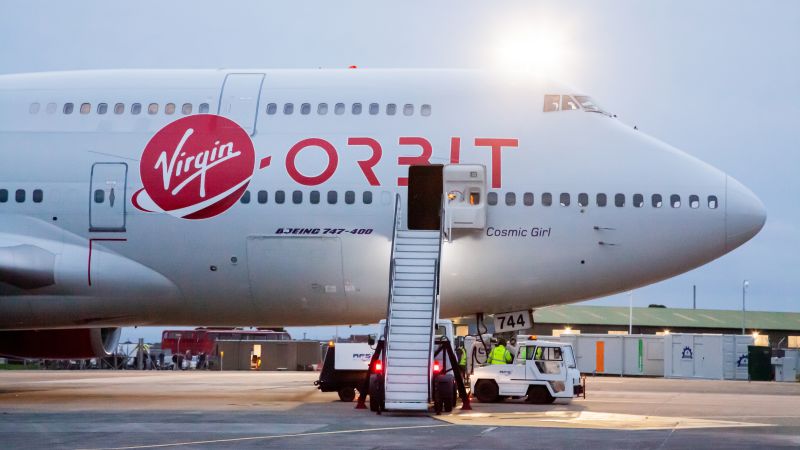
The aircraft in question, affectionately dubbed "Cosmic Girl," is a former Virgin Atlantic passenger jet that has been repurposed into a sophisticated mobile launch platform. Operated by Virgin Orbit, the vessel is currently undergoing final trial flights from Newquay Airport—a facility that, while serving as the UK’s 29th largest airport, is rapidly transforming into a pivotal hub for the commercial space race. By utilizing a horizontal launch mechanism, Virgin Orbit aims to place seven satellites into low Earth orbit (LEO), a feat that signifies a historic milestone for British aerospace engineering and international space policy.
The Mechanics of a Horizontal Launch
Unlike the traditional vertical launches associated with massive infrastructure projects like those seen at Cape Canaveral, the horizontal launch model offers distinct operational advantages. The process involves attaching a rocket—the "LauncherOne"—beneath the left wing of the Boeing 747. Once the aircraft reaches an altitude of approximately 34,000 feet, the rocket is released in mid-air. After a brief freefall, the rocket’s engines ignite, propelling it into the vacuum of space at speeds exceeding 17,000 miles per hour.
This methodology provides a "broader range of orbits" than traditional ground-launched systems, according to Virgin Orbit. By decoupling the launch from a fixed terrestrial site, the company can essentially fly its launch pad to optimal coordinates, minimizing the fuel required for orbit insertion and maximizing the flexibility of the mission profile. This adaptability is particularly valuable for small-satellite operators who require precise orbital positioning without the prohibitive costs associated with large-scale rocket deployments.
A Chronology of the Mission
The journey toward this historic launch has been marked by meticulous planning and intercontinental coordination. The timeline of the mission, dubbed "Start Me Up," traces back to intensive development cycles in California.
- October 2: LauncherOne successfully completed its final full launch rehearsal in Long Beach, California, clearing the path for its deployment to the United Kingdom.
- October 11: Cosmic Girl arrived in Cornwall, signaling the beginning of the final integration phase at Spaceport Cornwall.
- October 14: The aircraft performed a nearly three-hour test flight over the Cornish landscape. These low-altitude maneuvers provided flight crews with vital data regarding the aerodynamics of the integrated system and allowed ground control to test communication protocols.
- November 2022: The anticipated window for the official launch, during which the payload will be deployed into its designated orbit.
For the residents of Newquay, the presence of the aircraft has been a source of local pride. Marc Andrew, a local resident, described the experience of watching the test flights as a "nice bit of history" that underscores the region’s newfound importance. Such sentiment reflects a broader trend in UK regional development, where infrastructure investment in spaceports is being leveraged to boost local economies and technical expertise.
The Strategic Importance of UK Space Capabilities
The United Kingdom has long maintained a robust satellite manufacturing sector, but it has historically relied on international partners—such as the United States, Kazakhstan, or French Guiana—to transport its hardware into space. The operationalization of Spaceport Cornwall is intended to rectify this dependency, granting the UK sovereign launch capabilities.
According to Ian Annett, deputy CEO of the UK Space Agency, this event is not merely a domestic achievement but a European first. "It’ll be Europe’s first satellite launch," Annett noted, highlighting the significance of the project within the broader European Space Agency (ESA) framework. By securing a domestic launch path, the UK expects to streamline the process for its burgeoning small-satellite industry, which is currently focused on applications ranging from climate monitoring and telecommunications to maritime surveillance and national security.
Expert Perspectives and Official Statements
The sentiment among stakeholders is one of measured anticipation. Virgin Orbit’s chief pilot, Matthew Stannard, who is tasked with the delicate responsibility of maneuvering the 747 during the launch sequence, emphasized the emotional weight of the mission. "It feels amazing to bring Cosmic Girl home to the UK. We are weeks away now from the first UK launch at Spaceport Cornwall, so it’s all very real," Stannard stated.
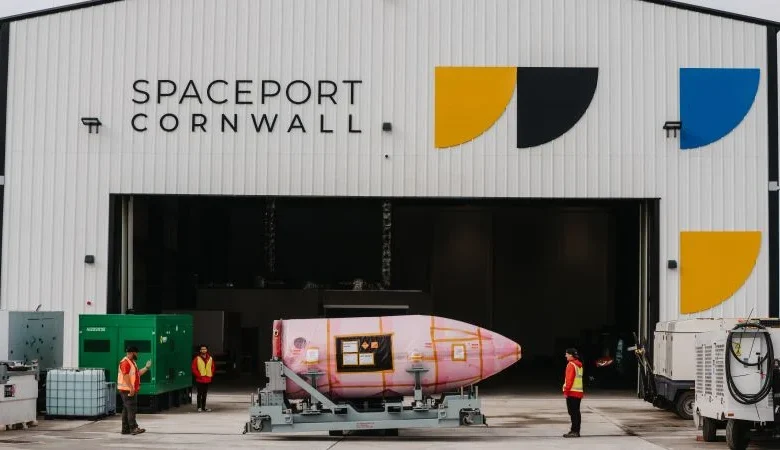
Melissa Thorpe, the head of Spaceport Cornwall, noted that the arrival of the hardware marked a transition from conceptual planning to tangible reality. "Seeing the infrastructure in place makes our launch ambitions a reality," Thorpe said. The site, which shares the airport’s 1.7-mile runway, has been retrofitted with specialized logistics facilities and regulatory clearance to accommodate the high-stakes requirements of orbital rocket launches.

Global Implications and Future Outlook
The success of the Cornwall mission could set a precedent for a global network of horizontal launch sites. Virgin Orbit has already expressed ambitions to expand its reach, with potential plans to conduct similar operations in Australia, Brazil, Japan, Poland, and the Republic of Korea. This "distributed" model of space access aims to democratize orbit, allowing nations with limited geography or infrastructure to participate in the burgeoning space economy.
The financial implications of this shift are significant. The global space economy is projected to reach $1 trillion by 2040, according to various industry analysts. By establishing itself as a launch hub, the UK is positioning its aerospace sector to capture a larger share of this market, fostering a high-skill workforce and stimulating innovation in propulsion, satellite design, and data analysis.
Furthermore, the environmental impact of these launches is under intense scrutiny. Unlike traditional rockets that require massive quantities of propellants for liftoff, the air-launch system utilizes the initial lift of the 747, potentially reducing the overall carbon footprint of the mission. While the aviation sector remains a significant emitter, the efficiency of the horizontal launch platform is a key selling point for a UK government increasingly focused on "Green Space" initiatives.
Conclusion
As the countdown to the November launch continues, the atmosphere in Cornwall remains charged with expectation. The integration of cutting-edge aerospace technology into the rural backdrop of the English coast serves as a powerful metaphor for the rapid evolution of the 21st-century space industry. Whether this mission succeeds or encounters the typical hurdles associated with maiden orbital attempts, the "Start Me Up" mission has already achieved a secondary goal: it has brought the reality of space exploration to the doorstep of the British public, cementing the UK’s commitment to a future among the stars.
The project represents a convergence of legacy aviation engineering—the iconic Boeing 747—and the future of satellite technology. As the world watches, the small town of Newquay will serve as the launchpad for a new chapter in British history, proving that even from the far southwestern tip of the country, the reach of human ingenuity is truly limitless.