Chelsea Handler, Leslie Jones and John Leguizamo among guest hosts to step in for Trevor Noah on ‘The Daily Show’

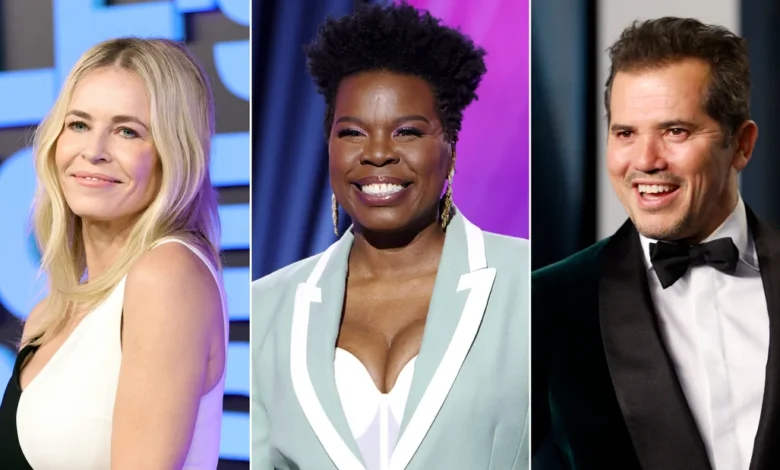
As Comedy Central’s acclaimed late-night institution prepares to turn a page, the network has unveiled an ambitious, star-studded roster of guest hosts to steer the franchise into its next era. Following the departure of Trevor Noah, who redefined the political satire landscape over a tenure marked by global turbulence and shifting media paradigms, the network is banking on a diverse collective of comedy veterans to maintain the show’s cultural relevance. Beginning Tuesday, January 17, a rotating lineup of celebrated comedians, actors, and public figures—including Al Franken, Chelsea Handler, D.L. Hughley, Leslie Jones, John Leguizamo, Hasan Minhaj, Kal Penn, Sarah Silverman, Wanda Sykes, and Marlon Wayans—will take turns behind the iconic desk.
This transitional phase marks a pivotal moment for the long-running program, which has served as a cornerstone of American political comedy for nearly three decades. While Comedy Central has not yet clarified whether this rotating format is a permanent strategy or a transitional runway designed to vet candidates for a permanent successor, the announcement signals an intentional pivot toward collaborative curation. Furthermore, the network confirmed that the program’s core stable of correspondents and contributors will also step into the hosting spotlight, with additional details regarding their specific assignments forthcoming.
The Evolution of a Late-Night Institution
To understand the weight of this transition, one must examine the monumental footprint The Daily Show has left on the television landscape since its inception. Launched in 1996 with Craig Kilborn as host, the program underwent a seismic transformation when Jon Stewart took over in 1999. Under Stewart’s stewardship, the half-hour broadcast evolved from a standard pop-culture and news-parody vehicle into an indispensable cultural touchstone. Stewart’s biting critique of cable news media, his relentless interrogation of political figures, and his ability to synthesize complex geopolitical events through a comedic lens turned the show into a trusted news source for younger demographics.
When Stewart stepped down in 2015, the network faced the daunting task of finding a successor capable of matching his formidable journalistic and comedic instincts. Enter Trevor Noah, a relatively unknown South African stand-up comedian whose global perspective offered a fresh, international vantage point on American politics. Noah assumed the mantle in September 2015, just as the political climate was shifting toward one of the most polarizing eras in modern American history. Over the next seven years, Noah navigated the Trump administration, a global pandemic, racial justice protests, and a deeply fractured political landscape.
Noah’s approach contrasted sharply with Stewart’s righteous indignation; he brought a measured, cosmopolitan curiosity and a gift for sharp cultural observations. Under his watch, the show expanded its digital footprint significantly, generating millions of views across YouTube and social media platforms through segments like "Between the Scenes." However, late-night television as a medium has faced unprecedented economic and structural headwinds. Traditional viewership metrics have declined precipitously as audiences migrate to on-demand streaming and short-form digital content, placing immense pressure on legacy networks to adapt.
The Announcement and the Transition Timeline
The machinery of this high-stakes transition began to shift publicly in late September 2022, when Trevor Noah surprised both his studio audience and the television industry by announcing his departure during a taping. Speaking directly to the viewers, Noah expressed a deep sense of gratitude while explaining that he felt his time running the show had reached its natural conclusion. He reflected on the unique challenges of covering an eventful seven-year stretch, noting a desire to return to his roots in stand-up comedy and international touring.
"It’s been absolutely amazing. It’s something that I never expected," Noah told his audience at the time, expressing appreciation for the production crew, the writing staff, and the loyal viewing public. "I spent two years in my apartment [during the pandemic], not on tour, and when I got back out there, I realized there’s another part of my life that I want to experience."
Following the surprise announcement, Paramount Global executives initiated a deliberative planning process. The strategy culminated in the early December revelation of the guest host roster. By opting for a high-profile collective of rotating talent rather than immediately anointing a single permanent replacement, Comedy Central has chosen a collaborative runway. This model mirrors strategies deployed by other networks facing similar late-night departures, allowing the network to test audience engagement, media reaction, and internal chemistry while keeping the franchise in the cultural conversation.
The timeline leading up to the rollout of the guest hosts culminates with Noah’s final broadcast, scheduled for a Thursday night in mid-December. Following a brief hiatus over the traditional winter holiday break, the program will return with new episodes on January 17, anchored by the first wave of guest hosts.
A Closer Look at the Roster of Guest Hosts
The lineup assembled by Comedy Central represents a cross-section of veteran comedic talent, many of whom possess deep familiarity with political commentary, social satire, and live performance.
Al Franken brings a uniquely hybrid background to the desk, having transitioned from a legendary career as a writer and performer on Saturday Night Live to serving as a United States Senator from Minnesota, before returning to media and comedy. His insider perspective on the mechanics of Washington, D.C., offers a distinct lens for political satire.
Chelsea Handler, a pioneering voice in late-night television who previously hosted her own nightly talk show on E! and a critically acclaimed Netflix documentary series, brings a sharp, unfiltered comedic voice. Her penchant for direct confrontation and cultural commentary is expected to inject a distinct energy into the broadcast.
D.L. Hughley, an original member of the landmark The Original Kings of Comedy documentary and a seasoned radio and television host, offers decades of experience dissecting race, politics, and social dynamics in America through a fearless comedic prism.
Leslie Jones, whose explosive energy and magnetic stage presence captivated audiences during her tenure on Saturday Night Live and in blockbuster feature films, brings an unpredictable, high-octane dynamic that promises to disrupt traditional late-night formats.
John Leguizamo, a versatile multi-hyphenate artist renowned for his one-man Broadway shows, dramatic acting, and vocal advocacy for the Latino community, brings a theatrical and politically engaged sensibility to the hosting chair.
Hasan Minhaj is perhaps uniquely positioned among the guest hosts, having served as a prominent senior correspondent on The Daily Show under Noah before launching his Peabody Award-winning Netflix series Patriot Act with Hasan Minhaj. His deep institutional knowledge of the show combined with his investigative, data-driven style of comedy makes his upcoming stint one of the most anticipated.
Kal Penn balances a successful career in Hollywood—spanning franchises like Harold & Kumar—with genuine policy experience, having served as an associate director in the White House Office of Public Engagement during the Obama administration.
Sarah Silverman, a veteran stand-up comedian, actress, and political activist, has long used her platform to skewer political hypocrisy and social norms, making her a natural fit for the progressive-leaning comedic tradition of the franchise.
Wanda Sykes, a towering figure in American comedy who has received numerous accolades for her writing, stand-up specials, and acting roles, brings a commanding, deadpan authority that has made her one of the most respected voices in the industry.
Marlon Wayans, a member of the legendary Wayans family entertainment dynasty, brings decades of physical comedy, sketch-writing, and box-office success, ensuring a dynamic that leans heavily into pop culture and broad entertainment.
Corporate Strategy and Industry Implications
The decision by Paramount Media Networks—overseen by President and CEO Chris McCarthy—to utilize a multi-host model reflects a broader calculation regarding the economics and branding of late-night television in the digital age. The traditional five-nights-a-week, single-host format, popularized in the 20th century by Johnny Carson and sustained for decades, has faced intense financial pressures. Production costs remain high, while ad revenues shift increasingly toward streaming platforms and digital ecosystems.
By rotating high-profile guest hosts, Comedy Central can capture distinct demographic slices with each incoming personality. A week hosted by Hasan Minhaj may appeal heavily to younger, digitally native news consumers, while a week anchored by Al Franken or Wanda Sykes might engage older, core cable-television viewers. Furthermore, this approach functions as an extended screen test, allowing network executives to evaluate how different comedic styles resonate with audiences before committing to a permanent multi-year contract with a single individual.
Chris McCarthy emphasized the network’s forward-looking vision in a formal statement released alongside the announcement. "As we enter Trevor’s final week, we want to thank him for his many contributions," McCarthy said. "Trevor redefined the show, as did Jon Stewart before him, and as we look to the future, we are excited to reimagine it yet again with the help of this incredible list of talent and correspondents along with the immensely talented Daily Show team."
The inclusion of the show’s internal correspondents and contributors in the upcoming hosting rotation also highlights the network’s commitment to nurturing in-house talent. Over the years, correspondents have routinely proven themselves capable of carrying the broadcast during field pieces and guest segments, and giving them the anchor desk offers a seamless bridge between the Noah era and whatever structural iteration follows.
The Road Ahead for Political Satire
As The Daily Show prepares for its January relaunch, media analysts are watching closely to see how the experiment impacts the broader ecosystem of political humor. In an era where real-world political discourse often feels indistinguishable from satire, late-night comedy shows face a continuous challenge: finding absurdity in political landscapes that frequently push past the boundaries of conventional parody.
The rotating host model ensures that the program will not attempt to directly replicate Trevor Noah’s specific voice, nor try to recapture the exact lightning-in-a-bottle energy of the Jon Stewart years. Instead, Comedy Central is leaning into pluralism, offering a mosaic of perspectives from comedians of diverse backgrounds, generations, and comedic styles.
Whether this transitional phase will eventually consolidate into a permanent hosting appointment or evolve into a permanent rotating ensemble remains to be seen. For now, viewers tuning in to Comedy Central at 11:00 p.m. ET/PT—or streaming the following morning on Paramount+—will witness the unfolding of a calculated reinvention, one designed to preserve the legacy of a legendary franchise while adapting to the demands of a rapidly changing media landscape.