SpaceX Unveils Ambitious Financials and $28.5 Trillion Market Vision in Landmark S-1 Filing Ahead of Anticipated IPO

After operating for nearly a quarter of a century as a closely-held private entity, meticulously guarding its financial accounts, SpaceX dramatically pulled back the curtain on Wednesday afternoon, releasing a comprehensive 400-page S-1 filing with the US Securities and Exchange Commission. This pivotal document, a prerequisite for public trading, signals the company’s intent to launch an initial public offering (IPO) of its stock as early as June 12, marking a monumental shift for Elon Musk’s trailblazing aerospace and communications enterprise. The filing, while confirming much of what was anecdotally known about its expansive space operations, also disclosed a treasure trove of granular details about its increasingly diversified portfolio, which now spans critical sectors including advanced rocket launch services, human spaceflight, global satellite internet provision through Starlink, and, notably, a strategic foray into social media and artificial intelligence following its recent acquisition of xAI, another venture led by Musk.
The financial disclosures within the S-1 painted a picture of rapid growth coupled with significant strategic investments. SpaceX reported a robust revenue stream of $18.67 billion in 2025, a substantial increase from the $14.02 billion recorded in the preceding year. However, this impressive top-line growth was offset by a notable shift in profitability. After registering a modest profit in 2024, the company incurred a considerable loss of $4.94 billion in 2025. The filing explicitly attributed this substantial deficit primarily to intensified spending on artificial intelligence development, underscoring the company’s aggressive pivot into this burgeoning technological frontier.
The Evolution of a Space Titan: From Conception to Public Scrutiny
SpaceX’s journey from a nascent startup founded in 2002 with the audacious goal of making life multi-planetary to a multifaceted technology conglomerate on the cusp of a public listing is a testament to its disruptive vision and relentless execution. For over two decades, the company has operated under the shroud of privacy, a characteristic shared by many of Musk’s ventures in their early, capital-intensive phases. This private status allowed SpaceX to pursue long-term, high-risk endeavors—such as developing fully reusable rocket technology and constructing a global satellite internet constellation—without the quarterly pressures and public scrutiny associated with publicly traded companies.
The decision to go public, long speculated within financial and aerospace circles, represents a maturation point for SpaceX. An S-1 filing is a comprehensive registration statement required by the SEC from companies planning to offer securities to the public. It provides potential investors with essential information about the company’s business operations, financial condition, management, and risk factors. For SpaceX, this transparency offers unprecedented insight into its vast operations, which have historically been shrouded in secrecy, accessible only to a select group of private investors and partners.
Unpacking SpaceX’s Diversified Empire
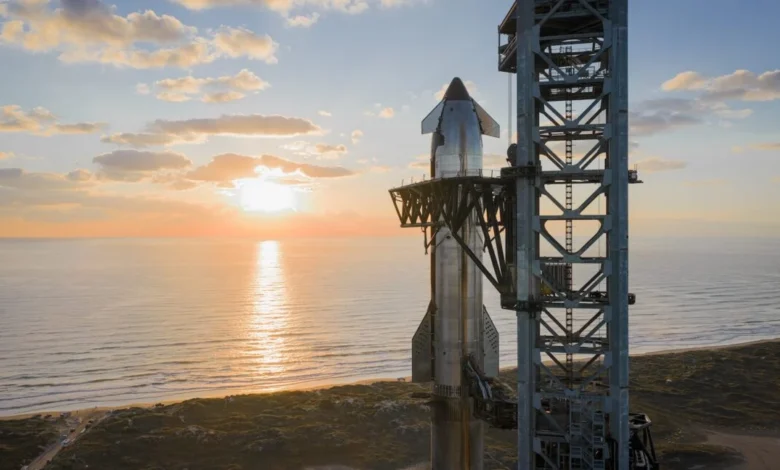
The S-1 filing meticulously detailed SpaceX’s core and expanding business segments. At its foundation are its launch services, dominated by the highly successful Falcon 9 and Falcon Heavy rockets, which have revolutionized the global launch market through reusability, significantly driving down costs and increasing launch cadence. This segment also encompasses the ambitious Starship program, designed for lunar and Martian missions, representing the future of heavy-lift space transportation.
Complementing its launch capabilities is its human spaceflight division, which has, in partnership with NASA, restored America’s ability to launch astronauts from U.S. soil aboard the Dragon spacecraft. This segment is poised for further expansion with Starship’s human-rated capabilities.
The Starlink constellation, SpaceX’s venture into space-based internet, has rapidly become a significant revenue driver and a strategic asset. Comprising thousands of satellites in low Earth orbit, Starlink aims to provide high-speed, low-latency internet access globally, particularly to underserved and remote areas. The S-1 filing likely offered specifics on subscriber growth, operational costs, and future deployment plans, solidifying its position as a key component of SpaceX’s valuation.
Perhaps the most striking revelation, and a significant expansion of its operational scope, is SpaceX’s integration of social media and artificial intelligence through its acquisition of xAI. While the specific timing and financial terms of the xAI acquisition were not detailed in the provided content, its inclusion in SpaceX’s S-1 filing signals a profound strategic pivot. xAI, also founded by Elon Musk, aims to "understand the true nature of the universe" through AI, and its integration suggests a synergy with SpaceX’s existing infrastructure, particularly its Starlink network and future orbital compute capabilities. This move underscores Musk’s broader vision of creating interconnected technological ecosystems.
Financial Performance: Growth, Investment, and the AI Imperative
SpaceX’s reported revenues for 2025 ($18.67 billion) and 2024 ($14.02 billion) demonstrate a robust growth trajectory, indicative of increasing demand for its launch services and the expanding subscriber base of Starlink. Such year-over-year growth positions SpaceX as one of the fastest-growing companies in the aerospace and technology sectors.
However, the reported loss of $4.94 billion in 2025, following a profitable 2024, is a critical data point for potential investors. The S-1 explicitly attributes this loss to substantial investments in artificial intelligence development. This mirrors a trend seen across the broader technology industry, where leading companies are pouring billions into AI research, infrastructure, and talent acquisition, often at the expense of short-term profitability. For SpaceX, this signifies a strategic decision to prioritize long-term dominance in a rapidly evolving field, leveraging its vast resources to build foundational AI capabilities that it believes will be integral to its future. The scale of this investment suggests an ambition far beyond mere software development, hinting at a deep integration of AI into its core space operations and its new ventures.
The Unprecedented $28.5 Trillion Total Addressable Market (TAM)
One of the most eye-catching declarations in the S-1 filing, prominently featured on page 171, is SpaceX’s projection of a "total addressable market" (TAM) of a staggering $28.5 trillion across its current and future offerings in space, data, and AI services. This figure, described by the company as "the largest TAM in human history," immediately captivated market analysts and industry observers.
A closer examination of this colossal figure reveals a significant divergence in its composition. Only approximately $2 trillion of this projected TAM is directly attributed to space-related activities or the Starlink network. The overwhelming majority—an astonishing $26.5 trillion—is believed to originate from artificial intelligence, predominantly from enterprise applications. This distribution starkly illustrates SpaceX’s strategic realignment and its profound belief in the transformative potential of AI as its primary growth vector.
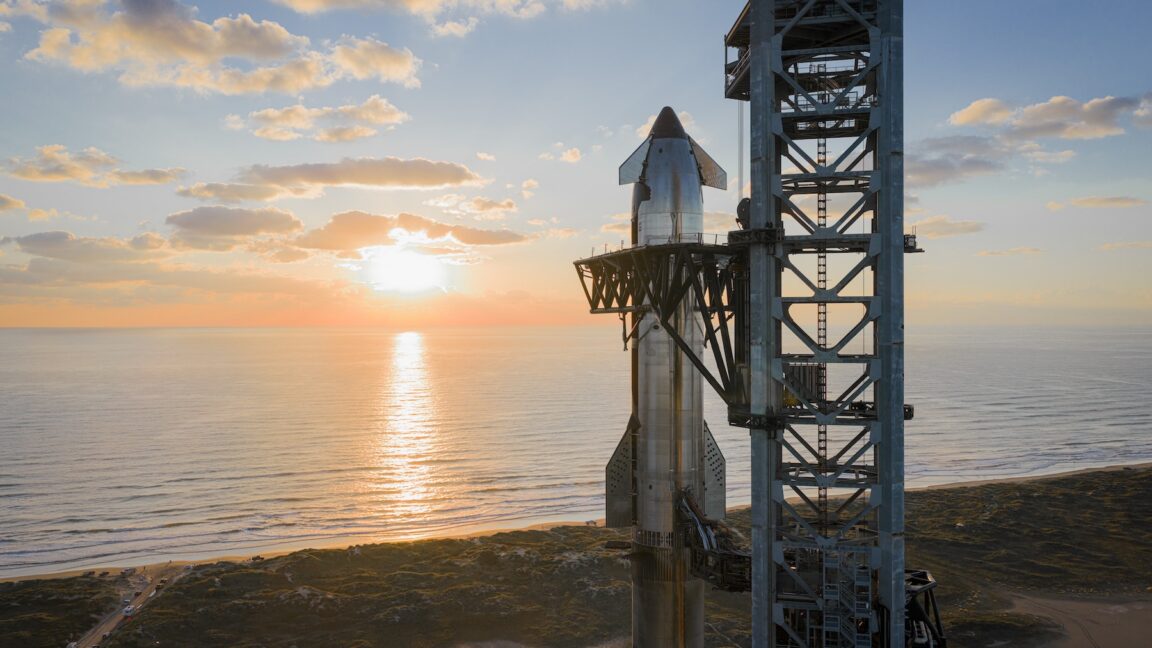
The company’s bold statement, "We believe our next trillion-dollar market is AI compute, which we contemplate will leverage our rockets and satellites for massive orbital deployment," unveils a futuristic vision. This suggests not merely utilizing AI for internal efficiencies but rather establishing a new paradigm for AI infrastructure—one where compute capabilities are deployed in orbit, potentially offering advantages in data processing, security, and energy efficiency. Such a proposition could redefine the very architecture of global AI infrastructure.
SpaceX clarified its methodology for estimating this gargantuan market. The filing stated, "Our AI market estimates are based in part on projections of global data center compute demand from third-party sources, including estimates published by RAND Corporation, together with internal assumptions regarding the portion of global compute capacity that may be utilized for AI workloads and other operational assumptions such as power usage, utilization rates and pricing." This reliance on external reputable sources like RAND Corporation, combined with internal models, lends a degree of credibility to an otherwise extraordinarily ambitious projection, though the speculative nature of such long-term forecasts for emerging technologies remains a point of discussion.
Chronology of Disruption: SpaceX’s Path to the Public Market
- 2002: Founded by Elon Musk with the goal of revolutionizing space travel and enabling human life on Mars.
- 2006: First Falcon 1 launch attempt (failure), followed by subsequent development efforts.
- 2008: First successful Falcon 1 launch, making SpaceX the first private company to put a liquid-fueled rocket into orbit. NASA awards SpaceX a Commercial Resupply Services (CRS) contract.
- 2010: First Falcon 9 launch and first Dragon capsule test flight.
- 2012: Dragon becomes the first private spacecraft to deliver cargo to the International Space Station (ISS) and return safely.
- 2015: First successful landing of a Falcon 9 first stage, pioneering reusable rocket technology.
- 2016: Launch of the first Starlink demonstration satellites.
- 2018: First Falcon Heavy launch, becoming the world’s most powerful operational rocket.
- 2019: First large-scale Starlink deployment, beginning the construction of the global internet constellation.
- 2020: Dragon 2 (Crew Dragon) conducts its first crewed mission, restoring human spaceflight capability to the U.S.
- Early 2020s: Continued rapid deployment of Starlink satellites, expansion of launch cadence, and significant development of the Starship vehicle.
- ~2024 (Inferred): Reports of initial profitability for SpaceX, prior to massive AI investments.
- ~2025 (Inferred): Acquisition of xAI by SpaceX, marking a strategic entry into AI and social media, coinciding with significant AI development expenditure and resulting in a reported loss.
- May 2026 (Implied): SpaceX files its comprehensive S-1 document with the SEC, publicly revealing its financials and strategic vision.
- June 12, 2026 (Anticipated): Earliest projected date for SpaceX’s initial public offering.
Industry and Investor Reactions: Navigating Ambition and Risk
The release of SpaceX’s S-1 filing and its associated market projections is poised to elicit a mixed, yet intensely focused, reaction from the financial markets and the broader technology and aerospace industries. On one hand, the sheer ambition and track record of innovation at SpaceX, coupled with its robust revenue growth, will undoubtedly excite investors eager to participate in a company at the forefront of multiple transformative technologies. The prospect of investing in a company that is not only a leader in space exploration and communication but also a significant player in the burgeoning AI market presents a unique opportunity for portfolio diversification and high-growth potential.
However, the substantial loss reported in 2025, despite significant revenue, will prompt scrutiny. While strategic investments in R&D are common for high-growth tech companies, the magnitude of the loss and the highly speculative nature of a $26.5 trillion AI TAM will raise questions about valuation, profitability timelines, and execution risk. Market analysts will dissect the assumptions underlying the AI market projection, evaluating its realism and the feasibility of SpaceX’s "orbital deployment" concept. Investors will weigh the long-term growth narrative against the short-term financial performance and the inherent risks associated with pioneering such capital-intensive and technologically challenging ventures.
Competitors in the aerospace sector, such as Blue Origin and United Launch Alliance, will undoubtedly be observing the market’s reception to SpaceX’s valuation and strategic direction. The public filing may also set new benchmarks for private space companies considering their own pathways to public markets.
Broader Implications: Reshaping Industries and Investment Paradigms
SpaceX’s public debut and its articulated strategy carry profound implications for several industries. For the space sector, it represents a landmark event, potentially ushering in a new era of investment and public engagement. A successful IPO could validate the commercial space industry’s maturity and its potential for sustained growth, attracting further capital and fostering increased competition and innovation.
For the artificial intelligence industry, SpaceX’s vision of "orbital compute" could be a disruptive force. If realized, it could create entirely new infrastructure requirements, challenge existing data center models, and open up novel applications for AI, particularly in areas requiring global coverage, secure processing, or unique environmental conditions. The convergence of space technology and advanced AI, spearheaded by a company of SpaceX’s scale, could accelerate breakthroughs across both domains.
For investors, SpaceX represents a high-stakes, high-reward proposition. It offers exposure to sectors that are central to humanity’s future: space exploration, global connectivity, and artificial intelligence. However, it also comes with the inherent volatility and risk associated with speculative, long-term technological bets, particularly given the unprecedented scale of its AI market projections.
Challenges and Opportunities on the Horizon
As SpaceX prepares for its public offering, it faces a myriad of challenges and opportunities. Regulatory scrutiny from the SEC will be intense, ensuring all disclosures are accurate and transparent. The company will also need to effectively communicate its complex, multi-faceted strategy to a broad base of public investors, balancing its ambitious long-term vision with demonstrable progress and eventual profitability.
Operational challenges remain significant, particularly with the Starship program’s development and the ongoing expansion of the Starlink constellation. The highly competitive nature of both the launch market and the burgeoning satellite internet sector will demand continuous innovation and efficiency. Furthermore, integrating xAI and successfully executing its vision for orbital AI compute will require immense technical prowess, strategic partnerships, and a significant allocation of resources.
Ultimately, SpaceX’s S-1 filing is more than just a financial document; it is a blueprint for a future envisioned by Elon Musk – one where humanity’s reach extends beyond Earth, where global connectivity is ubiquitous, and where artificial intelligence plays a pivotal role in shaping our understanding and interaction with the universe. Its public debut will be a critical test of whether the financial markets are ready to embrace a company that dares to dream, and invest in, the "largest TAM in human history."