Across the heart of central Turkey, a vast, shimmering landscape unfolds like an ancient, handwoven tapestry. A dramatic palette of caramel swirls, soft ochers, deep creams, and blush pinks defines the horizon, punctuated by the rhythmic rise and fall of valleys carved by volcanic activity. This is Cappadocia, a region defined not only by its geological marvels but by a deep, layered history that stretches back millennia. While modern travelers often recognize the area by the silhouettes of hundreds of hot air balloons drifting at sunrise, the true essence of Cappadocia lies on the ground—within the porous rock, the hidden monasteries, and the winding paths that connect a civilization built into the earth itself.
A Geological Tapestry Forged in Fire
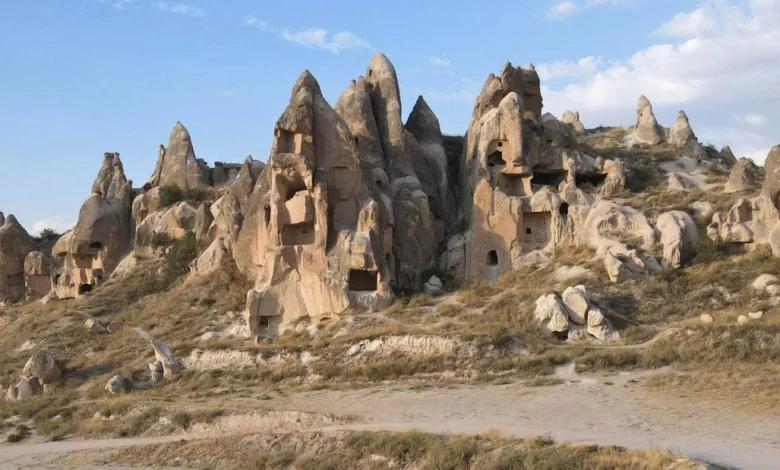
The unique topography of Cappadocia is the result of a geological process that began millions of years ago. Following the eruptions of three major volcanoes—Erciyes, Hasan, and Melendiz—the region was blanketed in thick layers of volcanic ash. Over time, this ash compressed into a soft, porous rock known as tufa.
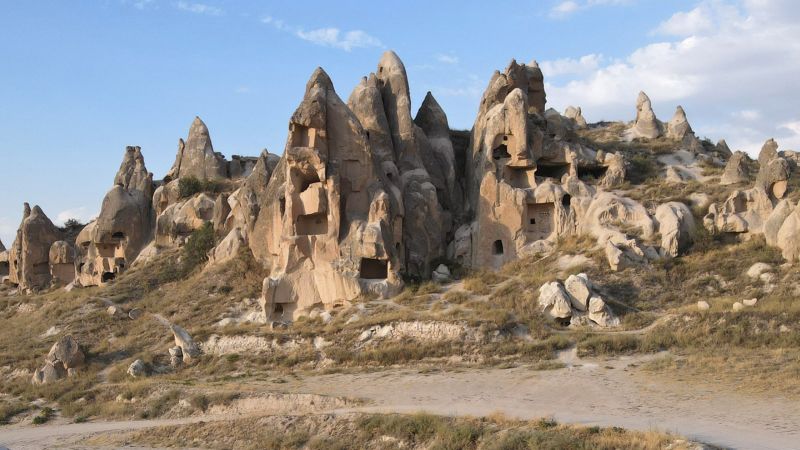
As tectonic shifts and climatic changes altered the landscape, the elements began their work. Water and wind erosion sculpted the tufa into the distinctive, conical structures known locally as peribacaları, or "fairy chimneys." Because the rock is remarkably easy to carve when freshly exposed but hardens significantly upon contact with the air, it became an ideal medium for human habitation. For centuries, the people of the Anatolian plateau utilized this natural resource to create an architectural marvel: a subterranean society.
A Chronology of Human Resilience
The history of human occupation in Cappadocia is a testament to survival and adaptation. By the 6th century, the region had become a sanctuary for early Christian communities seeking refuge from persecution and the volatility of the Byzantine-Sassanid wars. These settlers carved sprawling networks of homes, churches, and monasteries directly into the soft stone, creating vertical villages that were both defensible and climate-controlled.
This tradition of troglodytic living persisted for over 1,400 years. According to medieval art historian Tolga Uyar of Nevşehir Hacı Bektaş Veli University, sites like Zelve serve as a primary example of this continuity. Occupied from the 6th century until the 20th century, Zelve stands as a microcosm of a civilization that transitioned from early Christian monastic life to the modern era of the Turkish Republic. Until the 1950s, the majority of the local population continued to reside within these rock-cut dwellings, maintaining an agricultural lifestyle that remained largely unchanged for generations.

The Rise of Cultural Tourism
In recent decades, the transition from subsistence farming to a tourism-based economy has fundamentally altered the region. The influx of international interest, spurred by the UNESCO World Heritage status granted to the Göreme National Park and the Rock Sites of Cappadocia in 1985, has brought both economic prosperity and new challenges.
Data from the Turkish Ministry of Culture and Tourism indicates that Cappadocia consistently ranks among the top three most visited sites in the country, attracting millions of visitors annually. This surge in tourism has necessitated a careful balance between preservation and development. Local authorities and heritage organizations have worked to stabilize the fragile tufa structures, which remain susceptible to erosion and human wear. The shift has also led to the "cleansing" of the landscape; as agriculture shifted toward tourism, many of the chemical additives used in traditional farming were phased out, leading to the resurgence of native flora, including the rare Iris galatica and various wild orchids that thrive in the valley crevices.
Experiencing the Landscape: Beyond the Balloon
While the aerial perspective provided by hot air balloons offers a breathtaking overview of the "fairy chimneys," locals and historians argue that the true scale of the region is only understood through immersion. The valley systems—specifically Ihlara, Zelve, and the Red (Kızılçukur) and Rose valleys—offer some of the most profound insights into the region’s past.

The Ihlara Valley, for instance, provides a stark contrast to the arid plains surrounding it. Stretching eight miles along the Melendiz River, this lush canyon houses a series of 9th-century churches and dwellings. The hike from Ihlara Village to the Selime Monastery serves as a historical corridor, where hikers encounter Byzantine-era murals and monastic chambers that remain surprisingly well-preserved despite the passage of time.
The Role of Local Guides and Sustainable Tourism
As the region gains global prominence, the role of professional, locally-based guides has become increasingly critical. Guides like Mehmet Güngör, who has operated walking tours in the area since 1998, provide more than just navigation; they offer a bridge between the physical landscape and its cultural narrative.
"Cappadocia is like no other place," says Güngör, who resides in a home partially carved into the rock in the town of Göreme. "It’s full of positive energy. While walking, I become one with nature."

For many visitors, the presence of a guide is the difference between seeing a rock formation and understanding its historical significance. Many of the ancient churches are tucked away in labyrinthine canyons, often locked or requiring specific knowledge to locate. Guides ensure that travelers can visit these sites respectfully, adhering to conservation protocols that are vital for the longevity of the delicate murals and stone interiors.
Equestrian Traditions: A Return to Roots
The region’s nickname, the "Land of Beautiful Horses"—derived from the Persian term Katpatuka—remains relevant today. Before the mechanization of agriculture in the mid-20th century, the yılkı (wild horses) were a staple of the Cappadocian economy. When the winter harvest concluded, working horses were turned loose to roam the valleys, only to be reclaimed in the spring.
While the wild herds have largely disappeared, a new tradition of equestrian tourism has emerged. Operations such as the Cemal Ranch have revived the connection between the local community and their historical reliance on horses. By offering small-group treks through the Red and Rose valleys, these operators emphasize a slower, more deliberate form of tourism. These rides, which often culminate in sunset viewings, allow participants to traverse terrain inaccessible by vehicle, providing a vantage point that emphasizes the silence and grandeur of the volcanic topography.

Future Implications and Preservation
The long-term sustainability of Cappadocia depends on managing the competing pressures of mass tourism and cultural heritage conservation. The shift from an inhabited landscape—where people lived, worked, and prayed in caves—to an open-air museum requires constant oversight.
Analysis from regional urban planners suggests that the future of the area lies in "slow tourism." By encouraging visitors to engage in walking, cycling, or horse-riding tours, the strain on the fragile geology is reduced, and the economic benefits are more equitably distributed among the smaller towns and villages that line the valley floors.
Furthermore, the preservation of the "living" aspects of the region—the culinary traditions, the local crafts, and the stories of the families who moved from the caves into modern homes only a few decades ago—is essential to maintaining the authenticity that draws travelers to Cappadocia in the first place. As the region moves further into the 21st century, its greatest asset remains its ability to connect the modern visitor with a profound sense of geological time and human endurance, proving that the ancient, carved stone of central Turkey still has much to teach the world.