Australia cricket: Usman Khawaja says entire team knew about ball-tampering scandal in South Africa in 2018

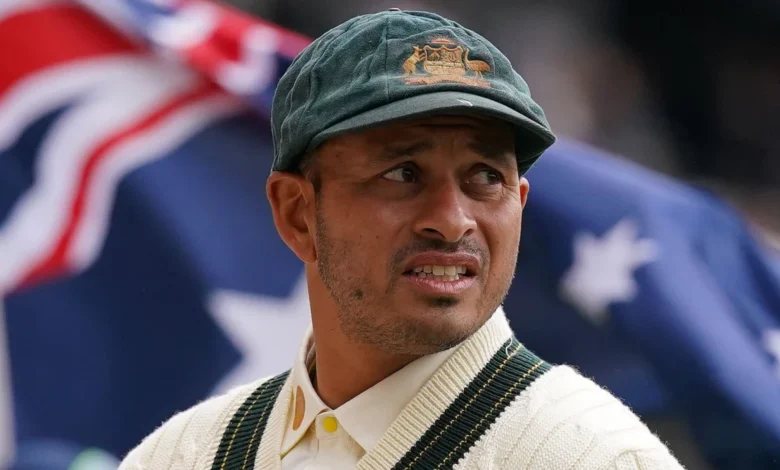
The revelation, detailed in his new book titled Sabr, stands in stark contradiction to the official narrative maintained by Cricket Australia for eight years. Following the discovery of sandpaper being used to alter the condition of the ball during the third Test against South Africa, the governing body conducted an investigation that resulted in sanctions for only three individuals: then-captain Steve Smith, vice-captain David Warner, and opening batter Cameron Bancroft.
Khawaja, who recently concluded his illustrious international career following a dominant Ashes series, suggests that the accountability for the incident was disproportionately shouldered by a small group. "It was all of us," Khawaja writes. "Not the batters, not the bowlers, not the staff. All of us."
A Timeline of the Cape Town Crisis
To understand the gravity of Khawaja’s claims, one must revisit the sequence of events that brought Australian cricket to its lowest ebb in the modern era.

- March 2018 (Second Test, Gqeberha): According to Khawaja, discussions regarding the manipulation of the ball began as early as the second match of the series.
- March 24, 2018 (Third Test, Cape Town): Cameron Bancroft is captured on television cameras concealing a piece of yellow sandpaper down his trousers after attempting to alter the ball.
- March 25, 2018: The fallout is immediate. Steve Smith and David Warner are stood down from their leadership roles. Cricket Australia launches an urgent investigation.
- March 28, 2018: Cricket Australia announces one-year bans for Smith and Warner, and a nine-month ban for Bancroft. Darren Lehmann, the coach at the time, eventually resigns.
- May 2021: In an interview with The Guardian, Bancroft implies that the bowling unit was aware of the state of the ball.
- May 2021: The four primary bowlers—Pat Cummins, Mitchell Starc, Josh Hazlewood, and Nathan Lyon—issue a formal, joint statement categorically denying prior knowledge of the plot.
- October 2026: Usman Khawaja releases Sabr, asserting that the entire squad was complicit in the culture that led to the incident.
The Myth of the Three-Man Plot
For years, the official position held that the conspiracy was limited to the leadership trio. Warner was identified as the primary architect, with Smith failing to prevent the act, and Bancroft serving as the executor on the field. However, this narrative has long been scrutinized by cricket commentators and former players who argued that the level of coordination required to tamper with a ball—and the visual evidence of its condition—would have been impossible to hide from the rest of the eleven-man side.
Khawaja’s testimony provides a firsthand account from inside the room. He recounts moments immediately following the conclusion of the Cape Town Test, where he attempted to frame the collective responsibility of the team. "I said: ‘Take this as a team. We did this as a team. We knew what was going on. We have to take it as a team,’" he writes.
The discrepancy between this account and the public defense of the bowlers remains a point of significant friction. When Bancroft suggested in 2021 that the bowlers were aware, the subsequent joint statement from the bowling unit effectively shut down the conversation, leaving a lingering sense of unresolved tension within the Australian cricketing community.
Fact-Based Analysis of the Implications
The implications of Khawaja’s admission are twofold: they challenge the integrity of Cricket Australia’s initial investigation and highlight a shift in how former players are now willing to discuss the "win-at-all-costs" culture that permeated the team during that period.
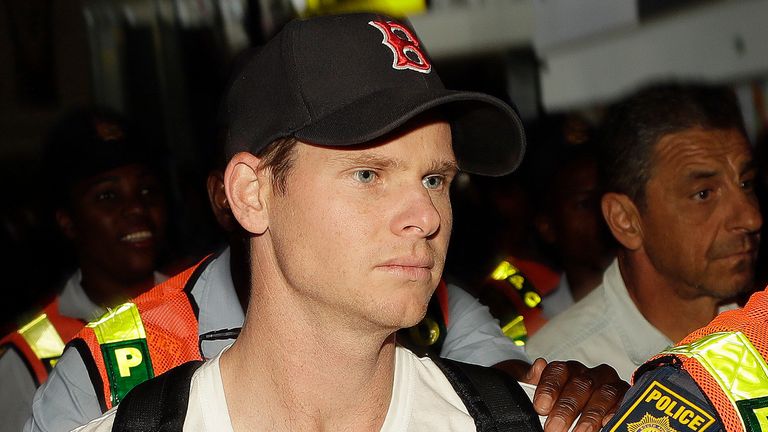
- Integrity and Governance: If, as Khawaja claims, the entire dressing room was aware, the 2018 investigation by Cricket Australia may be viewed as a damage-limitation exercise rather than a thorough pursuit of truth. This raises questions about the thoroughness of the inquiry and whether the governing body deliberately isolated the three players to preserve the image of the wider squad and the sport.
- Cultural Reckoning: The "Sandpapergate" incident led to a massive cultural review of Australian cricket. The findings of the Longstaff Review, commissioned shortly after the scandal, highlighted a toxic culture of aggression and a lack of accountability. Khawaja’s recent remarks suggest that the cleanup was perhaps not as comprehensive as the public was led to believe.
- The "Crucified" Trio: Khawaja’s sympathy for Smith, Warner, and Bancroft is evident. By stating that the three were "crucified," he posits that they became the fall guys for a collective systemic failure. This narrative shifts the focus from individual moral failings to an environment where such actions were implicitly or explicitly encouraged.
The View from the Dressing Room
Khawaja’s motivation for speaking out now, nearly a decade later, appears to be a desire for closure. He expresses frustration that the truth did not emerge organically, noting that he expected figures like Warner to eventually come forward. "I don’t want to be the one who comes out and talks about the truth," he admits, adding, "The issue is that I genuinely thought after eight years the truth would have been out by now."
For the players involved, the incident defined their careers. Steve Smith, once widely considered the heir apparent to the greatness of Don Bradman, suffered a profound hit to his reputation and career trajectory. Warner, an aggressive opening batter, was essentially sidelined during his prime. Bancroft, the youngest of the three, had his international career permanently derailed.
The silence of the other team members has been interpreted by some as loyalty, but by others as a betrayal of the truth. Khawaja suggests that his colleagues might actually feel a sense of relief now that the "team" nature of the incident has been exposed. "I think most of the guys in the team, at some level, will be relieved that we can finally move on," he writes.
Official Responses and Future Fallout
As of the time of writing, Cricket Australia has not released a formal statement regarding the specific claims made in Khawaja’s book. The board is likely to face mounting pressure to address whether a re-investigation or a formal acknowledgement of the wider team’s involvement is necessary.

The bowling group, who have successfully maintained their distance from the scandal for years, may now find their 2021 statement under renewed scrutiny. Whether they choose to address these claims or continue to maintain their original position will be a critical factor in how the sporting public perceives the legacy of that era.
The release of Sabr ensures that the 2018 Cape Town Test will remain a dark chapter in the history of Australian cricket for the foreseeable future. By breaking the code of silence that has held firm for eight years, Khawaja has not only reopened a painful wound but has also forced a necessary conversation about accountability, institutional honesty, and the heavy price of professional sports at the elite level.
Whether this revelation serves as the final word on the matter or triggers a cascade of further admissions remains to be seen. What is clear, however, is that the narrative of "three bad apples" has been effectively dismantled, replaced by a more complex, and perhaps more uncomfortable, portrait of a team operating as a singular, complicit unit. As the cricketing world digests these revelations, the focus will undoubtedly shift toward the governance of the sport and the standards of conduct expected of those who represent their nation on the world stage.
Related posts: