White House Financial Disclosure Page Briefly Goes Dark Before Restoration Following Inquiry

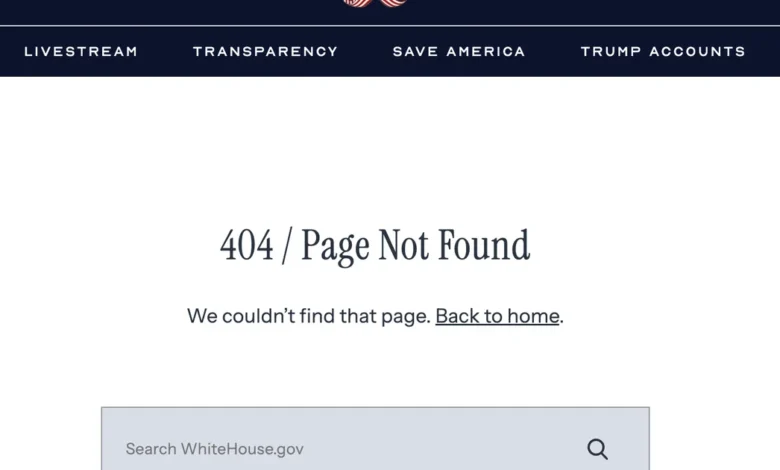
The official White House webpage dedicated to hosting the financial disclosure forms of President Donald Trump and senior administration officials experienced a sudden and unexplained disappearance from public view on Friday, November 6, 2026. The site, whitehouse.gov/disclosures, serves as a critical repository for ethics-related documentation, including the president’s annual financial filings, periodic stock transaction reports, and the mandatory disclosures for over 100 high-ranking staffers. The outage, which occurred during a standard Friday afternoon window, prompted immediate scrutiny from transparency advocates and media organizations that rely on the hub to track potential conflicts of interest within the executive branch.
Chronology of the Disappearance and Restoration
The disruption was first identified by automated monitoring systems utilized by CBS News, which routinely scan government portals for new filings at 30-minute intervals. According to these digital logs, the page was fully functional as of 3:01 p.m. EST on Friday. However, at the subsequent check at 3:31 p.m. EST, the system returned a 404 "Not Found" error, signaling that the page had been removed from the server or redirected to an inactive path.
The timing of the outage coincides with a period of intense public interest in the administration’s financial dealings, particularly following recent personnel shifts, including the transition of Stephen Miller into a prominent role within the White House staff.
By 4:20 p.m. EST, CBS News issued a formal inquiry to the White House press office, seeking clarification on whether the removal was an intentional act of transparency reduction or the result of a technical glitch. The White House did not provide an immediate response. Within the hour, the monitoring system indicated that the page had been restored. Server metadata suggests the page was republished at approximately 5:00 p.m. EST. Upon its return, the site featured a newly uploaded PDF: a periodic transaction report for President Trump, signed on September 17, 2026, and previously available via the Office of Government Ethics (OGE) since October 8.
The Role of the Ethics in Government Act and the STOCK Act
Financial transparency in the executive branch is not merely a matter of policy but a legal mandate governed by two primary pieces of legislation. The Ethics in Government Act of 1978 requires senior officials to file annual reports detailing their assets, income, and liabilities. Furthermore, the 2012 Stop Trading on Congressional Knowledge (STOCK) Act mandates that executive branch officials, including the president and vice president, report significant financial transactions—such as stock trades—to prevent the use of non-public information for personal gain.
While the president and vice president file their primary disclosures with the Office of Government Ethics, the White House portal serves as a centralized, user-friendly hub for the public to access these records alongside those of their aides. For many White House staffers who do not require Senate confirmation, the White House website is often the primary, and sometimes only, source of their financial disclosures.
In September 2026, investigative analysis revealed a significant gap in this decentralized system: roughly 110 out of 180 officials listed on the White House page were not reflected in the OGE’s public database. This discrepancy places a higher burden of responsibility on the White House to maintain its own site, as the absence of a functional disclosure page essentially creates a "black hole" for information regarding the financial interests of these specific government employees.
Data Trends and Conflict of Interest Concerns
The importance of this disclosure hub has been underscored by the sheer volume of financial activity attributed to the president’s personal portfolio. Since the beginning of 2026, the president’s financial filings have revealed thousands of individual stock transactions. These reports are of particular interest to watchdogs because many of the trades involve companies that hold significant contracts with the federal government or operate in sectors heavily regulated by executive policy.
While the White House has consistently maintained that the president is shielded from the day-to-day management of his assets—asserting that his portfolio is handled by independent third-party financial advisers—the frequency and scale of the trading have generated persistent questions. Critics argue that even if the president is not directing specific trades, the appearance of a conflict is exacerbated when the data is difficult to access, delayed, or subject to unexplained site maintenance.
The specific report uploaded during the Friday outage—the September 17 transaction report—had already been available on the OGE website for nearly a month. The fact that it took until November 6 to appear on the White House portal suggests a delay in internal processing, a common point of contention for transparency advocates who argue that timely disclosure is essential for the public to hold officials accountable.
Broader Implications for Government Transparency
The incident has sparked a broader conversation regarding the vulnerability of public records in the digital age. In an era where "link rot" and server maintenance can effectively erase access to government data, the reliance on proprietary, self-managed websites by executive agencies presents a challenge for the public interest.
"The public expects a seamless flow of information from the executive branch," noted a governance expert familiar with federal disclosure protocols. "When a portal that hosts ethics filings goes offline without notice, it erodes trust. Even if the outage is purely technical—such as a server update or a database migration—the lack of communication from the administration creates a vacuum that is inevitably filled by speculation."
Furthermore, the lack of a standardized, unified portal for all federal ethics disclosures continues to be a systemic issue. Because individual agencies, including the White House, manage their own digital footprints, the quality and accessibility of these files vary wildly. The OGE attempts to aggregate this data, but as the 2026 findings indicated, there remain significant gaps between what is filed at the White House level and what is ultimately reflected in the central OGE repository.
Official Response and Future Outlook
Despite the restoration of the page, the White House has declined to comment on why the site was taken down or why the upload of the September 17 stock report appeared to coincide with the restoration process. The silence from the press office has left key questions unanswered:
- Were internal protocols followed regarding the maintenance of public-facing web assets?
- Is there a formal policy governing the removal of disclosure pages for updates?
- How does the administration plan to address the discrepancies between their internal records and those maintained by the Office of Government Ethics?
As the 2026 calendar year draws to a close, the focus on executive ethics remains high. The role of the White House disclosure page is critical to ensuring that the public can monitor the financial health of the administration. For now, the site remains operational, but the incident serves as a reminder of the fragility of digital transparency and the ongoing tension between executive power and the public’s right to know.
Moving forward, transparency organizations are expected to continue their pressure on the White House to maintain consistent, reliable access to these documents. Without a formal policy or a clearer explanation of Friday’s events, the incident will likely remain a focal point for those monitoring the administration’s commitment to open governance and ethical accountability. The episode highlights the necessity for more robust, redundant systems that prevent the accidental or intentional concealment of information that is, by law, the property of the American public.