Chinese Tech Giant Huawei Convicted of Stealing Trade Secrets, Bank Fraud, and Violating U.S. Sanctions After Landmark Federal Trial

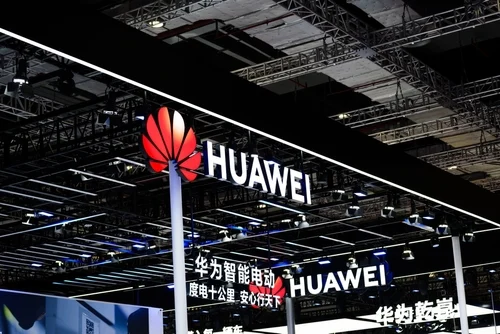
Following an intensive four-day period of jury deliberations, a federal court in New York delivered a landmark verdict finding the Chinese telecommunications giant Huawei guilty on multiple counts of conspiracy, trade secret theft, wire and bank fraud, money laundering, and sanctions evasion. The Tuesday verdict marks the culmination of an exhaustive 11-week federal trial prosecuted by the U.S. Attorney’s Office for the Eastern District of New York.
Throughout the proceedings, government prosecutors systematically laid out a case alleging that the multinational tech titan built its colossal global empire not merely through legitimate innovation and market competition, but through a persistent, systemic pattern of intellectual property theft and deliberate violations of American law. Out of the 12 total counts brought against the company, the federal jury convicted Huawei on 10 counts, rejecting only the lead racketeering conspiracy charge and a single count of conspiring to obstruct justice.
The case represents one of the most high-profile corporate criminal prosecutions in modern legal history, carrying severe financial, structural, and geopolitical implications. It underscores a historic escalation in the United States government’s efforts to police international corporate malfeasance, safeguard domestic technology, and enforce foreign policy sanctions through the federal judiciary.
A Chronology of Conflict: The Road to the Huawei Verdict
The legal showdown between the United States government and Huawei is the culmination of years of escalating tensions, cross-border investigations, and strategic geopolitical maneuvering. To fully understand the gravity of the recent federal jury verdict, one must examine the timeline of events that brought the telecommunications giant into the crosshairs of American federal prosecutors:
- December 2018: The conflict dramatically escalated when Meng Wanzhou, Huawei’s chief financial officer and the daughter of company founder Ren Zhengfei, was arrested in Vancouver, Canada, at the request of U.S. authorities. The arrest was made under a provisional extradition treaty, focusing on bank fraud and misleading global financial institutions regarding Huawei’s business dealings with Iran.
- January 2019: The U.S. Department of Justice formally unveiled two sweeping indictments against Huawei, its chief financial officer, and several affiliates. The charges detailed decades-long efforts to misappropriate American intellectual property, circumvent U.S. trade sanctions against Iran, and obstruct official investigations.
- May 2019: Amid escalating national security concerns, the Trump administration placed Huawei on the Department of Commerce’s Bureau of Industry and Security Entity List. This effectively barred U.S. companies from selling components and software—including critical Google Android services—to Huawei without obtaining a specialized government license.
- September 2021: After a protracted legal battle that strained diplomatic relations between Beijing, Ottawa, and Washington, Meng Wanzhou reached a deferred prosecution agreement with the U.S. Department of Justice. In exchange for acknowledging certain misrepresentations made to financial institutions, the U.S. dropped its extradition request, allowing Meng to return to China, while the broader corporate prosecution against Huawei continued to move through the federal court system.
- September–November 2026: The long-awaited criminal trial commenced in the Eastern District of New York. Spanning 11 weeks, the prosecution presented a mountain of documentary evidence, expert testimony, and corporate communications intended to prove that Huawei systematically targeted U.S. competitors to steal proprietary technology.
- November 2026: Following four days of deliberation after the lengthy trial, the federal jury returned its verdict, convicting Huawei on 10 of the 12 counts, validating the government’s core assertions of intellectual property theft and sanctions evasion while acquitting the company of the sweeping RICO charge.
Prosecution Arguments and the Mechanics of the Crimes
During the grueling 11-week trial, prosecutors from the U.S. Attorney’s Office for the Eastern District of New York argued that Huawei’s meteoric rise to global dominance was fueled by a corporate culture that encouraged and rewarded intellectual property theft and regulatory evasion.
According to the government’s presentation of evidence, Huawei systematically targeted American technology companies to pilfer proprietary source code, robotic testing apparatus designs, and advanced telecommunications methodologies. Prosecutors highlighted instances where Huawei employees allegedly entered non-disclosure agreements with U.S. partners under false pretenses, utilizing business meetings to extract sensitive technological data that was subsequently integrated into Huawei’s own product lines.
Furthermore, the government detailed an intricate financial web designed to bypass rigorous U.S. economic sanctions placed on Iran. Prosecutors demonstrated how Huawei utilized clandestine front companies and misled international banking institutions—including major global financial hubs—to process millions of dollars in transactions tied to sanctioned regimes. These actions, the government argued, not only undermined U.S. foreign policy objectives but also exposed international banks to severe, hidden legal liabilities through fraudulent misrepresentations.
"Few crimes are as serious as Huawei’s decades-long pattern of endangering U.S. national security, violating the sanctity of U.S. commerce, and impeding the enforcement of U.S. laws," U.S. Attorney Joseph Nocella stated following the verdict. "Today’s verdict is a step towards accountability for Huawei’s criminal activities, which includes yearslong collaboration with sanctioned entities in Iran, repeated lies to banks, and blatant thefts from U.S. technology companies."
Nocella’s remarks captured the overarching prosecutorial thesis: that Huawei operated as a sophisticated enterprise willing to circumvent global legal norms to secure a competitive advantage in the 5G and telecommunications sectors.
Defense Strategy and Partial Victory
Facing an imposing array of federal charges, Huawei’s legal defense team mounted an aggressive campaign to dismantle the government’s narrative. Led by defense attorney Brian Heberlig, the defense argued that the prosecution’s case relied on overzealous interpretations of routine corporate behavior, inflated accusations, and recycled allegations meant to cripple a leading foreign competitor for geopolitical leverage.
While the jury ultimately found Huawei guilty on 10 counts, the defense successfully defended against the most severe charge in the government’s indictment: the racketeering conspiracy charge, commonly known as the RICO (Racketeer Influenced and Corrupt Organizations) count. The indictment had also included a count of conspiring to obstruct justice, which the jury similarly rejected.
Immediately following the announcement of the verdict, Heberlig held a press conference to address the outcome, framing the avoidance of the RICO conviction as a substantial victory for the defense.
"It’s hard not to have profoundly mixed emotions from the verdict we just heard, but the single lead charge that was brought by the United States government against Huawei was the RICO charge, a charge that alleged that the company was corrupt from top to bottom," Heberlig said.
By defeating the racketeering charge, the defense successfully prevented the federal government from establishing that Huawei operated fundamentally as a criminal enterprise in its entirety. Under federal law, a RICO conviction carries devastating structural and financial penalties, often threatening the very existence of a corporate entity by enabling sweeping asset forfeitures and mandatory dissolution orders. The jury’s rejection of this charge shields the company from the most catastrophic structural remedies the prosecution sought, even as the 10 convictions for fraud, money laundering, and trade secret theft still expose the tech giant to monumental financial penalties.
Supporting Data and Broader Context
The financial and operational scale of Huawei makes the fallout from this federal verdict uniquely significant on the global stage. Prior to the sweeping U.S. trade restrictions and subsequent criminal indictments, Huawei had established itself as the world’s largest telecommunications equipment manufacturer and a leading smartphone vendor, rivaling Apple and Samsung in global market share.
However, the compounding pressure of the Entity List designation, European restrictions on 5G infrastructure, and now a federal criminal conviction in the United States dramatically alters the company’s trajectory. Key data points surrounding the broader corporate and geopolitical ecosystem include:
- Global R&D Investment: Despite American sanctions, Huawei has continued to pour tens of billions of dollars annually into research and development, particularly in domestic semiconductor design, operating systems (such as HarmonyOS), and artificial intelligence infrastructure, attempting to insulate its supply chain from Western technological dependencies.
- Revenue Shifts: Following the initial 2019 sanctions, Huawei experienced a temporary contraction in consumer smartphone revenues overseas. However, the company successfully pivoted toward enterprise cloud computing, smart automotive solutions, and domestic Chinese market dominance, reporting stabilized financial revenues in recent fiscal years.
- International Alliances: While Western nations—including the United States, the United Kingdom, Australia, and Canada—have largely banned Huawei equipment from national telecommunications grids over national security concerns, the company has maintained strong commercial ties with numerous emerging markets across Africa, Asia, and Latin America.
Broader Impact and Implications of the Verdict
The conviction of Huawei carries profound implications that extend far beyond the courtroom in the Eastern District of New York. Legal scholars, national security analysts, and international trade experts are already evaluating how the verdict will shape future corporate enforcement actions and geopolitical dynamics.
1. Enforcement of Extraterritorial Jurisdiction
The case serves as a definitive validation of the U.S. government’s aggressive posture regarding extraterritorial jurisdiction. By prosecuting a foreign corporation headquartered in Shenzhen, China, for acts involving trade secret theft, international wire fraud, and sanctions evasion that touched U.S. financial clearinghouses, the Justice Department has reinforced the doctrine that foreign companies engaging with the American economy must strictly adhere to U.S. federal laws or face severe criminal consequences.
2. Deterrence for Multinational Corporations
For other global enterprises, particularly those operating in high-stakes technological sectors like artificial intelligence, biotechnology, and semiconductor manufacturing, the verdict acts as a stark warning. Compliance programs, supply chain vetting, and intellectual property protocols will face renewed internal scrutiny. Corporate boards and general counsels will likely review their international partnerships to ensure that foreign operations do not inadvertently trigger U.S. bank fraud or sanctions violations.
3. Geopolitical and Trade Relations
The timing and outcome of the trial arrive at a delicate juncture in U.S.-China relations. As both superpowers continue to compete for supremacy in critical technologies—such as 5G networks, quantum computing, and advanced microelectronics—the verdict will likely be viewed in Beijing as another manifestation of economic protectionism and legal weaponization. Conversely, U.S. policymakers will likely point to the jury’s decision as a vindication of the rule of law and an essential national security measure to protect American innovation from foreign industrial espionage.
4. Sentencing and Financial Penalties Ahead
With the trial phase concluded, attention now turns to U.S. District Judge (to be assigned for sentencing) to determine the appropriate penalties for the 10 counts of conviction. Under federal sentencing guidelines, Huawei faces potentially billions of dollars in monetary fines, restitution orders for affected U.S. technology firms, and strict terms of corporate probation. While the company avoided the corporate death sentence implied by the rejected RICO charge, the financial and reputational fallout from being a convicted corporate felon in the United States will profoundly constrain Huawei’s global ambitions for years to come.
Related posts: