Strobe Talbott, Renowned Diplomat, Soviet Expert, and Former Deputy Secretary of State, Dies at 80

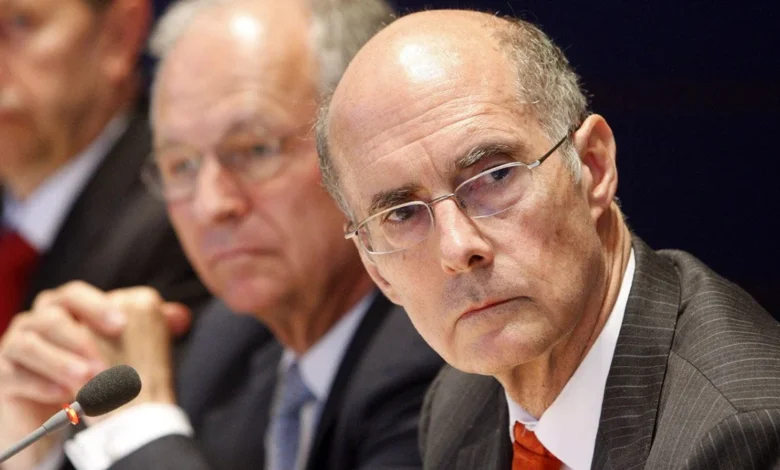
Strobe Talbott, a towering figure in American foreign policy whose extensive scholarship on the Soviet Union profoundly shaped Western strategy during the waning years of the Cold War and the tumultuous post-Soviet era, passed away on Thursday at the age of 80. His son, Devin Talbott, confirmed that his father died peacefully at his home in East Hampton, New York, following a long illness.
Talbott’s career spanned elite journalism, high-stakes diplomacy, and institutional leadership. From translating the leaked memoirs of Nikita Khrushchev as a young reporter to helping architect post-Cold War security architecture alongside his college roommate, President Bill Clinton, Talbott left an indelible mark on international relations. Later in life, he directed the Brookings Institution, guiding one of the world’s most influential think tanks through a critical period of global transformation.
From Ohio Roots to the Halls of Power: Early Life and Education
Born in Dayton, Ohio, in the mid-20th century, Nelson Strobe Talbott III displayed an early intellect and a fascination with global affairs. He pursued his undergraduate studies at Yale University before attending Oxford University as a Rhodes Scholar. It was during his time at Oxford that Talbott roomed with a young Bill Clinton, forging a lifelong personal and professional bond. Clinton would later fondly recount that his primary domestic responsibility in their shared apartment was preparing breakfast for Talbott every morning.
This academic foundation paved the way for an unconventional entry into journalism. While still a student, Talbott secured an internship at Time magazine. His linguistic aptitude and burgeoning expertise in Soviet affairs quickly caught the attention of senior editors. In 1969, at a time when Kremlinology—the study and analysis of Soviet politics—was a vital and opaque art, Talbott was entrusted with a high-profile assignment: translating the leaked memoirs of Nikita Khrushchev. The former Soviet leader, ousted in a coup in 1964, had recorded memoirs that smuggled their way out of the USSR. Talbott’s translation and editorial work on the project not only became a publishing sensation but also earned him a permanent, full-time position on the Time staff.
A Two-Decade Journalism Career Shaping Cold War Discourse
Over the next twenty-one years, Talbott established himself as one of the preeminent journalists covering superpower relations. Stationed primarily in Washington, D.C., he rose through the ranks to lead Time’s Washington bureau and eventually served as a prominent foreign affairs columnist.
During the height of the Cold War, Talbott’s writing bridged the gap between dense intelligence reports and the American public. He authored several critically acclaimed books examining nuclear arms control and the geopolitical chess match between Washington and Moscow, including Endgame: The Inside Story of SALT II (1979) and The Russians and Reagan (1984). His analytical rigor earned him the respect of diplomats and policymakers on both sides of the Iron Curtain, establishing his reputation as a sober, deeply knowledgeable observer who understood the internal mechanisms of the Soviet state.
Stepping Into Diplomacy: The Clinton Administration Years
When Bill Clinton assumed the presidency in January 1993, he sought to bring external expertise directly into the levers of government. Following a brief initial stint as ambassador-at-large and special adviser to the secretary of state on the newly independent states of the former Soviet Union, Talbott was formally nominated as deputy secretary of state in 1994, serving under Secretary of State Warren Christopher and later Madeleine Albright.
For the remainder of the decade, Talbott was at the center of American foreign policymaking in Eastern Europe and Eurasia. Working in tandem with the White House, he was tasked with navigating one of the most delicate geopolitical transitions in modern history: managing the collapse of the Soviet Union while ensuring the security and stabilization of the newly liberated states.
Talbott played a pivotal role in several defining foreign policy initiatives of the 1990s:

- NATO Expansion: Despite fierce opposition from Moscow, Talbott helped engineer the integration of former Warsaw Pact nations—including Poland, Hungary, and the Czech Republic—into the North Atlantic Treaty Organization, anchoring Central Europe to Western democratic institutions.
- Arms Control and Nuclear Security: He spearheaded efforts to secure and dismantle the vast nuclear arsenals left scattered across post-Soviet states, successfully negotiating the denuclearization of Ukraine, Belarus, and Kazakhstan under the Lisbon Protocol and the Nunn-Lugar Cooperative Threat Reduction framework.
- Balkan Crisis Resolution: Talbott was actively involved in diplomacy surrounding the violent breakup of Yugoslavia, helping coordinate U.S. and allied responses to ethnic conflicts in Bosnia and Kosovo.
- Partnership for Peace: He helped design and implement NATO’s Partnership for Peace program, a mechanism aimed at building trust and military cooperation between NATO and non-member European and post-Soviet states, including Russia.
Tributes and Reflections on a Diplomatic Legacy
Following the news of his passing, former President Bill Clinton released a heartfelt statement reflecting on Talbott’s profound contributions to global security and his personal character.
"No one was better suited to advise me on Russian affairs than Strobe," Clinton said, noting that former Secretary of State Hillary Clinton also heavily relied on his counsel. "He was analytical, completely devoted to diplomacy, and on the level. With his expertise, we made real progress building trust between two former adversaries—moving beyond decades of confrontation to reduce the nuclear dangers future generations would inherit."
Clinton emphasized that Talbott’s vision was instrumental in creating a safer, more integrated Europe. "Together we laid the groundwork for greater cooperation while putting Russia on a path to democracy," Clinton stated. He added a poignant reflection on the subsequent deterioration of U.S.-Russia relations under the current regime, noting, "Sadly, its current leader has taken the country in a different direction," an explicit reference to Russian President Vladimir Putin.
Clinton concluded his tribute by describing Talbott as a "good and brilliant man who made our world more peaceful and secure," adding, "Hillary and I will miss him very much."
Directing the Brookings Institution and Later Years
After leaving the State Department in 2001, Talbott transitioned from government execution to public policy leadership. In 2002, he assumed the presidency of the Brookings Institution, one of Washington’s oldest and most prestigious think tanks.

During his 15-year tenure as president, which concluded in 2017, Talbott oversaw a significant expansion of the institution’s global footprint, research capacity, and financial endowment. He modernized Brookings to adapt to a rapidly digitizing media landscape and a shifting geopolitical order characterized by the rise of new global powers and the resurgence of authoritarianism. In addition to his leadership at Brookings, he chaired the State Department’s Foreign Affairs Policy Board, continuing to lend his expertise to successive generations of diplomats.
Personal Life and Surviving Family
Talbott’s life was also marked by deep personal partnerships. His first wife, Brooke Shearer, a prominent environmental official and journalist, passed away in 2009. He later married author and journalist Barbara Lazear Ascher.
He is survived by his two sons, Devin and Adrian, and six grandchildren, who carry forward his legacy in public service, law, and enterprise.
Historical Implications and Analytical Context
Strobe Talbott’s passing comes at a critical juncture in contemporary geopolitics. The architectural frameworks he helped construct during the 1990s—particularly NATO enlargement and arms control treaties—are currently undergoing their most severe stress tests since the end of the Cold War. The return of large-scale conventional warfare to the European continent, catalyzed by Russia’s invasion of Ukraine, has forced Western policymakers to re-evaluate the very assumptions of post-Cold War security that Talbott spent his professional life designing.
Historians and foreign policy analysts view Talbott as a quintessential representative of the liberal internationalist school of American diplomacy. Proponents of this worldview argue that patient multilateralism, institutional integration, and the reduction of nuclear stockpiles are essential for maintaining global stability. Critics, particularly in the wake of renewed tensions with Moscow, have occasionally debated whether the rapid expansion of Western institutions in the 1990s inadvertently contributed to the security anxieties that fueled subsequent Russian revisionism.

Regardless of ongoing academic and political debates over the trajectory of post-Cold War diplomacy, Talbott’s legacy remains secure as a tireless advocate for peaceful engagement, institutional resilience, and democratic governance. From the pages of Time magazine to the negotiating tables of Geneva and Washington, his intellectual rigor and unwavering commitment to public service helped steer the global superpower through one of the most perilous transitions in human history.
Related posts: