CNN Political Briefing: Inside the Shifts, Shakes, and Power Struggles Shaping American Politics

The modern American political landscape is experiencing a period of profound transformation, characterized by intra-party fractures, high-stakes legislative standoffs, and dramatic electoral shifts at both the local and national levels. Hosted by CNN Political Director David Chalian, the CNN Political Briefing podcast serves as an essential auditory archive and analytical lens into these tumultuous dynamics. Over recent months, the program has charted the escalating friction within the Republican House caucus, the strategic maneuvering of Democrats ahead of the 2026 midterm elections, and the sweeping municipal and state electoral outcomes that continue to redefine the nation’s political identity. By bringing key power players—ranging from dissenting lawmakers and party strategists to veteran journalists—into the studio, the podcast offers a granular look at the forces driving contemporary governance and political strategy.
Internal GOP Friction and the Leadership Crisis
At the core of the current legislative quagmire is a palpable shift in the vibe of the Republican conference in the House of Representatives. Long defined by ironclad adherence to party lines and loyalty to former President Donald Trump, the caucus is increasingly exhibiting signs of internal dissent as lawmakers look toward a post-Trump future and the looming battles of the 2026 midterms.
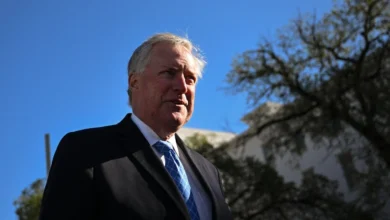
A striking manifestation of this internal discord was highlighted when California Republican Representative Kevin Kiley appeared on the podcast to critique House leadership. Kiley explicitly stated that Speaker of the House Mike Johnson had “failed to lead” during critical legislative moments. This public rebuke underscores a broader frustration among rank-and-file members who feel that leadership has been reactive rather than proactive, particularly in managing narrow majorities and contentious federal budget negotiations.
Compounding Kiley’s legislative frustrations are personal political pressures stemming from his home state. Following aggressive redistricting maneuvers pushed by California Governor Gavin Newsom and approved by voters, Kiley faces the distinct possibility of being drawn out of his congressional seat. This collision of federal legislative stagnation and local redistricting battles illustrates the multi-front war facing vulnerable incumbents. The tension highlights a growing anxiety within the GOP: as the party attempts to maintain its fragile House majority, disagreements over strategy, messaging, and leadership competence threaten to undermine their electoral prospects.
The MAGA Base and the Limits of Presidential Control
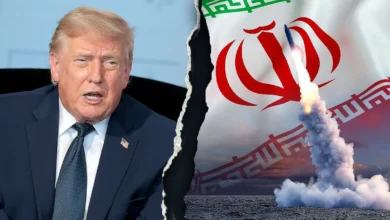
Beyond Capitol Hill, the relationship between Donald Trump and his core MAGA (Make America Great Again) base has faced unprecedented stress tests. Historically characterized by unwavering loyalty, recent months have revealed rare fractures in this coalition.
A prominent point of contention arose when Trump reversed course on the release of the Epstein files—a pivot aimed at appeasing broader party concerns that momentarily created friction with populist purists who demand total transparency regardless of political fallout. Furthermore, the administration and its congressional allies have faced persistent criticism from their own supporters regarding economic messaging. While voters consistently rank inflation, the cost of living, and everyday affordability as top-tier concerns, critics within and outside the conservative movement have argued that political messaging has frequently pivoted toward foreign affairs and culture-war flashpoints, diluting the economic focus that traditionally drives working-class support.
Political analysts, such as POLITICO’s Jonathan Martin, have closely monitored these developments to determine whether they signal the early onset of a traditional lame-duck period for the president or a deeper ideological realignment within the right. While the MAGA movement remains a formidable force, these cracks suggest that the base is increasingly willing to voice dissatisfaction when leadership strays from core domestic and economic priorities.
The 2025 Government Shutdown and Bipartisan Blame Calculus
Legislative dysfunction reached a climax in late 2025 with one of the longest government shutdowns in United States history. The weeks-long fiscal standoff paralyzed Washington, prompting an aggressive war of words between Republicans and Democrats as each side sought to pin the blame on the other.
Democratic strategist and former Virginia Governor Terry McAuliffe argued on the podcast that the enduring friction within Washington ultimately positions Donald Trump and the Republican apparatus as the Democrats’ best foil, provided the opposition can maintain a unified message. However, achieving unity has proven difficult for Democrats, who have found themselves internally divided over how and why the shutdown ultimately concluded.
Progressive voices, such as California Representative Ro Khanna, articulated the left-wing perspective during the peak of the stalemate, detailing precisely what progressive Democrats viewed as negotiable versus non-negotiable items during budget negotiations. Khanna emphasized that safeguarding social safety nets and federal labor protections were strictly off the table, reflecting the ideological firmness that prolonged the standoff.

Conversely, Republicans in competitive districts viewed the Democrats’ strategy as a catastrophic miscalculation. Representative Mike Lawler—one of a handful of House Republicans representing a district won by Kamala Harris—argued that the Democrats fundamentally misunderstood public sentiment regarding fiscal responsibility and governance. Joining the debate from the leadership perspective, Democratic Congressional Campaign Committee (DCCC) Chair Representative Suzan DelBene countered with a blueprint for how her party intended to leverage the shutdown fallout to energize the base and recapture the House majority in the upcoming 2026 midterms.
The Criminal Justice Frontier: Prosecuting the State
In a parallel narrative capturing national attention, the American judicial system entered uncharted territory with the prosecution of former FBI Director James Comey. This unprecedented legal action against a former top intelligence official represents a watershed moment in the intersection of executive power and federal law enforcement.
Legal expert and former prosecutor Elie Honig joined the discussion to contextualize the Comey prosecution within a historical framework. Drawing from his analysis of the Justice Department’s historical relationship with the presidency—ranging from the Nixon era to the Trump administration—Honig explored the profound constitutional implications of utilizing federal prosecutorial power against political figures and institutional leaders. The case underscores a lingering, deep-seated polarization within federal institutions, where the boundaries of executive oversight and prosecutorial independence are continually retested.
Municipal Upheaval and the Rewriting of the Urban Playbook
While federal battles dominated the headlines, the 2025 off-year elections in major metropolitan centers delivered seismic shifts in local governance, offering a preview of evolving national trends.
In New York City, the mayoral race shattered conventional political wisdom. Zohran Mamdani, a little-known state assemblyman representing the democratic socialist wing of the party, achieved a stunning victory that catapulted him onto the national stage. Spectrum News NY1 Political Anchor Errol Louis analyzed how Mamdani completely rewrote the political playbook in Gotham, bypassing traditional party machinery to mobilize a coalition of young, working-class, and progressive urban voters.
Mamdani’s rise came at the expense of a fractured field that included disgraced former New York Governor Andrew Cuomo and Republican standard-bearer Curtis Sliwa. Sliwa, running in a city where registered Democrats outnumber Republicans by a ratio of six to one, mounted a vigorous long-shot campaign. Despite facing intense pressure from establishment figures to drop out and consolidate the anti-progressive vote, Sliwa pressed forward, leveraging his decades-long public profile to articulate a populist law-and-order platform.
Meanwhile, CNN correspondents Jeff Zeleny and Eva McKend provided comprehensive tracking of the final sprint across the broader regional battlegrounds of New York City, New Jersey, and Virginia. These gubernatorial and municipal contests served as critical barometers for national party health, highlighting voter sentiment on public safety, education, and economic security just one year ahead of the midterm elections.
Chronology of Key Political Developments (Late 2025)
- September 2025: Washington braces for fiscal insolvency as budget negotiations stall, leading to the onset of a prolonged government shutdown. Democratic and Republican congressional campaign arms immediately mobilize to frame the narrative.
- October 2025: The government shutdown enters its third week. Lawmakers like Rep. Ro Khanna and Rep. Mike Lawler offer divergent views on the stalemate’s endgame. Concurrently, the Department of Justice advances its prosecution of former FBI Director James Comey, drawing intense legal scrutiny.
- Late October 2025: In the final stretch of the 2025 off-year elections, intense campaigns unfold in New York City, New Jersey, and Virginia. Republican mayoral candidate Curtis Sliwa defends his long-shot bid against a crowded field.
- Early November 2025: Municipal election results stun political observers as progressive candidate Zohran Mamdani clinches the New York City mayoral race, signaling a dramatic shift in urban politics.
- Mid November 2025: Following the resolution of the government shutdown, Democrats assess their legislative strategy. Former Virginia Governor Terry McAuliffe outlines a framework for the 2026 midterms.
- Late November 2025: Cracks appear in the relationship between President Trump and the MAGA base, driven by policy reversals on the Epstein files and voter anxiety over inflation and economic affordability. Politico’s Jonathan Martin evaluates the political fallout.
- Early December 2025: Internal Republican divisions break into the open as California GOP Rep. Kevin Kiley publicly criticizes Speaker Mike Johnson’s leadership, highlighting the mounting pressure within the conference as redistricting threats and the 2026 midterms approach.
Broader Implications and Analytical Outlook
The convergence of these events paints a picture of a political system under severe strain, yet continuously adapting to new realities. At the federal level, the erosion of party discipline within the GOP signals that congressional leadership will face persistent challenges in maintaining caucus cohesion, particularly as vulnerable members seek to distance themselves from legislative stagnation to protect their seats.
For the Democratic Party, the challenge lies in translating voter frustration over federal gridlock and economic anxieties into cohesive electoral victories. While local successes—such as Mamdani’s victory in New York City—demonstrate the potency of energetic grassroots progressive movements in urban centers, the party must still bridge internal ideological divides to construct a winning national coalition for 2026.
Ultimately, as explored through the expert analyses on the CNN Political Briefing, the American electorate is demonstrating a growing volatility. Traditional party loyalties are increasingly tested by economic pressures, institutional mistrust, and stark generational and ideological shifts. Whether these fractures lead to a permanent realignment or merely represent temporary growing pains in an era of intense polarization remains the central question hanging over Washington and the nation at large.
Related posts: