A DIY Train Station Departure Board Brings Vintage Charm and Real-Time Travel Information to the Home

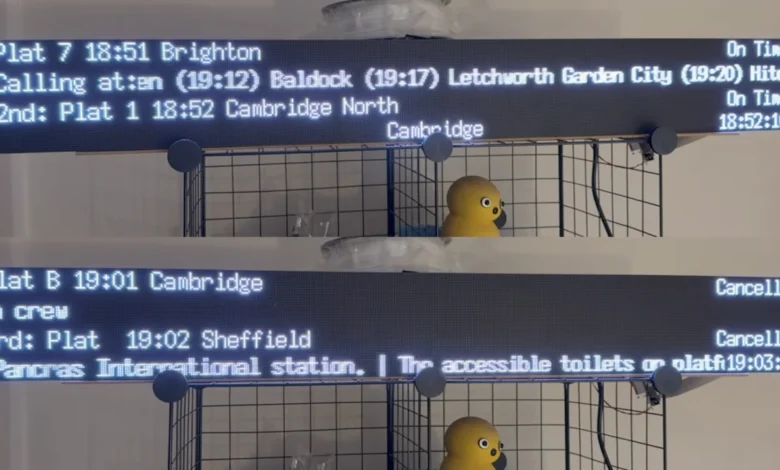
The familiar, rhythmic flicker of a train station departure board has long evoked a sense of nostalgic anticipation for travelers. The glowing, segmented digits and the constant stream of destinations and times create a unique ambiance, often confined to the bustling terminals themselves. However, for enthusiasts who yearn to bring this distinctive aesthetic into their personal spaces, a recent DIY project by YouTuber Jon Morris Smith offers a compelling solution. Smith has successfully engineered a homebrew departure board, transforming a collection of modern electronics into a functional and visually captivating replica of the classic railway information display. This project not only replicates the iconic look but also integrates real-time travel data, proving that vintage charm and cutting-edge technology can coexist harmoniously in a domestic setting.
The Genesis of a Homebrew Departure Board
Jon Morris Smith, a self-proclaimed lifelong train aficionado and a regular commuter, harbored a long-standing desire to own his own departure board. His motivation stemmed from both a personal fascination with railway aesthetics and a practical need for a personalized travel information system. Smith expressed his ambition on his personal website, "Another Partial Success," stating, "Being a life-long train fan I’ve always wanted my own departure board, and as a regular commuter one which shows my usual route." This personal connection to the project imbues it with a relatable narrative, highlighting the appeal of recreating cherished experiences through DIY ingenuity.
The initial exploration into acquiring a departure board led Smith to examine commercially available LED dot-matrix screens. However, he quickly encountered significant financial barriers. Many pre-made solutions were prohibitively expensive, while others necessitated ongoing subscription fees for access to real-time data. These commercial limitations spurred Smith to consider a more accessible and customizable approach. Reflecting on this challenge, he mused, "My thought—How hard can it be? And here we are." This sentiment underscores the spirit of innovation often found in the maker community, where perceived obstacles become opportunities for creative problem-solving.
The Technical Backbone: Raspberry Pi and LED Matrices
At the core of Smith’s creation is the ubiquitous 1GB Raspberry Pi 4, a compact and versatile single-board computer that has become a cornerstone of countless DIY electronics projects. The Raspberry Pi serves as the central processing unit, managing the display logic and data retrieval. Connected to this is a matrix board, which acts as an interface, and four LED matrices, each measuring 128 by 64 pixels. These matrices are the visual output, capable of rendering text and graphics with the characteristic segmented look of traditional departure boards.
Powering this setup is a robust 5-volt, 5-amp power supply. This specification is crucial for ensuring a consistent and flicker-free display across all four LED matrices, even when displaying complex information or when the system is under load. The choice of a reliable power supply is a testament to the practical considerations involved in building functional electronics, emphasizing that aesthetic appeal must be supported by stable performance.
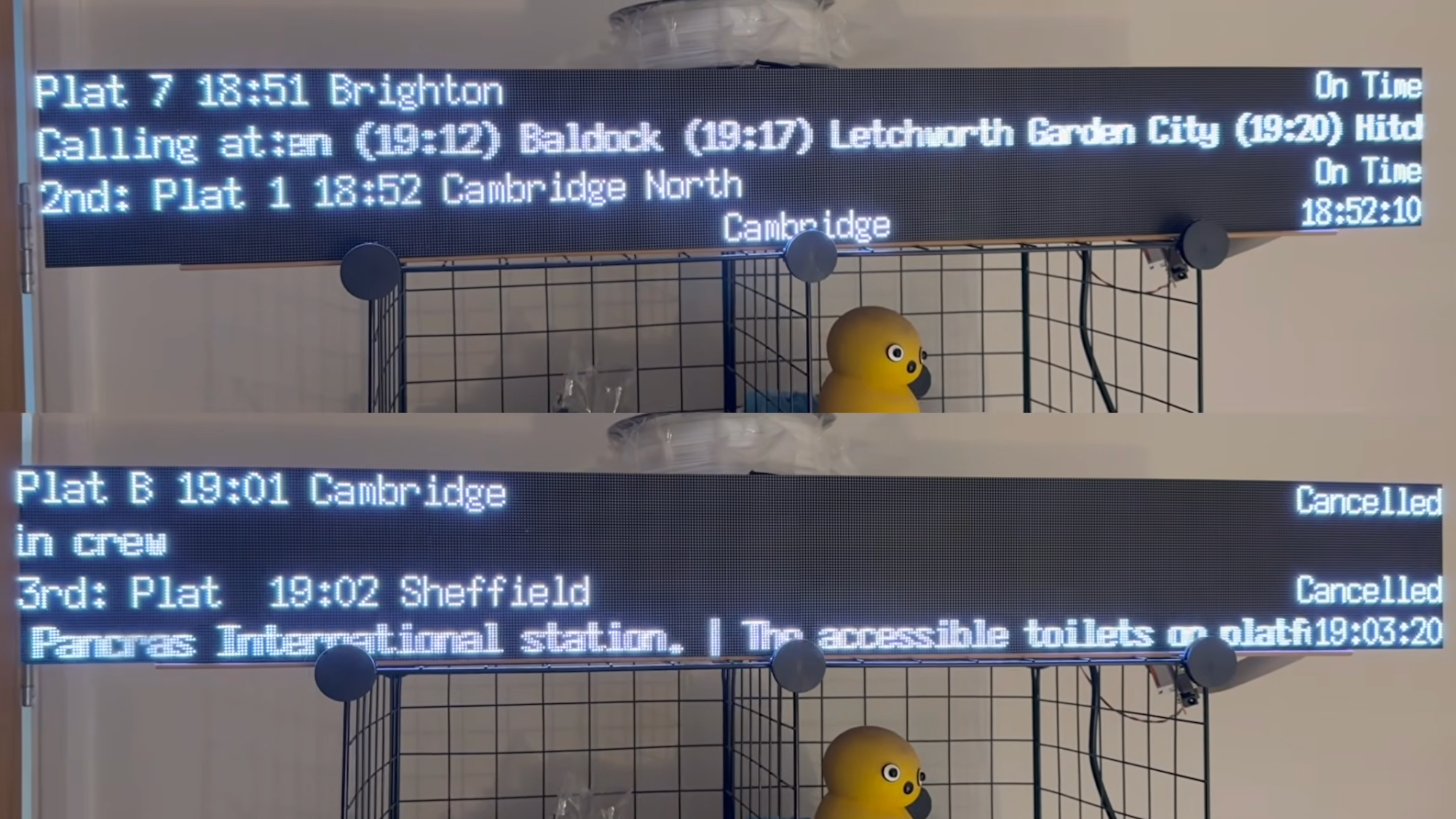
The software configuration is equally vital. Smith developed custom departure board software to run on the Raspberry Pi 4. This software is responsible for interpreting data and formatting it for display on the LED matrices. The real-time information for train schedules is sourced through a subscription to the Rail Data Marketplace. This platform provides access to crucial data feeds, allowing the departure board to function as a genuine information portal rather than a static decorative piece. The integration of real-time data transforms the project from a mere replica into a practical tool.
The Data Source: Rail Data Marketplace and Geographical Limitations
The choice of the Rail Data Marketplace as the data provider introduces a specific geographical focus to Smith’s project. This platform primarily offers UK-based train information. Consequently, the current iteration of Smith’s departure board is optimized for displaying schedules and updates for trains operating within the United Kingdom. This limitation, while inherent to the chosen data source, is acknowledged by Smith and presents an opportunity for further customization.
Smith himself notes this constraint, suggesting that the project is "available [with] plans [that] only display U.K. information, but can likely be tweaked as needed." This implies that the underlying architecture is adaptable. For users in other regions, such as the United States, the process would involve identifying and subscribing to a comparable domestic live train tracking service. Websites like Train Tracking, which provides live train information for the United States, are examples of such alternatives. A user interested in replicating this project outside the UK would need to integrate data from a similar service, potentially requiring adjustments to the custom software to accommodate different data formats and APIs.
Beyond Functionality: Aesthetic Appeal and Broader Implications
The allure of Smith’s departure board extends beyond its technical capabilities. The project taps into a broader cultural appreciation for vintage technology and the romanticism associated with train travel. The segmented glow of the LED matrices, combined with the dynamic flow of information, evokes a sense of stepping back in time, a sentiment that resonates with many. This project serves as a tangible reminder of a bygone era of information display, offering a unique decorative element that is both functional and conversation-starting.
The implications of this DIY project are manifold. Firstly, it democratizes access to a formerly exclusive aesthetic. What was once confined to public spaces can now be recreated in homes, offices, or even community centers, fostering a sense of connection to the broader world of travel and technology. Secondly, it highlights the power of open-source hardware and software, exemplified by the Raspberry Pi, in enabling complex and personalized technological solutions. Such projects can inspire others to explore their own interests through accessible platforms.
Furthermore, the project underscores the evolving landscape of smart home technology. While often associated with voice assistants and automated lighting, smart homes can also incorporate elements that appeal to niche interests and aesthetics. Smith’s departure board is an example of a personalized smart device that prioritizes a specific visual and informational experience, demonstrating that the future of home technology is not monolithic but can cater to diverse preferences.

The Future of DIY Departure Boards
The success of Jon Morris Smith’s project opens up avenues for further development and customization. For instance, incorporating multiple data feeds could allow a single board to display information for different regions or modes of transport. Imagine a departure board in a home office that simultaneously tracks flights, trains, and even bus schedules for various travel plans. The scalability of the LED matrix technology also suggests the possibility of larger, more immersive displays, perhaps recreating the grandeur of major railway stations within a home environment.
The integration of more advanced features is also a potential next step. While the current project focuses on information display, future iterations could include interactive elements, such as touch controls for querying specific destinations or saving favorite routes. The use of machine learning could even enable predictive capabilities, anticipating travel needs based on user behavior and calendar integration.
The underlying principle of Smith’s project—leveraging accessible technology to recreate a beloved analog experience—is a powerful model for future DIY endeavors. As technology continues to advance, the ability to bridge the gap between the digital and the physical, the modern and the nostalgic, will only become more valuable. Jon Morris Smith’s train station departure board stands as a testament to this trend, offering a glimpse into a future where personal technology is not just functional but also deeply personal and aesthetically resonant. It serves as an inspiration for makers and enthusiasts alike, proving that with a bit of ingenuity and a passion for the past, even the most iconic elements of public life can be brought home.
The project also implicitly addresses the growing interest in retro-futurism and the appreciation of design elements that have stood the test of time. In an era dominated by sleek, minimalist interfaces, the tangible, mechanical feel of older technologies holds a distinct appeal. The departure board, with its distinct mechanical flip-clack sound (though this DIY version is likely silent, relying on LED illumination) and its grid-like display, represents a design language that is both functional and visually arresting. Smith’s success in recreating this experience highlights a desire to connect with the tactile and the visual in ways that purely digital interfaces sometimes lack.
The DIY community continues to be a fertile ground for innovation, with platforms like YouTube, Hackaday, and personal blogs serving as crucial dissemination channels for ideas and tutorials. Smith’s willingness to share his process, even with the caveat of regional data limitations, fosters a collaborative environment where others can learn, adapt, and build upon his work. This iterative process of creation and sharing is fundamental to the advancement of accessible technology and the democratization of complex engineering. The journey from a personal desire to a fully functional, aesthetically pleasing device is a narrative that resonates deeply within this community and beyond, encouraging a new generation of makers to tackle their own ambitious projects.