California Pioneers Environmental Reparations with Direct Cash Aid for Families Living Near Inglewood Oil Field

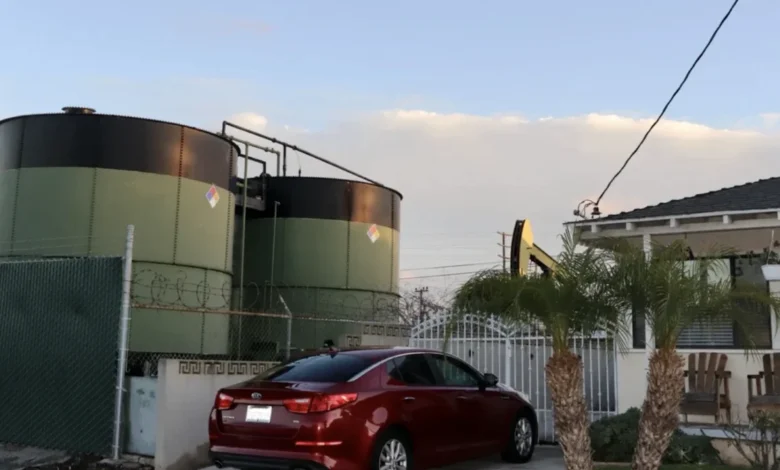
In a landmark legislative move that redefines the intersection of corporate accountability and public health, California is on the verge of implementing a direct cash-assistance program for residents living in the shadow of the Inglewood Oil Field. Assembly Bill 1661, currently awaiting the signature of Governor Gavin Newsom, marks a significant shift in environmental policy by transitioning from mere regulatory oversight to a model of direct restitution for communities disproportionately burdened by industrial pollution. The bill authorizes the distribution of $5 million—generated through penalties levied against low-producing oil wells—to provide financial relief to 1,000 households that have suffered documented respiratory or reproductive health impacts linked to long-term exposure to the field’s emissions.
A Legacy of Exposure: The Historical Context
The Inglewood Oil Field, one of the most productive urban drilling sites in United States history, has functioned for over a century, frequently operating in close proximity to residential areas that have historically been home to Black and lower-income families. For decades, residents like Regina Martin have lived alongside the rhythmic, constant movement of pumpjacks. The atmospheric reality for these neighborhoods has often been defined by the persistent, sulfurous odor of hydrogen sulfide and the particulate matter generated by industrial extraction.
Scientific research has long established a link between the proximity of urban oil infrastructure and adverse health outcomes. Studies from the University of Southern California and other research institutions have consistently found that residents living within a few miles of such sites exhibit higher rates of asthma, cardiovascular disease, and specific reproductive health complications. For many residents, this has translated into a dual burden: the physical toll of chronic illness and the financial strain of managing medical conditions, often exacerbated by the historical devaluation of their property due to the surrounding industrial landscape.
Legislative Chronology: From Regulation to Restitution
The road to AB 1661 is rooted in a broader, multi-year legislative strategy led by Assemblymember Isaac G. Bryan, who represents the affected districts. The effort to secure this funding represents the second phase of a systemic approach to managing the oil field’s decline.
- 2024: Governor Newsom signs AB 2716, a foundational piece of legislation that mandated the eventual closure of the Inglewood Oil Field by 2030. Crucially, the bill established a financial penalty structure for low-producing wells, which are statistically more prone to leaking methane and other volatile organic compounds.
- Early 2026: Regulatory bodies begin collecting monthly fees of $10,000 per non-compliant well. This revenue was earmarked for a "community repair and reinvestment fund," specifically restricted for use within a 2.5-mile radius of the drilling site.
- September 2026: The California legislature passes AB 1661, formalizing the mechanism for the $5 million allocation to direct household aid.
- October 2026 (Projected): Governor Newsom is expected to sign the bill into law, triggering the development of the application process by Los Angeles County.
Data and Economic Implications
The financial structure of the program is designed to be self-sustaining through the penalties imposed on the oil operators. By charging $10,000 per well per month, the state is effectively forcing companies to internalize the cost of their negative externalities. For the 1,000 qualifying households, the assistance is capped at $5,000 per unit, providing a immediate, albeit limited, buffer against the economic costs associated with health issues.
However, the scale of the need far outweighs the current funding capacity. There are tens of thousands of households within the 2.5-mile impact zone. Critics and advocates alike note that while $5 million is a historic start, it represents a fraction of the cumulative economic damage caused by a century of extraction. The state has also passed legislation to shield these reparation payments from taxation, ensuring that the full amount of the aid reaches the families without being clawed back by the state, a policy change championed by Assemblymember Tina McKinnor to maximize the impact of the funds.
Official and Community Perspectives
Assemblymember Isaac G. Bryan has framed the bill not just as a health initiative, but as an act of fundamental fairness. "The company has essentially just been extracting from the community with no investments in the community," Bryan noted during legislative sessions. His argument centers on the idea that the state has a moral obligation to facilitate a transfer of wealth back to those who paid the "hidden" price for the region’s energy production.
Environmental justice groups, including Black Women for Wellness, have played a pivotal role in shaping the dialogue. Tianna Shaw-Wakeman, the organization’s environmental justice program director, has cautioned that the success of the program will hinge on the accessibility of the application process. There is a strong push to move away from rigid, bureaucratic requirements for medical proof, which often disadvantage the very people the program is intended to help—those who may suffer from chronic health issues but lack the resources for formal, continuous medical documentation. Instead, advocates are pushing for "self-attestation," a model that trusts the testimony of the residents.
Broader Impact and Future Challenges
The implementation of AB 1661 serves as a high-stakes test case for "environmental reparations." If successful, the model of taxing polluters to directly compensate affected residents could become a standard policy tool in other states currently grappling with the transition away from fossil fuels. It signals a move toward a more holistic view of environmental justice, one that acknowledges that the damage done to human health and generational wealth is just as real as the physical pollution in the air.
However, the program faces significant challenges, the most pressing of which is the potential for gentrification. As oil wells close and land is remediated, the property values in previously blighted areas are beginning to rise. Community leaders are acutely aware that if the land is cleaned up only to displace the original residents through rising rents, the "reparation" will have failed.
"We can’t replace toxic oil extraction with gentrification," Shaw-Wakeman warned. The long-term goal for many activists is to ensure that the transition of these sites—whether into public parks, affordable housing, or green space—is controlled by the community members who bore the brunt of the pollution.
Analysis of Implications
The shift toward direct cash aid is a departure from traditional environmental policy, which typically focuses on site remediation or broader community grants for infrastructure. By targeting individuals, the state is making a direct admission of the personal, human cost of industrial policy.
The political implications are equally significant. By establishing this precedent, the California legislature has signaled that industrial companies are no longer insulated from the long-term societal consequences of their operations. The "polluter pays" principle, long a staple of environmental regulation, has been extended to include direct, individual victim compensation. Whether this will lead to a broader, more aggressive movement for environmental reparations remains to be seen, but the infrastructure for such a movement is now firmly in place in the nation’s most populous state.
As Los Angeles County begins the task of designing the rollout for these funds, the eyes of the nation will be on how they handle the delicate balance of eligibility, verification, and the ethical imperative to provide meaningful relief to those who have lived in the shadow of the pumpjacks for generations. The legacy of the Inglewood Oil Field is changing, but the fight to address the full scope of its history is only just beginning.