Chase introduces Invest Your Points feature for Ultimate Rewards users while highlighting strategic redemption trade-offs

Chase has officially launched a new redemption feature titled Invest Your Points, allowing cardholders to convert their Ultimate Rewards points directly into cash for deposit into J.P. Morgan investment accounts. The move marks a significant shift in how the banking giant integrates its loyalty ecosystem with its brokerage services. While the new feature offers a streamlined path for wealth accumulation, financial analysts and rewards experts emphasize that the inherent valuation of one cent per point often falls short of the potential value achievable through other redemption channels, particularly when utilizing the Pay Yourself Back program or travel transfer partnerships.
The Evolution of Ultimate Rewards Integration
The announcement, made on September 16, reflects a broader trend among major financial institutions to consolidate customer activity within a single proprietary ecosystem. By facilitating the movement of reward points into brokerage accounts, Chase is effectively encouraging users to treat their credit card rewards as a supplement to their investment portfolios.
Historically, Ultimate Rewards points have been viewed primarily as a currency for travel, retail, or statement credits. The Invest Your Points feature formalizes the "cash-equivalent" status of these points at a fixed rate of $0.01 per point. For a customer holding 100,000 points, this translates to a $1,000 investment. While the convenience is notable, it is critical to observe that this rate matches the standard cash-back redemption rate already available to most Chase cardholders. The novelty of the feature lies not in the valuation, but in the frictionless transfer to the J.P. Morgan brokerage environment, keeping the capital within the bank’s financial infrastructure.
Chronology and Operational Mechanics
The rollout of the Invest Your Points feature follows a series of updates to the Chase digital interface. Users can access the option by navigating to the "Benefits & Travel" section within the Chase mobile application or website, selecting "Redeem Rewards," and opting for the "Invest Your Points" prompt.
This development follows the continued refinement of the Pay Yourself Back (PYB) initiative, which was significantly bolstered during the 2020 pandemic to provide cardholders with more flexible redemption options. Unlike the flat-rate investment option, the PYB program offers tiered values depending on the card product and the category of the purchase being offset. This tiered structure provides a clear timeline for users to evaluate whether an investment deposit is truly the most efficient use of their accrued rewards.
Comparative Valuation: Investment vs. Pay Yourself Back
A rigorous analysis of redemption options reveals that the Invest Your Points feature is rarely the optimal financial strategy for maximizing rewards. Chase’s current Pay Yourself Back offers, which remain valid through September 30, 2026, provide a higher cents-per-point (CPP) value for specific categories.
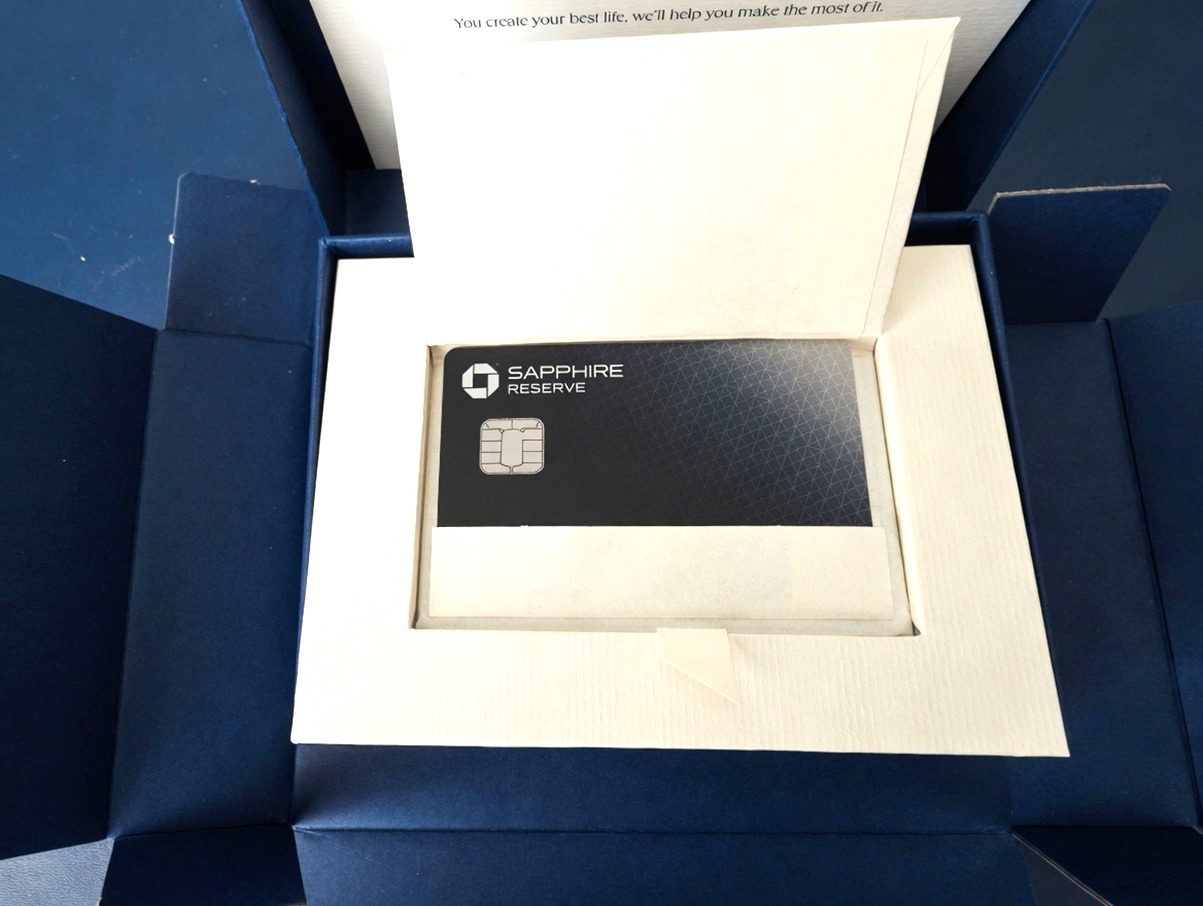
For instance, Sapphire Reserve and J.P. Morgan Reserve cardholders can redeem points at a value of 1.2 cents per point for gas station and public transit expenses, and up to 1.5 cents per point for eligible charitable donations. In contrast, depositing those same points into an investment account at a flat 1.0 cent per point results in a 20% to 50% loss in potential purchasing power relative to the PYB program.
The following table illustrates the current disparity in redemption efficiency across various card products:
| Card Product | Category | Cents Per Point |
|---|---|---|
| Sapphire Reserve | Charitable Donations | 1.50 |
| Sapphire Reserve | Annual Fee Payments | 1.25 |
| Sapphire Reserve | Gas / Public Transit | 1.20 |
| Sapphire Preferred | Charitable Donations | 1.25 |
| Ink Business Preferred | Charitable Donations | 1.25 |
| Ink Business Preferred | Shipping/Internet/Cable | 1.10 |
When a cardholder opts to redeem points for an investment, they are essentially bypassing the opportunity to "erase" high-value expenses at a premium rate. For example, by applying 10,000 points to a gas bill at the 1.2 cent rate, a user covers $120 in expenses. Investing those same 10,000 points nets only $100. The $20 "saved" by utilizing the higher-value redemption category can then be deposited into an investment account, ultimately resulting in a larger total capital injection.
The Role of Travel Redemptions in Wealth Management
Beyond the Pay Yourself Back program, travel redemptions continue to represent the high-ceiling for Ultimate Rewards value. For many, the primary objective of a credit card rewards strategy is to offset travel costs that would have otherwise required out-of-pocket cash.
If a traveler redeems points for a flight or hotel stay at a valuation of 2.0 cents per point—a standard target for experienced users—100,000 points would effectively save the user $2,000. If that user then takes the $2,000 they would have spent on travel and deposits it into their brokerage account, they have effectively doubled the utility of their rewards compared to the new "Invest Your Points" feature.
However, this strategy is contingent upon the travel being an expense the user would have incurred regardless. Redeeming points for a premium business-class ticket that a user would not otherwise purchase does not constitute a true cash savings. Furthermore, lower-value transfers to partners like Marriott or IHG, where the value per point often drops below 1.0 cent, make the fixed "Invest Your Points" option a more reliable, if less lucrative, alternative.
Strategic Implications for the Consumer
The introduction of "Invest Your Points" signals a pivot by Chase toward a "financial wellness" marketing strategy. By positioning points as a foundation for investing, the bank appeals to a demographic increasingly interested in personal finance and wealth management.
However, from an objective financial standpoint, the feature serves as a "convenience trap." While it simplifies the process of converting points to assets, it discourages the comparative shopping required to extract maximum value from the rewards ecosystem. For the average cardholder, the takeaway is clear: the ability to move points into an investment account is a useful utility for those seeking simplicity, but it should not be the default choice for those looking to maximize the return on their annual fees and spending.
Future Outlook and Market Context
As competition among premium credit card issuers intensifies, Chase is likely to continue iterating on its rewards platform to keep users engaged within its ecosystem. The "Invest Your Points" feature is a low-risk addition that provides an alternative for customers who find travel redemptions cumbersome or who are disinterested in tracking the shifting categories of the Pay Yourself Back program.
Financial advisors typically suggest that consumers prioritize high-interest debt repayment or tax-advantaged retirement contributions before focusing on brokerage-based rewards redemptions. Because the "Invest Your Points" feature operates at a flat 1:1 ratio, it functions similarly to a standard cash-back redemption. Users who already have their points sitting idle and have no upcoming travel plans may find this a viable way to put those points to work, but they do so at the cost of the higher potential returns available elsewhere in the Chase ecosystem.
Ultimately, the utility of the new feature will depend on the user’s individual financial goals. Those prioritizing simplicity will likely welcome the new integration, while those prioritizing maximum return on investment will continue to navigate the more complex, yet more rewarding, pathways of travel transfers and strategic statement credits. As the landscape for credit card rewards continues to evolve, the ability to discern between convenience and value remains the most important tool for the savvy consumer.