New audit reveals systemic failures in USPS ballot handling as Supreme Court considers sweeping changes to mail-in voting protocols

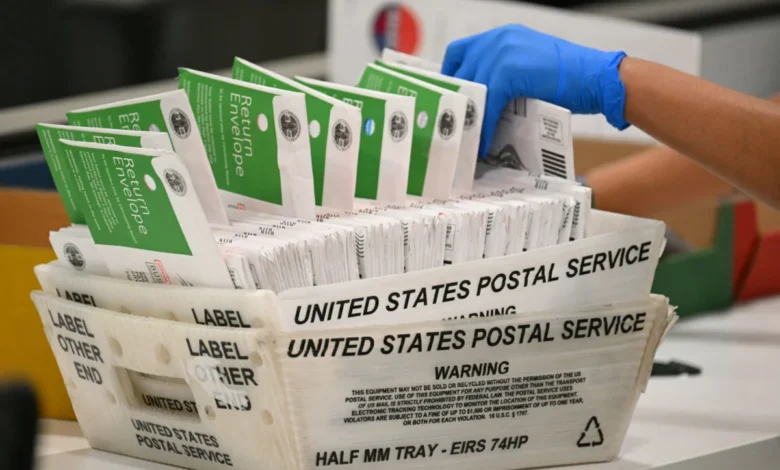
A recently disclosed audit from the U.S. Postal Service (USPS) Office of Inspector General has ignited a firestorm of concern regarding the agency’s capacity to manage the integrity of the upcoming November election. The report, dated September 4 and previously unreleased, provides a granular look at operational deficiencies during this year’s primary season, identifying lapses in training, tracking, and postmarking procedures. These findings have emerged at a precarious moment, as the U.S. Supreme Court deliberates on whether to permit the implementation of a controversial executive order issued by President Donald Trump, which would fundamentally alter how mail-in ballots are processed and verified nationwide.
The audit’s release has catalyzed a broader debate among election administrators, civil rights advocates, and postal labor representatives, all of whom are questioning whether the agency is equipped to absorb additional administrative burdens under existing conditions. With the November general election fast approaching and millions of ballots already slated for distribution, the intersection of these operational failures and new regulatory demands has created a high-stakes environment for the American electoral process.
Anatomy of an Operational Failure: Findings from the Inspector General
The Inspector General’s investigation, which spanned 14 mail processing facilities and 73 delivery units across eight states, sought to evaluate how strictly the Postal Service adhered to its own established protocols for "Election and Political Mail." While the report emphasizes that roughly 99% of ballots tracked reached election officials in a timely fashion, the remaining 1%—coupled with significant procedural gaps—has drawn intense scrutiny.
The audit identified three primary areas of concern: training deficiencies, tracking inaccuracies, and postmarking errors. Perhaps most alarming to election integrity advocates is the lack of standardized knowledge among staff. Investigators found that at nearly 30% of the delivery units visited, essential election-related training materials were either missing or not properly displayed. In some instances, frontline staff and local management expressed a fundamental lack of familiarity with the specific requirements for handling ballots.
Postmarking, a critical step for ballots in the 14 states plus Washington, D.C., that require an Election Day postmark for validity, was found to be inconsistently applied. The audit revealed that at 12% of the surveyed facilities, management was unclear on the proper methodology for postmarking ballots. Furthermore, at five out of nine processing facilities, retail clerks were found to be using manual stamps with incorrect dates. One notable incident in Pennsylvania saw 56 ballots erroneously postmarked, a mistake that could have directly resulted in the rejection of those votes by local election boards.
Logistical errors also plagued the process. In one specific case at a processing plant in Harrisburg, Pennsylvania, 108 ballots were erroneously bundled with standard commercial mail. The oversight necessitated an emergency, last-minute intervention to expedite the shipment to Pittsburgh on the morning of the election, a maneuver that only narrowly prevented the ballots from being invalidated.
The Looming Legal Battle: Executive Order 2026-09
The timing of these findings is particularly sensitive due to the ongoing litigation before the Supreme Court. The court is currently reviewing a challenge to a March executive order signed by President Trump, which seeks to centralize the regulation of mail-in voting through the USPS. Under the proposed rules, states would be required to transmit comprehensive lists of all eligible voters to the Postal Service. The agency would then serve as the primary arbiter in determining which voters receive ballots and managing the subsequent distribution process.
Critics, including a whistleblower who recently submitted a formal disclosure to Senator Richard Blumenthal, argue that the system is being rushed without sufficient stress testing. The whistleblower’s concerns, which align with reports from internal postal officials, suggest that the new system could result in the widespread disenfranchisement of voters due to both the complexity of the logistics and the potential for technological or administrative failure.
The American Postal Workers Union (APWU) has weighed in heavily, filing a brief with the Supreme Court that argues the current mandate is practically unfeasible. The union contends that the Postal Service’s existing workforce, already stretched thin, cannot absorb the increased regulatory responsibility without a significant risk to the democratic process.
Expert Analysis and Political Fallout
David Becker, executive director of the Center for Election Innovation and Research and a former Department of Justice civil rights attorney, characterized the audit findings as a "sobering reality check." Becker argues that the agency’s performance in the primaries serves as a "canary in the coal mine" for the general election.
"The audit confirms that the Postal Service has a significant distance to travel to meet its core obligations regarding the timely delivery of election mail," Becker stated. "When you layer the administration’s radical new responsibilities under the executive order on top of these existing procedural gaps, the system risks becoming completely overwhelmed. The agency is, quite simply, not ready for this scale of change."
The sentiment is echoed by state-level officials. Chelsey Wininger, executive director of the Democratic Association of Secretaries of State, noted that the audit validates the organization’s long-standing opposition to implementing new postal rules during an election year. "The audit proves that the Postal Service struggles to implement even basic, long-standing changes to its processes consistently," Wininger said. "Asking them to overhaul their entire election mail operation weeks before voters head to the polls is a recipe for catastrophe."
Official USPS Response and Internal Defense
In its formal response included in the audit, the Postal Service management defended its overall performance, describing the identified failures as "isolated incidents." The agency noted that while it acknowledges the need to reinforce internal procedures, the primary election season demonstrated "strong performance" regarding the millions of ballots successfully processed.
The agency officially agreed to implement all but one of the Inspector General’s recommendations. The rejected recommendation involved a proposal to notify customers immediately when regional transportation plans are altered—a measure the agency argued was logistically impractical and potentially confusing for the public.
Regarding the specific failures, such as the New Jersey ballots that were inadvertently routed through Tennessee, the USPS characterized these as anomalies within a massive, complex network. "While we acknowledge that we can always reinforce and amplify our internal processes and procedures—and will continue to do so between now and November—overall ballot mail performance is strong," the agency stated.
Broader Implications for the November Election
The discrepancy between the USPS’s defensive posture and the findings of its own independent watchdog has created a climate of uncertainty for election administrators across the country. As the Supreme Court considers the legality of the new mail-voting rules, the audit provides a evidentiary basis for those arguing that the status quo—or a more cautious approach—is necessary to ensure the franchise.
The stakes for the November election are historically high. With over 6.3 million ballots tracked during the primary season, the sheer volume of mail-in participation is expected to rise significantly in the general election. If the procedural gaps identified in the audit are not addressed, even a small percentage of systemic error could translate into tens of thousands of rejected ballots in competitive swing states.
For now, the legal and operational future of the U.S. mail-in voting system rests in the hands of the Supreme Court. As the judiciary weighs the constitutional and practical merits of the administration’s order, local election officials remain in a state of high alert, balancing the need to inform voters of their options with the anxiety of a system that may be operating on the edge of its capacity. The final weeks before the November election will be a critical test of whether the Postal Service can translate the lessons of its primary season audit into the rigorous, error-free performance that the democratic process demands.