Environmental Coalitions and Tribes File Federal Lawsuits to Block Trump Administration Rollback of Critical Endangered Species Act Protections

A coalition of environmental organizations and Native American tribes has launched a series of federal lawsuits against the Trump administration, challenging a new regulatory rule that effectively dismantles habitat protections for the nation’s most vulnerable wildlife. The rule, finalized in July 2026, rescinds the long-standing regulatory definition of "harm" under the Endangered Species Act (ESA), a move that legal experts and conservationists describe as the most significant weakening of the landmark environmental law since its inception in 1973. By removing habitat degradation from the scope of prohibited activities, the administration has paved the way for expanded industrial development, oil and gas exploration, and large-scale infrastructure projects in areas previously designated as critical for the survival of imperiled species.
The Endangered Species Act, often referred to as the "Magna Carta" of environmental law, was designed to prevent the extinction of at-risk plants and animals. Central to its enforcement has been the "take" prohibition, which forbids any person or entity from harassing, harming, pursuing, hunting, shooting, wounding, killing, trapping, capturing, or collecting a listed species. For decades, the U.S. Fish and Wildlife Service (FWS) and the National Marine Fisheries Service (NMFS) have interpreted "harm" to include significant habitat modification or degradation that results in the actual death or injury of wildlife by significantly impairing essential behavioral patterns, such as breeding, feeding, or sheltering. The new rule eliminates this interpretation, a shift that the administration argues is necessary to alleviate the regulatory burden on private landowners and industry.
The Legal Challenge and Plaintiffs
The legal battle is being fought on two primary fronts. One lawsuit was filed by a coalition of nine environmental groups, including the Center for Biological Diversity, the Sierra Club, Oregon Wild, and the Humane Society of the United States, represented by the nonprofit law firm Earthjustice. A separate, concurrent lawsuit was filed by the Swinomish Indian Tribal Community and the Squaxin Island Tribe in the U.S. District Court for the Western District of Washington. Both complaints argue that the Interior Department’s decision to rescind the harm definition violates the statutory language of the ESA and ignores the fundamental biological reality that species cannot survive without intact habitats.
The plaintiffs contend that the administration’s actions are "arbitrary and capricious" under the Administrative Procedure Act, alleging that the government failed to provide a reasoned explanation for reversing fifty years of conservation policy. Furthermore, the tribes argue that the rule change threatens their treaty-reserved rights to hunt and fish, as the degradation of habitat will inevitably lead to the collapse of culturally and economically vital species, such as the Pacific salmon.
Historical Context and the 1995 Supreme Court Precedent
The definition of "harm" has been a point of contention for decades, particularly between conservationists and industries such as logging, mining, and real estate development. The current conflict mirrors a high-stakes legal battle from the mid-1990s. In the landmark 1995 case Babbitt v. Sweet Home Chapter of Communities for a Great Oregon, the United States Supreme Court ruled 6-3 that the Interior Department had the authority to include habitat modification in its definition of "harm." Justice John Paul Stevens, writing for the majority, noted that the text and structure of the ESA made it clear that Congress intended to provide broad protections for endangered species, which naturally included the environments they depend on.
The Trump administration’s recent rescission seeks to circumvent this precedent by arguing that the 1995 interpretation was a "regulatory intrusion" that exceeded the original intent of Congress. Interior Secretary Doug Burgum defended the move, stating that the previous definition functioned as a "regulatory trap" that drove up costs for American families and businesses. However, legal scholars point out that while the Supreme Court allowed the broad definition, the administration’s executive action to remove it creates a vacuum in federal enforcement that may leave species on private lands—where the majority of endangered species reside—with virtually no protection from industrial encroachment.
A Chronology of Policy Shifts
The rescission of the "harm" definition is the latest in a series of efforts by the Trump administration to reform the ESA in favor of "energy dominance" and deregulation. The following timeline illustrates the progression of these policy shifts:
- 1973: President Richard Nixon signs the Endangered Species Act into law with nearly unanimous bipartisan support.
- 1975: Regulatory definitions are established, including the broad interpretation of "harm" to include habitat loss.
- 1995: The Supreme Court upholds the "harm" definition in Babbitt v. Sweet Home.
- 2019: A major study published in Conservation Science and Practice finds that 81% of species listed under the ESA are threatened primarily by habitat loss and degradation.
- April 2025: The Trump administration officially proposes the rescission of the harm definition, sparking an immediate outcry from the scientific community.
- May 2025: The public comment period closes with over 358,000 submissions, the vast majority of which oppose the change.
- March 2026: The "God Squad," a rare committee of high-level officials, grants exemptions for oil and gas activities in the Gulf of Mexico, further signaling a shift away from ESA compliance.
- July 2026: The final rule rescinding the harm definition is published in the Federal Register.
- September 14, 2026: The date the new rule is scheduled to take official effect, barring a court-ordered injunction.
Scientific Data on Habitat and Extinction
The scientific consensus regarding the role of habitat in preventing extinction is overwhelming. According to data from the Center for Biological Diversity and various academic studies, habitat loss is the single greatest threat to biodiversity in the United States. Unlike direct threats like poaching or overhunting, which are relatively easy to monitor and regulate, habitat degradation is often incremental. A road project here, a drainage project there, and a timber sale elsewhere can collectively isolate populations until they are no longer viable.
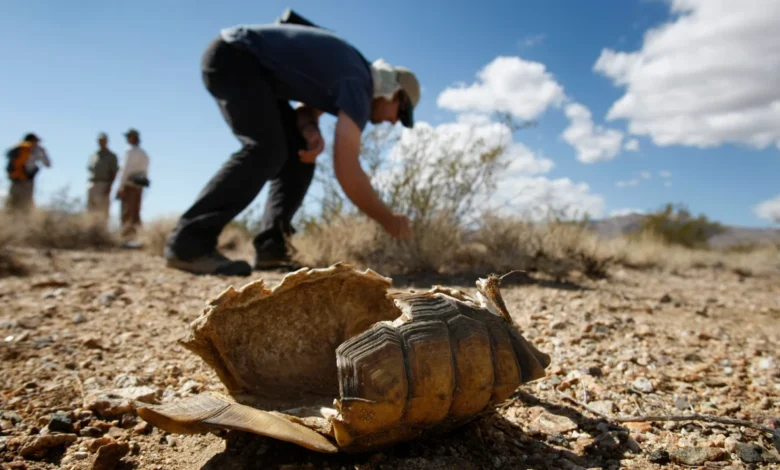
Specific species cited in the lawsuits illustrate the stakes. The desert tortoise, found in the Southwest, has seen its population plummet as its fragile desert habitat is fragmented by energy corridors and urban expansion. The ivory-billed woodpecker, long thought to be extinct but the subject of ongoing search and recovery efforts, serves as a grim reminder of how the destruction of old-growth forests can lead to the permanent loss of a species. In the Pacific Northwest, salmon populations—which are already struggling with rising water temperatures due to climate change—rely on pristine stream habitats for spawning. Without the "harm" rule, developers could potentially destroy these riparian zones without facing federal penalties, provided they do not directly kill a fish in the process.
Official Responses and Industry Perspectives
The administration has framed the rule change as a victory for common sense and economic efficiency. In a statement released by the Department of the Interior, officials argued that the previous rules created "unnecessary permitting" and "compliance costs" that hindered local governments and small businesses. The Forest Landowners Association and various oil and gas trade groups have voiced support, arguing that the ESA had been "weaponized" to block legitimate economic activity. They contend that the original intent of the law was to prevent the active killing of animals, not to give the federal government veto power over how a private citizen uses their land.
Conversely, tribal leaders emphasize that the rule ignores the federal government’s trust responsibility to Indigenous nations. Tandy Wilbur, a senator and fisheries manager for the Swinomish Tribe, noted that salmon are not just a resource but are central to the spiritual and cultural identity of the Coast Salish people. The tribes argue that by allowing the degradation of salmon habitat, the government is effectively allowing the destruction of their way of life.
Broader Implications and Future Outlook
The outcome of these lawsuits will have profound implications for the future of American biodiversity. If the courts uphold the Trump administration’s rule, the burden of protecting habitat will shift almost entirely to state governments and private land trusts, many of which lack the resources or the legal authority of the federal government. Analysts suggest that this could lead to a "patchwork" of protections that fail to account for the migratory patterns and large-scale ecosystems that many species require.
Furthermore, there is the risk of long-term legal entrenchment. If the case reaches the current Supreme Court, which is significantly more conservative than the 1995 bench, the court could issue a ruling that permanently narrows the scope of the ESA. Such a decision would make it nearly impossible for future administrations to restore habitat protections without a new act of Congress—an unlikely prospect given the current political polarization.
As the September 14 effective date approaches, the environmental and tribal plaintiffs are seeking a preliminary injunction to halt the rule’s implementation. They argue that once habitat is destroyed, the damage is often irreversible, making immediate judicial intervention a necessity. For the manatees of Florida, the grizzly bears of the Rockies, and the salmon of the Pacific, the legal interpretation of a single word—"harm"—may well determine their survival in the 21st century.
Related posts: