Betting on Destruction: The Ethical and Safety Implications of Wildfire Prediction Markets

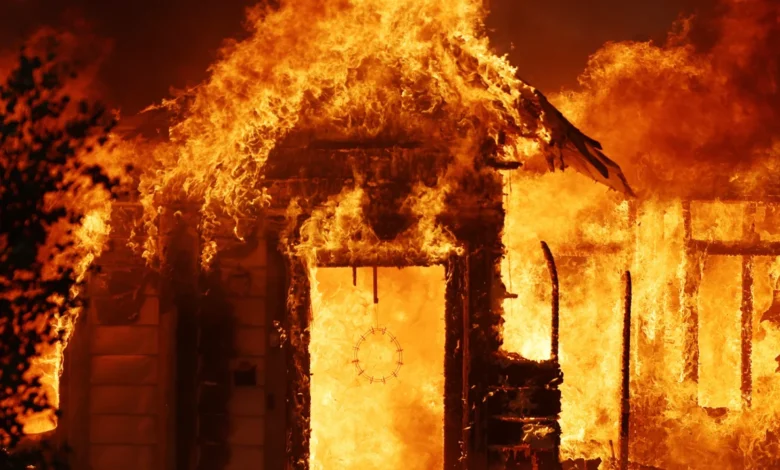
While Sylvie Andrews and her partner were racing to salvage what they could from the newly built home they had spent a decade dreaming of, the Eaton Fire was systematically reducing their neighborhood in Altadena, California, to ash. It was January 2025, and the fire, fueled by erratic winds and bone-dry vegetation, was part of a dual-disaster scenario that included the Palisades Fire to the west. Together, these infernos claimed 31 lives and leveled more than 16,000 structures, leaving a scar on the Southern California landscape and the collective psyche of its residents. Yet, as thousands of families faced the most harrowing moments of their lives, a different kind of activity was surging online: high-stakes financial speculation on exactly how much of the state would burn.
The rise of prediction markets has introduced a controversial new layer to disaster management. Platforms like Polymarket, the world’s largest decentralized prediction market, allowed users to wager on the outcomes of the very fires that were destroying homes like Andrews’. For some, it was a test of analytical skill or a way to hedge against climate risk; for survivors and ethicists, it represented a "morally reprehensible" gamification of human suffering. As the 2025 wildfire season transitions into a new year of climate uncertainty, the intersection of speculative finance and natural disaster is prompting urgent questions about public safety, the incentive for arson, and the ethical boundaries of the digital age.
The Mechanics of Disaster Speculation
Prediction markets operate as information aggregators where participants trade "shares" in the outcome of future events. These markets function similarly to stock exchanges, but instead of betting on a company’s performance, users bet on "yes" or "no" propositions. In January 2025, Polymarket featured nearly 20 distinct betting pools related to the Southern California wildfires. Questions ranged from the specific—"How many acres will the Palisades Fire burn by Friday?"—to the operational—"When will the Palisades Fire be 50 percent contained?"
The financial structure of these bets is binary. A contract pays out $1 if the prediction is correct and $0 if it is not. The trading price of the contract reflects the market’s perceived probability of the event occurring; for instance, a contract trading at 60 cents suggests a 60 percent probability of that outcome. According to data tracked by Aeon Magazine, over $1.2 million was wagered on the Southern California fire outcomes during that single week in January. This influx of capital into disaster-related betting has created a burgeoning economy built on the forecasting of catastrophe.
A Chronology of the 2025 Wildfire Betting Surge
The timeline of the January 2025 fires highlights the rapid speed at which prediction markets react to breaking news.
- Tuesday, January 7: The Palisades Fire ignites in the late morning. Within hours, Polymarket and other decentralized platforms list the first "acreage" contracts.
- Wednesday, January 8: The Eaton Fire begins in Altadena. New betting pools emerge regarding whether the two fires will merge or if they will reach specific high-value areas like Santa Monica or the Rose Bowl.
- Friday, January 10: As containment efforts struggle against Santa Ana winds, the volume of bets on "delayed containment" spikes. This coincides with some of the most destructive hours of the Eaton Fire, including the loss of the Andrews residence.
- Late January: Even as the fires reach full containment, secondary markets emerge regarding the total insurance payout and the potential for federal disaster declarations.
This sequence demonstrates that the "market" for disaster does not wait for official reports. It moves in real-time, often fueled by social media reports, amateur drone footage, and unverified rumors, creating a volatile information environment that can run counter to official emergency communications.
The Emergence of Specialized Platforms: The Wyldfyre Model
The phenomenon is no longer limited to general-interest platforms like Polymarket. A new entrant, "Wyldfyre," has launched specifically to target California’s wildfire risk. With the tagline, "You can’t predict wildfire. But you can trade on it," the platform attempts to frame speculation as a sophisticated financial tool.
Wyldfyre integrates real-time data from NASA’s FIRMS (Fire Information for Resource Management System) and the National Interagency Fire Center (NIFC) to provide "hotspot" tracking for its users. While the platform currently offers simulated trading, it has announced plans to transition to real-money wagering. Unlike general platforms, Wyldfyre prices risk at the county and city level, essentially allowing users to trade on the vulnerability of specific municipalities.
Proponents of such platforms argue that they provide a "public good" through crowdsourcing. The theory of the "wisdom of the crowd" suggests that when thousands of people put money on the line, the resulting market price becomes a more accurate forecast than any single expert model. Wyldfyre claims its platform turns "collective intelligence into better wildfire forecasting." However, this claim is sharply contested by the very agencies tasked with keeping the public safe.
Official Responses: Science vs. Speculation
State and federal firefighting agencies have been quick to distance themselves from prediction market data. The U.S. Forest Service has explicitly stated that it does not utilize information from these platforms for operational decision-making. A spokesperson for the agency emphasized that fire analysts rely on "validated science, proven predictive tools, and data from federal partners such as the National Weather Service and NOAA."
Phillip SeLegue, staff chief of CAL FIRE’s intelligence program, provided a detailed rejection of market-derived data. He noted that CAL FIRE utilizes deterministic, physics-based modeling that begins the moment a 911 call is processed. This modeling accounts for:
- Fuel and Vegetation Conditions: The moisture content of brush and timber.
- Topography: How the slope of the land will accelerate a fire’s spread.
- Weather Observations: Real-time wind speed and humidity levels.
- Resource Availability: The proximity of air tankers and ground crews.
"Our modeling is not informed by markets, wagering systems, or crowd predictions," SeLegue stated. The consensus among professionals is that while markets might be good at predicting the outcome of an election, they lack the physical and environmental inputs necessary to predict the behavior of a complex, chemical reaction like a wildfire.
The Arson Incentive and Public Safety Risks
Perhaps the most alarming concern raised by fire survivors and safety experts is the potential for "perverse incentives." Unlike a hurricane or an earthquake, which are purely natural phenomena, a wildfire can be started or influenced by human intervention.
Susan Sherman, who lost her childhood home in the Palisades Fire, expressed a fear shared by many in the wildland-urban interface: the threat of arson for profit. "That’s what has me nervous," Sherman said. If a participant has a significant financial stake in a fire burning a certain number of acres or reaching a specific landmark, the temptation to ensure that outcome through illegal means becomes a tangible risk.
Furthermore, ethicists point to the danger of "insider trading" in these markets. Firefighters, incident commanders, or land managers have access to non-public information regarding containment strategies, equipment failures, or planned backburns. If these individuals were to participate in prediction markets, they could profit from their knowledge of a fire’s likely path—or, in a worst-case scenario, make tactical decisions that favor their financial positions over public safety.
Ann Skeet, senior director of leadership ethics at the Markkula Center for Applied Ethics, warns that these markets diminish the value of human life. "When you start gambling on somebody’s potential death or harm, you’re really diminishing the value that you’re placing on human life," Skeet noted. This "transactional" view of disaster can lead to a desensitization of the public to the true cost of climate-driven catastrophes.
Legislative and Regulatory Frontiers
The legal status of prediction markets is currently a patchwork of federal and state regulations. In the United States, the Commodity Futures Trading Commission (CFTC) has historically been wary of "event contracts," particularly those involving "gaming" or activities contrary to the public interest.
In March 2024, a bipartisan group of representatives from Utah and California introduced federal legislation aimed at curbing the most extreme forms of event betting. The proposed bill would prohibit contracts related to terrorism, war, and "illegal activity." Senator Adam Schiff of California has also introduced companion legislation that would explicitly ban prediction contracts based on an individual’s death.
At the state level, Minnesota has taken the lead by becoming the first state to outlaw the hosting or advertising of prediction markets. This move prompted a swift legal challenge from the federal government, which argued that the state was overstepping its authority in a realm typically governed by federal commodity laws.
As of mid-2025, none of the proposed federal or state restrictions explicitly mention wildfires. However, the outcry following the Eaton and Palisades fires has led to calls for "disaster-specific" amendments that would prevent platforms from listing contracts based on active emergency events.
Conclusion: The Ethics of Recovery
The debate over wildfire betting ultimately highlights a growing divide in how society perceives risk in the era of climate change. For the "tech-optimists" and speculators, these markets are a neutral tool for price discovery and risk management. For survivors like Sylvie Andrews, they are a gut-wrenching reminder of a culture that prioritizes profit over empathy.
As California enters a new period of peak fire activity, the presence of platforms like Wyldfyre suggests that disaster speculation is not a passing trend but an emerging industry. The challenge for regulators and the public will be to determine if the "collective intelligence" gained from these markets is worth the risk to public safety and the erosion of social solidarity.
Andrews, for her part, offers a simple ethical litmus test for those who profit from the flames: "If someone won money in gambling with our fate, I would hope that they might be ashamed of themselves and take that money and donate it directly to fire survivors." In the absence of such altruism, the burden remains on lawmakers to ensure that the next time California burns, the only thing being "traded" is the information necessary to save lives.