A Physician Assistant’s Dream Hangs in the Balance Amidst New Federal Loan Restrictions


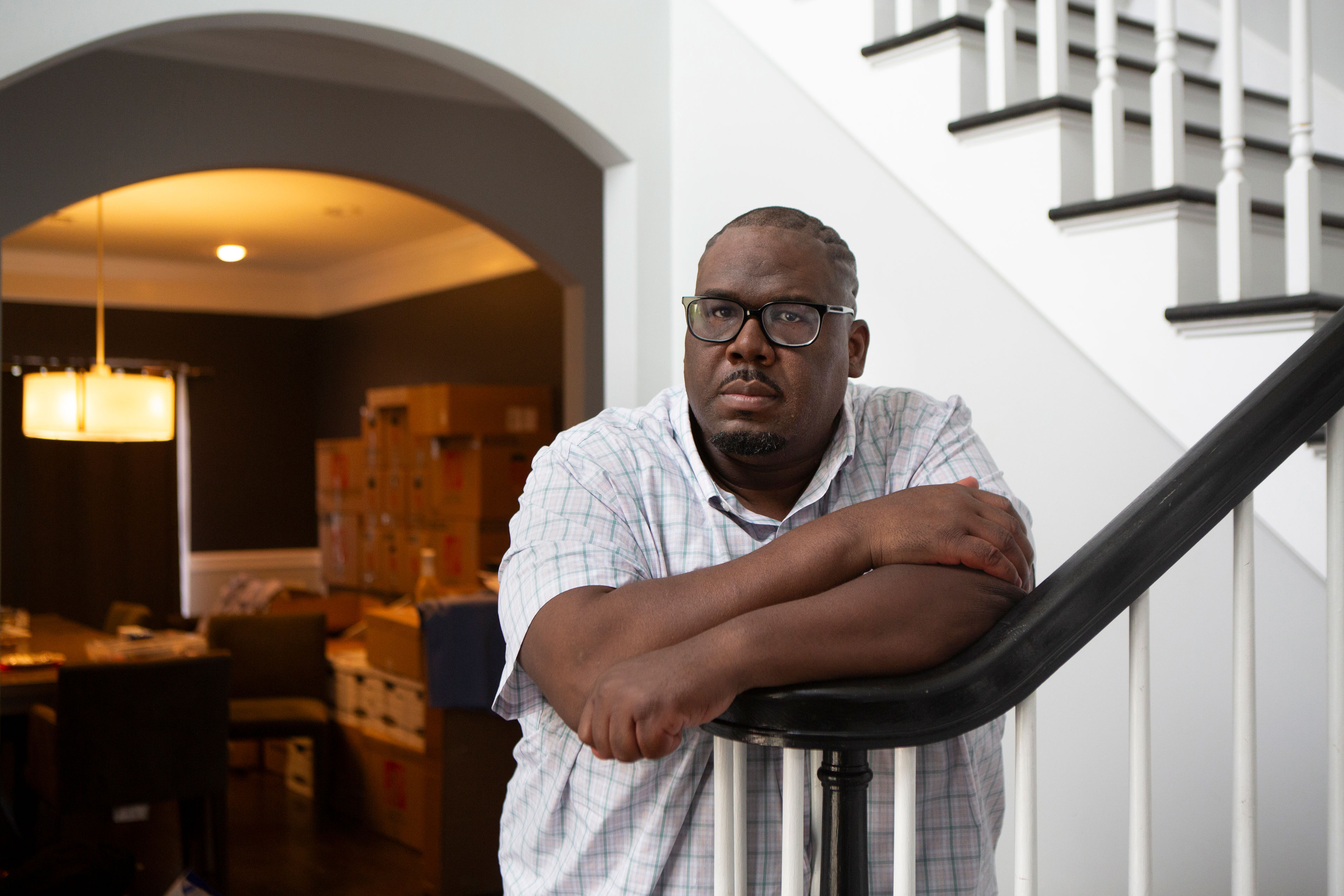
Benjamin Pinckney, a 46-year-old aspiring physician assistant, stands at a critical juncture, his lifelong ambition to enter the medical profession clouded by new federal student loan regulations. Pinckney’s journey toward this dream began in a hospital bed nearly two decades ago, a stark reminder of a past he is determined to transcend. His story, now intertwined with the complex landscape of higher education financing, highlights the potential ripple effects of policy changes on individuals and the broader healthcare system.
A Life-Altering Encounter in Jacksonville
The genesis of Pinckney’s aspiration can be traced back to a traumatic incident shortly after his 20th birthday. Targeted in a drive-by shooting in Jacksonville, Florida, he sustained two gunshot wounds and endured a week-long hospitalization. It was during this vulnerable period that a physician assistant, by simply offering daily visits and a stark warning, profoundly altered the trajectory of his life.
"I used to run the streets, you know, on the wrong sides of the track," Pinckney recounted, reflecting on his past. "He made me promise that I would never come into his ER that way again. That was the last conversation we had, right before I was discharged." This pivotal interaction ignited a deep-seated desire to pursue a career in healthcare, specifically as a physician assistant, driven by a newfound purpose and a commitment to service.
A Decade of Dedication and a Renewed Pursuit
For years, Pinckney navigated a different path, dedicating a significant portion of his career to the New York City Department of Sanitation and serving as a medic in the Army Reserve. These experiences, while providing invaluable practical skills and a strong work ethic, kept his ultimate medical aspirations on hold. However, in May, he achieved a significant milestone, graduating with departmental honors from Lehman College with a Bachelor of Science degree, a testament to his perseverance and renewed focus.
Following his graduation and a move to Prince George’s County, Maryland, Pinckney had meticulously planned to apply for physician assistant programs this year. His meticulous planning, however, has been met with an unforeseen obstacle: the implementation of new federal student loan rules that threaten to derail his carefully constructed future.
The Shifting Sands of Federal Student Loan Policy
Effective July 1st, the landscape of federal student loan borrowing for graduate students has undergone a significant alteration. New caps have been introduced, limiting the amount of money graduate students can borrow from the federal government. These restrictions are a component of the broader tax-and-spending legislation, dubbed the "One Big Beautiful Bill Act," signed into law by President Donald Trump last year. The administration’s stated intention behind these caps is to curb the escalating costs of higher education and alleviate the burden of student loan debt.
However, a chorus of critics, including educators, financial aid experts, and students themselves, argue that the new limits are excessively restrictive. A key point of contention lies in the law’s definition of a "professional degree," which has resulted in a significantly lower annual borrowing limit of $20,500 for certain graduate programs. While a federal judge temporarily blocked the Department of Education’s enforcement of this definition on June 24th, the practical impact on many students remains a grave concern. For numerous individuals, these new caps are insufficient to cover the combined costs of tuition, housing, and essential living expenses, potentially forcing them to seek financing from private lenders who typically offer higher interest rates and less flexible repayment terms.
The Economic Realities for Graduate Students
The financial implications of these new loan limits are particularly stark when examined against the actual costs of graduate education. Students pursuing degrees categorized under the law as "professional degrees"—which include aspiring doctors, dentists, pharmacists, and chiropractors—are now capped at borrowing a total of $200,000, with an annual limit of $50,000.
This figure, while seemingly substantial, falls short of the escalating costs associated with medical education. According to the Association of American Medical Colleges, the median cost of attending a public medical school over four years hovers near $300,000, while private medical school education can exceed $400,000.
The caps are even more stringent for students pursuing other "graduate" degrees, including those in fields like physical therapy, physician assistant studies, and nursing. Initially placed in this category, these students faced a total federal loan limit of $100,000 for their entire program, with an annual cap of a mere $20,500. Recent guidance from the Department of Education, however, has offered temporary relief, allowing some of these students to access higher borrowing limits, as reported by The Associated Press.
A "Rock and a Hard Place" for Aspiring Healthcare Professionals
The impact of these fluctuating regulations is keenly felt by students like Olivia Trull, a 24-year-old poised to begin a physician assistant program at Northwest University in Kirkland, Washington, this summer. Her 28-month program carries a total cost of $137,000, with tuition and fees alone estimated at $62,000 for her first year, excluding living expenses.
Under the initial interpretation of the new rules, Trull qualified for the maximum annual federal loan allotment of $20,500. The remaining substantial balance would necessitate reliance on private lenders. She anticipates needing upwards of $100,000 in private loans, a prospect that could translate to monthly payments exceeding $3,000 after graduation. "I have to actually sit down and have a conversation with myself," Trull stated, contemplating the daunting prospect of being "drowning in debt for the next 10 years of my life." She has already been quoted interest rates as high as 14% from one private lender.
Benjamin Pinckney echoes these concerns. Having completed his undergraduate studies with approximately $10,000 in federal student loan debt, he has observed friends seeking private loans being quoted rates as high as 13%. In contrast, federal loans for graduate students, with rates set annually, currently stand at around 8-9% and offer more favorable repayment options.
Legal Challenges and Industry Opposition
The controversial new rules have not gone unchallenged. In May, 25 states and the District of Columbia filed a federal lawsuit against the Department of Education, characterizing the law’s definition of "professional degree" as "arbitrary and capricious."
In a separate legal action initiated in June, the American Academy of Physician Associates (AAPA) and the PA Education Association alleged that the new regulations hinder students’ ability to secure the necessary loan amounts for physician assistant programs. They argue that PA students should have access to the same higher loan limits afforded to medical school students and those in other professional degree programs. The AAPA itself has advocated for the title "physician associate" to better reflect the role’s responsibilities in patient care.
The Department of Education, facing multiple lawsuits from clinician trade groups and numerous states, has not yet provided a formal response to inquiries regarding this article.
The Administration’s Stance and Economic Counterarguments
Trump administration officials maintain that the cost of graduate education is a pervasive issue. Education Secretary Linda McMahon, addressing the House committee in May, reiterated the administration’s objective: "It is our overall goal to bring down the cost of college and education."

Economists like Sandy Baum, a senior fellow at the Urban Institute, acknowledge that the new loan limits might contribute to cost reduction. The elimination of the federal Grad PLUS loan program, which previously had no cap on borrowing for graduate students, is seen by some as a necessary step. Baum noted, "There is considerable evidence that people borrowed more than they really needed to go to school." She pointed to instances where some graduate programs, such as the University of California-Irvine’s MBA programs, have proactively lowered tuition to fall below the new federal lending thresholds.
However, Baum is not optimistic about widespread tuition reductions. "I don’t think we’re going to see some dramatic decline in prices," she stated, adding a cautionary note: "I think some programs could close down because they can’t manage."
Disproportionate Impact and Broader Healthcare Implications
The new lending limits are expected to disproportionately affect minority students, particularly Black students, who have historically borrowed more to finance their education than their white and Hispanic peers. For students already carrying undergraduate loan debt, the cumulative lifetime limit of $257,000 in federal student loans under the new rules could prove insurmountable. "There will be students who can’t enroll," Baum warned.
Andrei Robu, a medical student at the Medical University of South Carolina and leader of the Financial Literacy Interest Group on campus, expressed concern that the lending limits could diminish the diversity of the student body. He fears that medical schools, facing high demand, might prioritize applicants from affluent backgrounds, potentially undermining the goal of creating a physician workforce that reflects the nation’s diverse population.
Jasmine Vasquez, 26, who has been accepted into a physician assistant program at South College in Atlanta, has deferred her enrollment until 2027. Her decision is partly driven by a desire to assess how her financing options might evolve and a deep-seated fear of accumulating excessive debt from private lenders. "Tears have been shed multiple times," Vasquez shared, her voice tinged with anxiety. "It’s nothing that’s within my control."
Betsy Mayotte, president of the Institute for Student Loan Advisors, anticipates that the new regulations will force some graduates into bankruptcy due to their inability to manage private loan repayments. She also predicts a decline in enrollment numbers and the potential closure of some graduate programs unable to attract sufficient students. Furthermore, completion rates may suffer as students exhaust their federal loan limits mid-program.
The long-term implications for healthcare delivery are also a significant concern. Mayotte foresees healthcare graduates gravitating towards high-paying specialties, a trend that could exacerbate existing shortages in rural and underserved communities. "They’re going to go where they can make the most money," she explained.
A Future Uncertain, but Hope Persists
Benjamin Pinckney remains uncertain about his immediate future. While he managed to finance most of his undergraduate education through work, he recognizes that this approach is often not feasible for full-time graduate students in demanding programs like physician assistant studies. He has considered alternative paths, such as a biomedical science graduate program, which he estimates would cost around $30,000—a more "doable" amount that could lead to careers in research or pharmaceuticals. However, these alternatives do not fulfill his core aspiration of direct patient care.
"Maybe this thing will blow over," Pinckney mused, referring to the new federal loan limits, while holding onto a sliver of hope. His motivation remains deeply rooted in the inspiration he received years ago. "If I can influence one person’s life, that would be my way of paying him forward for what he did," he said, alluding to the physician assistant who changed his life. "It’s very hard to pivot from that dream." His story, and those of countless others like him, underscore the profound human impact of policy decisions and the enduring power of aspiration in the face of adversity.
Related posts: