EPA Withheld Evidence of Monsanto Ghostwriting in Glyphosate Safety Studies for Nearly a Decade

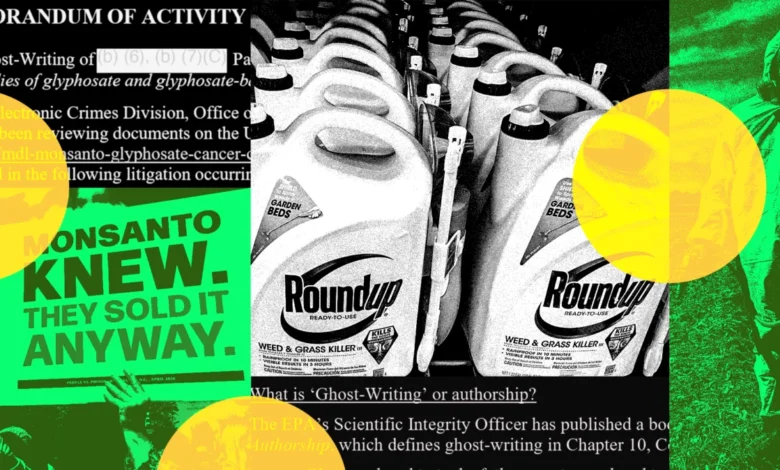
The United States Environmental Protection Agency (EPA) has been aware for nearly ten years that a pivotal 2013 scientific paper, which concluded that the herbicide glyphosate is safe for human use, was ghostwritten by its developer, Monsanto. According to an internal EPA Inspector General (IG) memo recently obtained by investigative journalists, the agency chose not to inform the public of this discovery and continued to utilize the compromised research to justify its regulatory stance. This revelation comes amid a flurry of legal challenges and a landmark Supreme Court ruling that has placed the safety of the world’s most widely used weedkiller, known commercially as Roundup, back into the global spotlight.
The memo, authored by a special agent within the EPA Inspector General’s Office’s crimes division, reveals that while the 2013 paper listed independent toxicologists Larry Kier and David Kirkland as its sole authors, a Monsanto employee named David Saltmiras played a substantial role in its creation. The IG investigation concluded that Saltmiras provided the "intellectual content" and shaped the criteria of the report, a practice defined as research misconduct. Despite these findings, the EPA cited the paper in its 2020 assessment of glyphosate, which reaffirmed the chemical’s safety and rejected claims that it posed a carcinogenic risk to humans.
A History of Regulatory Controversy
The controversy surrounding glyphosate, the active ingredient in Roundup, dates back decades. First approved for use in the United States in 1974, glyphosate became a cornerstone of modern industrial agriculture, particularly with the introduction of "Roundup Ready" genetically modified crops in the 1990s. However, the scientific consensus on its safety has been fractured since the late 1990s, when independent studies began suggesting that the chemical could cause genetic damage in laboratory settings.
The 2013 study in question, published in the journal Critical Reviews in Toxicology, was intended to settle this debate. It focused on genotoxicity—the ability of a chemical to damage DNA. The paper concluded that there was no evidence that glyphosate posed such a risk. This conclusion was vital for Monsanto, as genotoxicity is often considered a precursor to the development of cancer. By presenting the study as the work of independent "heavy-hitters" like Kirkland and Kier, the industry sought to provide a definitive rebuttal to emerging concerns from the academic community.
The newly revealed memo indicates that the EPA’s Inspector General began investigating the paper in 2017. This probe was launched following the release of the "Monsanto Papers"—a massive cache of internal company emails and documents made public during litigation brought by thousands of cancer patients. These documents suggested a coordinated effort by Monsanto to influence scientific literature and regulatory bodies.
Chronology of the Glyphosate Safety Debate
To understand the impact of the EPA’s nondisclosure, it is necessary to examine the timeline of events that have shaped the current regulatory landscape:
- 1974: The EPA first registers glyphosate for use in the U.S.
- 2013: The Kier and Kirkland paper is published in Critical Reviews in Toxicology, asserting that glyphosate is not genotoxic. The paper acknowledges Saltmiras only for "technical assistance."
- 2015: The International Agency for Research on Cancer (IARC), an arm of the World Health Organization, classifies glyphosate as "probably carcinogenic to humans." This classification triggers a global wave of lawsuits.
- 2017: The EPA Inspector General’s Office opens an investigation into potential research misconduct regarding the 2013 paper.
- 2018: Bayer AG acquires Monsanto for $63 billion, inheriting the mounting legal liabilities associated with Roundup.
- 2020: The EPA releases its "Interim Registration Review Decision," concluding that glyphosate is not a carcinogen and poses no risks to human health when used according to the label. The agency relies heavily on the 2013 Kier and Kirkland paper.
- 2022: The 9th Circuit Court of Appeals vacates the human health portion of the EPA’s glyphosate assessment, ruling that the agency ignored significant evidence of cancer risks.
- 2023: The European Food Safety Authority (EFSA) concludes its re-assessment, finding "no critical areas of concern" for glyphosate, citing the same 2013 study.
- June 2024: The U.S. Supreme Court rules that Bayer cannot be held liable for failing to warn consumers of cancer risks in a specific Missouri case, citing the EPA’s determination that a warning label was not required.
The Mechanics of Ghostwriting
The EPA memo provides a rare glimpse into how corporate influence can infiltrate the peer-review process. Internal emails from 2012 show that Larry Kier initially suggested Saltmiras be included as a co-author due to his substantive contributions. However, David Kirkland expressed concern that including a Monsanto employee would compromise the paper’s "independent" status and might prevent publication in a reputable journal.
The IG investigation determined that by hiding Saltmiras’s role, Monsanto successfully masked its conflict of interest. The special agent noted that Monsanto had a "vested interest in portraying glyphosate as a safe-to-use herbicide" to protect the massive revenue generated by its global sales. The act of ghostwriting, the memo stated, allowed the industry to "add credibility" to a narrative that otherwise "stretched the limits of credibility among less sophisticated audiences."
This is not an isolated incident. In late 2025, another influential review article was retracted after it was revealed that the authors failed to disclose Monsanto’s involvement. Furthermore, recent investigations have uncovered evidence of Monsanto secretly orchestrating research papers regarding the use of glyphosate in forest management.
Official Responses and Denials
Bayer, which continues to generate billions in annual revenue from glyphosate products, has defended the integrity of the research. In a statement, the company argued that the EPA memo’s allegations were based on a "limited set of documents" and failed to account for sworn testimony from the authors. Bayer maintains that glyphosate is safe and that the regulatory conclusions of the EPA and other global agencies are based on a "full body of evidence" comprising thousands of studies.
David Kirkland has also vehemently denied the allegations of ghostwriting. In an email correspondence, he stated, "I believe the memo is incorrect and I reject the claim. Our 2013 paper was NOT GHOSTWRITTEN." He further asserted that Saltmiras did not influence the analysis of the reports he reviewed.
Conversely, independent researchers who study corporate influence on science, such as Harvard professor Naomi Oreskes and research fellow Alexander "Sasha" Kaurov, argue that the intent to mislead was clear. Kaurov questioned why the EPA would continue to cite a paper its own investigators deemed compromised. "The authors tried to mislead the public intentionally," Kaurov said. "Why cite this paper when they knew that it was ghostwritten?"
The EPA, for its part, has remained largely silent on why it failed to disclose the IG’s findings. A spokesperson for the agency stated that its 2020 review evaluated more than 6,000 studies and that its determinations reflected the "full body of evidence." However, the agency did not address the specific reliance on the 2013 paper or its decision to withhold the misconduct findings from the public and international partners like the EFSA.
Broader Impact and Legal Implications
The implications of this disclosure are profound, particularly for the legal system. Bayer is currently managing more than $12 billion in settlements and judgments related to Roundup. The company’s primary legal defense is "preemption"—the argument that because the EPA (a federal authority) determined that glyphosate does not cause cancer and does not require a warning label, state-level lawsuits claiming a "failure to warn" should be barred.
The Supreme Court’s recent decision to shield Bayer in certain cases relies heavily on the EPA’s regulatory authority. However, if that authority was exercised based on fraudulent or ghostwritten data that the agency knew was compromised, the foundation of the preemption defense may be weakened. Legal experts suggest that the revelation of the EPA’s internal memo could provide new ammunition for plaintiffs in ongoing and future litigation.
Beyond the courtroom, the situation highlights a systemic crisis of trust in regulatory science. When government agencies responsible for public health are found to be aware of corporate misconduct but choose to maintain the status quo, the integrity of the entire regulatory framework is called into question. As the EPA prepares to release an updated review of glyphosate later this year, it faces intense scrutiny from environmental groups, labor organizations, and the scientific community.
The 9th Circuit Court of Appeals has already signaled its skepticism, noting in a previous ruling that the EPA’s errors in assessing human health risks were "serious." With mounting evidence suggesting that glyphosate may be linked to metabolic disorders, brain inflammation, and damage to the gut microbiome, the demand for a transparent, unbiased, and rigorous scientific review has never been higher. For now, the disclosure of the 2017 memo serves as a reminder of the hidden hands that often shape the policies governing the chemicals in our environment.
Related posts: