The Silent Disruption: How Human Activity is Rewriting the Planets Fragile Smellscapes

Across the globe, human-driven environmental changes are fundamentally altering the chemical landscape of the natural world, a phenomenon scientists refer to as the degradation of "smellscapes." While much of the public discourse surrounding climate change and pollution focuses on visual degradation or auditory disturbance, a growing body of research suggests that the invisible world of odors is undergoing a radical and potentially catastrophic transformation. From the jasmine fields of Egypt to the lavender farms of England, the scents that define geographic regions and facilitate essential biological interactions are being erased, distorted, or replaced by synthetic interference. This shift represents a profound threat to global biodiversity, food security, and the intricate web of communication that has governed life on Earth for millions of years.
The Invisible Architecture of Ecosystems
The term "smellscape," first coined in the 1980s, describes the totality of olfactory cues in a specific geographic area. For humans, these scents may provide a sense of place or trigger memories, but for the vast majority of the animal kingdom, they are a primary source of information. Unlike humans, who are largely visual and auditory creatures, many species rely on chemical signals—volatile organic compounds (VOCs)—to navigate, hunt, mate, and survive.
Chemical ecologist James Blande of the University of Eastern Finland emphasizes that scent mediates nearly every interaction within an ecosystem. Ants utilize pheromones to maintain colony cohesion and find food sources; turkey vultures track the faint scent of decay from kilometers away to locate carrion; and male moths can detect the specific pheromones of a female from hundreds of meters against a backdrop of competing odors. When these signals are disrupted, the "language" of the ecosystem begins to break down.
The preservation of these communication channels is not merely an academic concern; it is a prerequisite for the maintenance of ecosystem services that directly benefit human civilization. Pollinators, including bees, moths, and hoverflies, rely on floral scents to find the nectar they need, a process that simultaneously ensures the reproduction of approximately 75% of the world’s food crops and 90% of wild flowering plants. Furthermore, decomposers like dung beetles and carrion flies use scent to locate waste matter, playing a vital role in nutrient cycling and disease prevention.
The Chemistry of Decay: How Pollution Erases Floral Cues
The primary drivers of smellscape degradation are air pollution and rising temperatures. In recent years, sensory biologists have turned their attention to how oxidizing pollutants, such as ground-level ozone (O3) and nitrate radicals (NO3), interact with the VOCs released by plants. These pollutants, which have increased dramatically since the Industrial Revolution due to emissions from vehicles, power plants, and industrial manufacturing, do not simply mask natural scents; they chemically alter them.

Research conducted by Jeff Riffell, a sensory biologist at the University of Washington, has demonstrated the severity of this chemical interference. In a landmark study involving the pale evening primrose, a night-blooming wildflower, Riffell’s team found that nitrate radicals—which are particularly prevalent at night—rapidly degrade key components of the flower’s scent. Molecules such as β-Pinene and β-Ocimene, which provide woodsy and floral notes respectively, can be destroyed within seconds of contact with high levels of NO3.
The biological consequences are stark. In field experiments, hawkmoths were 70% less likely to visit flowers whose scent had been degraded by pollution. Atmospheric modeling conducted by Riffell and his colleagues suggests that in heavily polluted regions, the distance from which a moth can sense a flower has shrunk to just 25% of its pre-industrial range. This reduction in "olfactory reach" creates a disconnected landscape where pollinators may starve while plants remain unfertilized.
Agricultural Interference and the Pollination Crisis
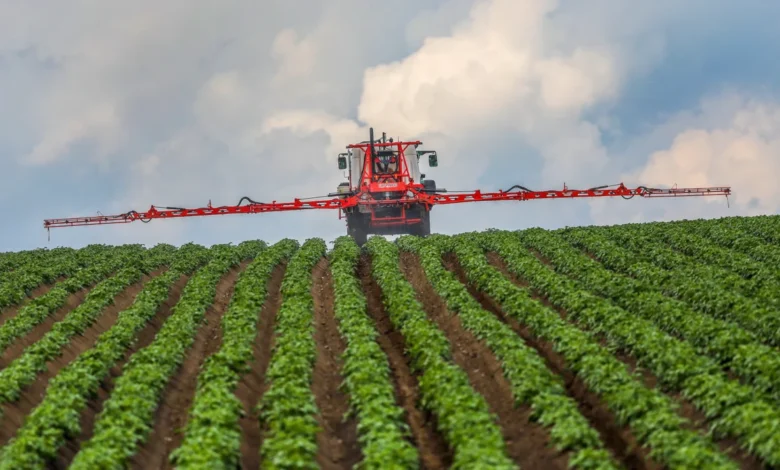
Beyond industrial air pollution, the modern agricultural landscape is a major source of olfactory noise. The widespread use of fungicides, fertilizers, and pesticides introduces a cocktail of synthetic VOCs into the atmosphere. While these chemicals are intended to protect crops, they often have unintended side effects on the beneficial insects required for those crops to thrive.
Jordanna Sprayberry, a pollination biologist at Stony Brook University, has pioneered research into the "proboscis extension response," a behavioral test used to determine how insects perceive odors. By training bumblebees to associate specific floral scents with sugar rewards, Sprayberry was able to test how the introduction of common fungicides affected the bees’ recognition abilities. The results indicated that every fungicide tested—even at low concentrations—disrupted the bees’ ability to identify their target flowers.
This discovery is particularly alarming for the global agricultural economy. Pollination services are estimated to contribute between $235 billion and $577 billion to the global economy annually. In regions where fruit and vegetable production relies heavily on chemical treatments, the "smellscape" of the farm may become so cluttered with synthetic signals that honeybees and bumblebees become inefficient, leading to lower yields and increased food prices.
Mating Disruption: When Pheromones Lose Their Meaning
While pollination is the most visible victim of altered smellscapes, the impact on animal reproduction is equally severe. Markus Knaden and his team at the Max Planck Institute for Chemical Ecology have documented how ozone pollution disrupts the pheromonal communication of insects. Unlike floral scents, which are used for inter-species attraction, pheromones are highly specific chemical signatures used for intra-species communication, particularly during mating.

Knaden’s research revealed that when male fruit flies were exposed to ozone, their pheromones were altered to the point that they were no longer attractive to females of their own species. Conversely, the breakdown of these chemical barriers led to an increase in male-male courtship and inter-species mating. Such errors in reproduction are biologically expensive; they waste energy, increase vulnerability to predators, and often result in infertile hybrid offspring.
As global insect populations continue to decline due to habitat loss and pesticide use, the degradation of mating signals acts as an "accelerant" to extinction. If individuals cannot find or identify appropriate mates because the chemical air is "foggy," populations may collapse even if suitable habitat remains.
A Chronology of Olfactory Change
To understand the scale of the current crisis, it is necessary to view the evolution of the Earth’s smellscape through a historical lens:
- Pre-Industrial Era: Global smellscapes were dominated by natural VOCs. Floral plumes could travel kilometers, and the background "noise" of oxidizing pollutants was negligible.
- 1850s–1950s: The Industrial Revolution introduced high levels of sulfur dioxide and particulate matter. While harmful to health, these did not interact with VOCs as aggressively as modern oxidants.
- 1960s–1990s: The rise of the internal combustion engine and the "Green Revolution" in agriculture led to a surge in nitrogen oxides (NOx) and synthetic pesticide use. The first signs of pollinator decline were recorded during this period.
- 2000s–Present: Rising global temperatures have accelerated the evaporation of VOCs, while ground-level ozone has become a pervasive global pollutant. Droughts in regions like France and Italy have further stressed aromatic plants, reducing the "volume" of the natural smellscape.
Broader Impact and Policy Implications
The implications of a shifting smellscape extend far beyond the laboratory. There is a profound economic risk to the global perfume and essential oil industries, which rely on the chemical consistency of plants like lavender, tuberose, and bergamot. In Italy, climatic extremes have already begun to alter the citrusy profile of bergamot, a staple of high-end perfumery. In Egypt, heat stress is shrinking the yields of jasmine, a critical export for the national economy.
Furthermore, the loss of smellscapes represents a loss of cultural heritage. Many human cultures are deeply tied to the seasonal scents of their environment. The "smell of rain" (petrichor) or the scent of a blooming forest are integral to the human experience of nature. As these scents fade or change, our psychological connection to the environment may also weaken.
Addressing this crisis requires a multi-faceted policy approach. While air quality regulations in the United States and Europe have successfully reduced levels of some pollutants like lead and sulfur, ground-level ozone and nitrogen oxides remain persistent problems. Scientists like Jeff Riffell argue for "enhanced regulations" that specifically account for the ecological impact of air quality on sensory systems, rather than just human respiratory health.

In the agricultural sector, there is a growing call for "integrated olfactory management." This would involve timing the application of fungicides and pesticides to avoid peak pollination hours and developing chemical formulations that are less volatile or less disruptive to insect receptors.
Conclusion: The Path Toward Olfactory Restoration
The degradation of the world’s smellscapes is a silent crisis, unfolding largely beneath the threshold of human perception. However, for the millions of species that "see" the world through their noses and antennae, the thickening chemical fog of the 21st century is a barrier to survival.
While some species, such as honeybees, have shown a limited capacity to learn and adapt to new scents, many others—like the short-lived fig wasp—are evolutionarily locked into specific chemical cues. For these specialists, there is no room for error. As the planet continues to warm and industrial activities continue to reshape the atmosphere, the preservation of the Earth’s olfactory integrity must become a priority for conservationists and policymakers alike. Reclaiming the smellscape is not just about preserving the fragrance of a flower; it is about ensuring the continued functionality of the biological systems that sustain life on Earth.
Related posts: