Laser and Geochemistry Fusion Offers Hope for Critically Endangered Speartooth Shark Age Determination and Environmental Health Assessment

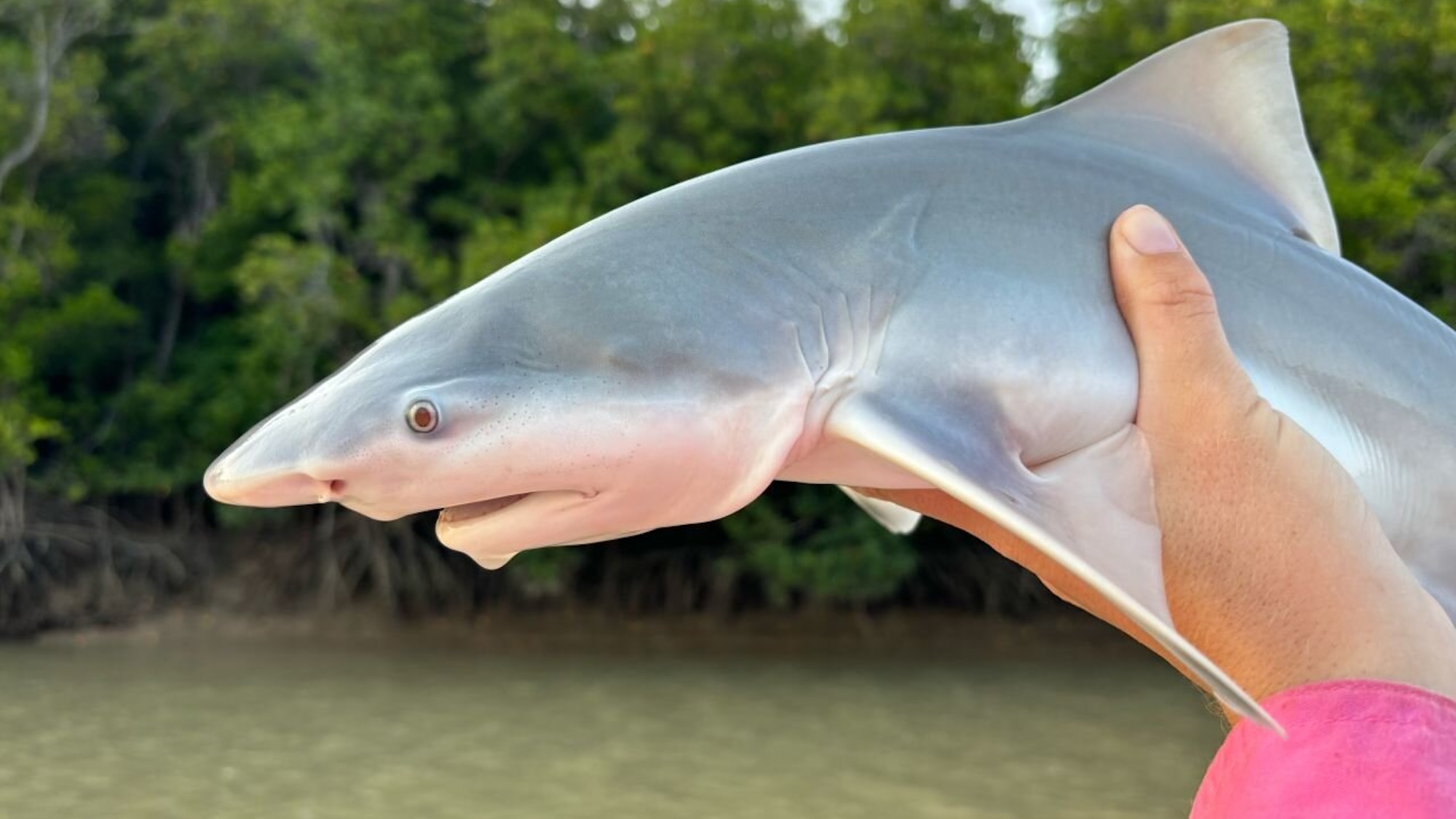
Marine ecologists are pioneering a groundbreaking approach that merges cutting-edge laser technology with sophisticated geochemical analysis to unlock crucial insights into the lives of critically endangered shark species. This innovative methodology, developed by researchers at the University of Melbourne, promises to revolutionize how scientists determine the age and assess the environmental health of the snub-nosed speartooth shark ( Glyphis glyphis ), one of the world’s most vulnerable marine predators. The technique holds significant potential for informing more effective conservation strategies for this elusive species and potentially others facing similar threats.
The speartooth shark, a distinctive inhabitant of the river systems and estuaries of northern Australia and Papua New Guinea, is facing an alarming decline in its population. Current estimates suggest that fewer than 2,500 mature individuals remain in the wild, placing it firmly on the list of endangered species. Its cryptic nature and preference for murky, estuarine environments have made traditional methods of study challenging, leaving significant gaps in our understanding of its life history, reproductive patterns, and ecological needs. This lack of detailed information has hindered the development of robust conservation plans, making the species particularly susceptible to habitat degradation and other anthropogenic pressures.
For decades, scientists have relied on analyzing growth rings within shark vertebrae to estimate age. Analogous to counting rings on a tree, each band in a shark’s vertebral column was believed to represent approximately one year of life. This method, typically involving the examination of extremely thin slices of vertebrae under transmitted light optical microscopy, has been the cornerstone of age estimation for many elasmobranch species. However, the accuracy of this approach, particularly for species like the speartooth shark that inhabit dynamic and variable environments, has come under increasing scrutiny. Researchers at the University of Melbourne, publishing their findings in the esteemed journal Marine Ecology Progress Series, have demonstrated that a more precise and informative method is now available, utilizing the power of lasers and geochemistry.
Unlocking the Secrets Within Vertebrae
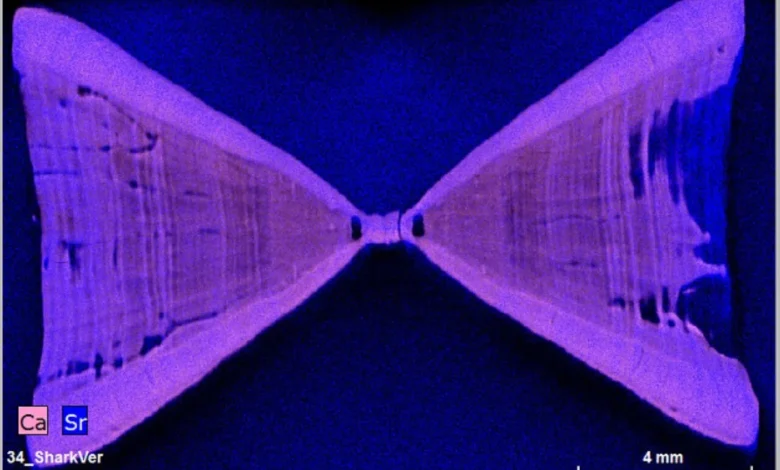
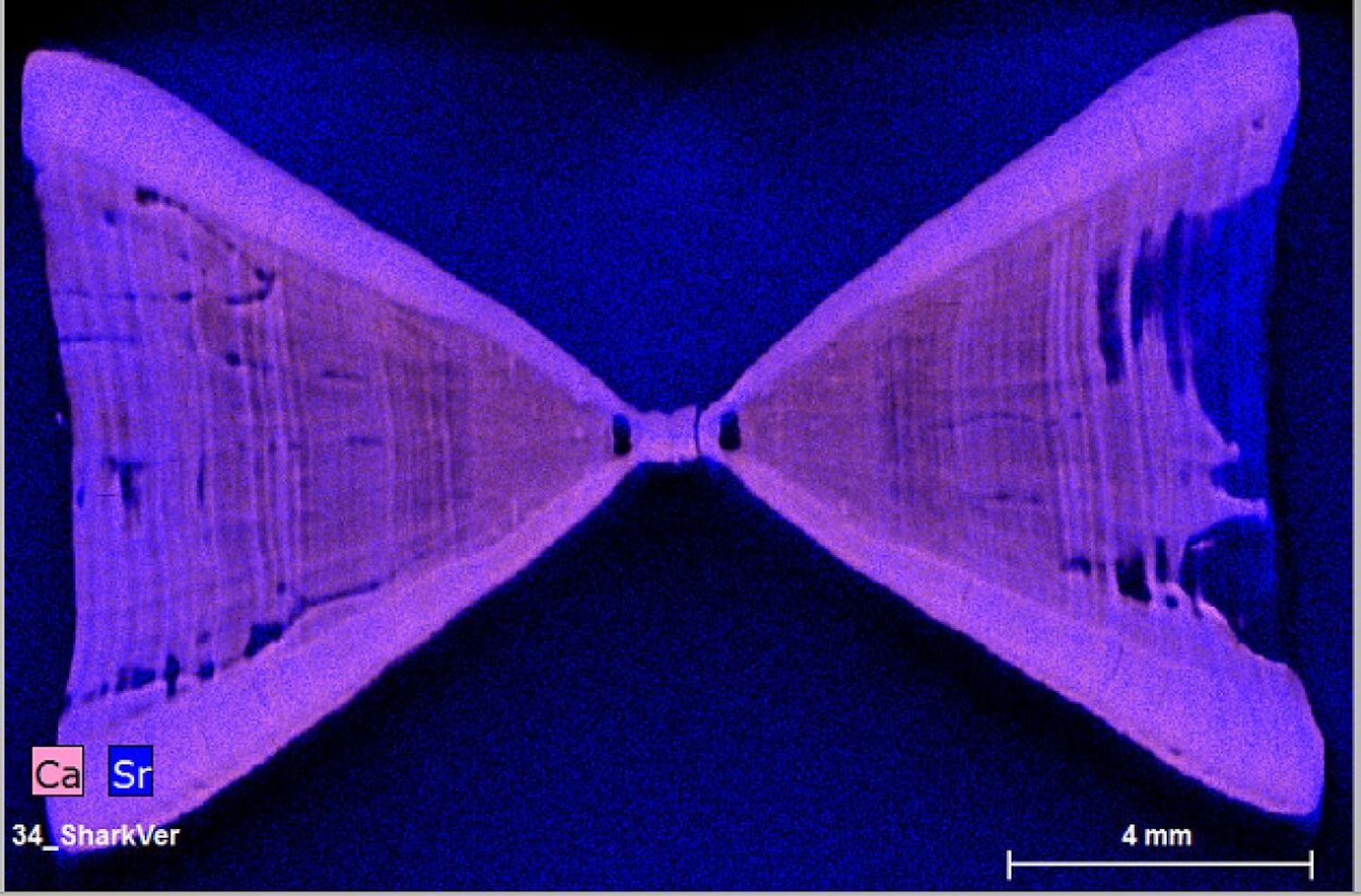
The new methodology employs a sophisticated analytical technique known as laser ablation inductively coupled plasma mass spectrometry (LA-ICP-MS). This process involves directing a highly focused laser beam onto a precisely prepared sample of shark vertebrae. The laser vaporizes a tiny portion of the bone, converting it into an aerosol. This aerosol is then introduced into a mass spectrometer, an instrument capable of identifying and quantifying the elemental and isotopic composition of the sample with extraordinary sensitivity.
This advanced analytical approach allows scientists to delve into the geochemical "fingerprint" of the shark’s vertebrae. As sharks grow, elements from their surrounding environment are incorporated into their skeletal tissues. By analyzing the concentrations of specific trace elements, such as strontium, researchers can gain a detailed understanding of the water chemistry the shark has been exposed to throughout its life.
Dr. Brandon Mahan, an earth scientist at the University of Melbourne and lead author of the study, explained the significance of this elemental incorporation. "Elements like strontium accumulate in the shark’s vertebrae as they grow, and the amount that accumulates is directly correlated with the strontium levels present in the water," Mahan stated in a university press release. "By comparing these elemental readings with historical environmental data, such as local precipitation records, we can precisely link the geochemical composition of the vertebrae, and therefore the shark’s age, to the specific environmental conditions the shark experienced, including the region’s wet and dry seasons."
A More Accurate Age and Environmental Record
The traditional method of counting vertebral bands, while useful, often provides only a rough estimate of age. The new laser-ablation geochemistry technique offers a far more granular and accurate picture. The study focused on speartooth shark specimens that had unfortunately died from natural causes or accidental bycatch. By applying LA-ICP-MS to these samples, the research team was able to identify distinct geochemical signatures that correlated with known environmental fluctuations.
For instance, variations in strontium levels within the vertebrae could be directly attributed to changes in salinity and water chemistry associated with seasonal rainfall patterns. This allowed the researchers to not only determine the age of the sharks with greater precision but also to reconstruct their movements and habitat use over time. This is particularly crucial for understanding the speartooth shark’s life cycle, as it is believed to utilize different estuarine and riverine environments at various life stages.
"So, in addition to providing a way to estimate shark age, our vertebral geochemical fingerprinting also differentiates between the water environments the shark inhabits during its lifetime," Mahan elaborated. This dual benefit—accurate aging and environmental reconstruction—is what makes this technique so transformative for marine conservation.
The Dire Situation of the Speartooth Shark
The urgency of this research is underscored by the critically endangered status of the speartooth shark. Measuring approximately 8.5 feet in length, these sharks are apex predators in their freshwater and estuarine habitats. However, their limited range and specific habitat requirements make them highly vulnerable to human activities.
Timeline of Conservation Concerns and Research:
- Early 20th Century: Speartooth sharks were more widely distributed and less of a conservation concern, though still not well-understood due to their elusive nature.
- Late 20th Century – Early 21st Century: Increasing awareness of declining fish stocks and the impact of coastal development, pollution, and fishing practices began to highlight the vulnerability of many shark species, including the speartooth.
- Early 2000s: Scientific assessments and population surveys began to reveal the significant decline in speartooth shark numbers, leading to their classification as endangered.
- 2010s: Ongoing research focused on understanding their habitat use, reproductive biology, and genetic diversity. Conservation efforts, including fishing restrictions in critical habitats, were implemented in some regions.
- Present Day (2020s): The development of advanced analytical techniques like LA-ICP-MS by researchers at institutions such as the University of Melbourne offers new hope for obtaining critical data to inform more effective conservation strategies. The species remains critically endangered, with estimated adult populations below 2,500.
The speartooth shark’s habitat is increasingly threatened by coastal development, agricultural runoff, and industrial pollution. These factors can alter water quality, reduce prey availability, and directly harm the sharks. Furthermore, while not a primary target species, speartooth sharks can become entangled in fishing gear deployed for other commercial species, leading to accidental mortality. The difficulty in studying these sharks in their natural, often murky, environments means that precise data on population dynamics, breeding success, and survival rates has been scarce.
Broader Implications for Conservation Science
The implications of this research extend far beyond the speartooth shark. The LA-ICP-MS technique offers a powerful new tool for understanding the life histories of numerous aquatic species, particularly those that are difficult to study directly or that inhabit environments undergoing rapid change.
Potential Applications:
- Endangered Species Monitoring: The method can be applied to other endangered sharks, rays, and bony fish to provide more accurate age and habitat use data, crucial for tailoring conservation efforts.
- Fisheries Management: Understanding the age structure of fish populations is fundamental to sustainable fisheries management. This technique could help fisheries scientists assess the health of exploited stocks more effectively.
- Climate Change Impact Studies: By analyzing geochemical records in skeletal tissues, researchers can reconstruct past environmental conditions and assess how species have responded to climate variability and change over long periods. This can help predict future responses to ongoing climate change.
- Pollution Tracking: The geochemical signatures within bones can also serve as historical records of exposure to contaminants, providing insights into the long-term impacts of pollution on aquatic ecosystems.
- Ecological Connectivity: Reconstructing the movement patterns and habitat use of species can reveal crucial information about ecological connectivity between different water bodies, essential for designing effective marine protected areas and conservation corridors.
Dr. Julia Constance, an author on the study, highlighted the interdisciplinary nature of this advancement. "This research exemplifies how integrating different scientific disciplines – in this case, optical technology, geochemistry, and marine biology – can lead to significant breakthroughs in our understanding of the natural world and our ability to protect it," she noted.
The University of Melbourne team’s work not only provides a more accurate method for aging sharks but also offers an unprecedented window into the environmental conditions they experience. This comprehensive understanding is vital for developing targeted conservation strategies that address the specific threats faced by the speartooth shark and other vulnerable species. As climate change continues to alter marine ecosystems and human pressures on aquatic environments intensify, such innovative scientific approaches will be indispensable in our efforts to preserve biodiversity for future generations. The successful application of lasers and geochemistry to the study of sharks represents a significant leap forward in the ongoing quest to understand and protect the ocean’s most enigmatic inhabitants.