
Wildlife Misconceptions Debunked: What Science Actually Tells Us About Bears, Birds, and Squirrels
As the Northern Hemisphere transitions toward the coldest months of the year, human preparations for winter typically involve firing up furnaces, servicing heating systems, and winterizing homes. Concurrently, public perception of the natural world shifts toward deeply ingrained folklore regarding how wildlife manages the freezing temperatures. Generations of children have grown up learning simplified, often inaccurate narratives about animal behavior during winter—ranging from the deep, uninterrupted slumber of bears to the perpetual forgetfulness of squirrels. However, decades of rigorous ecological and behavioral research paint a far more complex, fascinating picture of wildlife survival strategies. Modern science has systematically dismantled several enduring myths about winter animal behavior, revealing sophisticated adaptations driven by metabolic necessity, resource availability, and cognitive precision rather than simple thermal discomfort.
The Myth of Continuous Hibernation in Bears
Perhaps the most pervasive winter myth is that bears spend the entirety of the cold season in a deep, motionless sleep, completely detached from the outside world. Popular culture frequently depicts bears entering mountain caves in late autumn and remaining entirely comatose until the spring thaw. According to contemporary wildlife biology and historical data from organizations like the National Park Service, true hibernation—characterized by a profound, unbroken suppression of physiological processes—is a concept that modern science views on a broad spectrum rather than a binary state.

While smaller mammals such as ground squirrels and marmots experience extreme torpor where their metabolic rates plummet to between 2 and 5 percent of their basal metabolic rate (BMR), larger animals like black bears do not undergo such deep physiological suppression. A landmark 2011 study published in the journal Science by researchers at the University of Alaska Fairbanks provided empirical evidence that bears maintain significantly higher metabolic baselines during winter, dropping to only about 25 percent of their active BMR. Furthermore, the University of Alaska Fairbanks study tracked physiological and behavioral markers revealing that bears regularly shift positions, stand up, occasionally groom themselves, and rearrange their bedding material anywhere from twice a day to once every two days.
This frequent nocturnal or periodic activity shatters the illusion of uninterrupted winter dormancy. This active state is further underscored by the biological reality of reproduction. A widespread misconception suggests that female bears give birth during their deep winter sleep without waking. National Park Service documentation clarifies that expectant mothers remain conscious and actively prepare for parturition in the days leading up to birth. Pregnant bears meticulously chew bedding materials into finer fragments to optimize den insulation and thermal regulation. Following the birth of one to three tiny cubs—each weighing between a half-pound and a pound—the mother cleans them meticulously and nurses them continuously throughout the remainder of the winter months, ensuring they reach approximately five pounds by the time the family emerges into the spring landscape.
The Real Drivers Behind Avian Migration
Another cornerstone of traditional wildlife education involves the seasonal movement of birds. Millions of people grow up believing that birds fly thousands of miles southward in autumn simply because they cannot tolerate cold weather. This assumption is so deeply embedded in human culture that humans who travel to warmer climates during winter are colloquially referred to as "snowbirds."
Ornithological research compiled by organizations such as the Cornell Lab of Ornithology demonstrates that temperature alone is rarely the primary catalyst for avian migration. Birds possess remarkably efficient physiological adaptations to withstand sub-zero temperatures, provided they have access to sufficient nourishment. Many species, including small birds like chickadees, finches, and even certain hummingbirds, routinely survive severe freezing weather throughout North America and Europe.
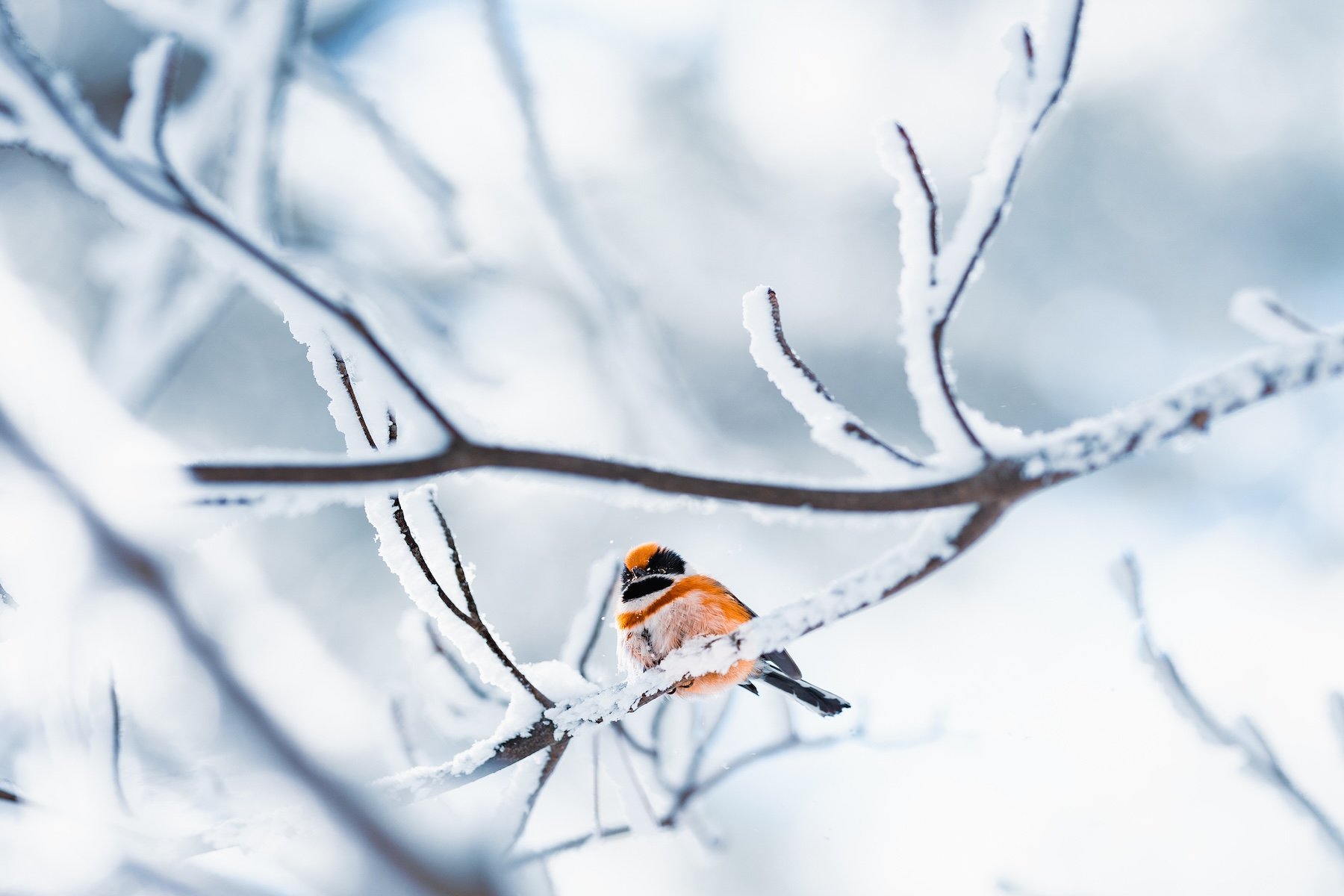
Instead of escaping the cold, birds initiate long-distance journeys to escape the seasonal collapse of their food webs. As autumn transitions to winter, the availability of insects, fresh vegetation, and accessible seeds diminishes drastically. Consequently, migration is fundamentally driven by resource scarcity and shortening daylight hours, which limit foraging windows. When the spring thaw arrives, birds return northward not because the air is warmer, but because the melting snow and warming soil unleash an abundance of insect life, new plant growth, and vast expanses of secure habitat required for breeding and rearing young.
Cognitive Precision in Squirrel Food Caching
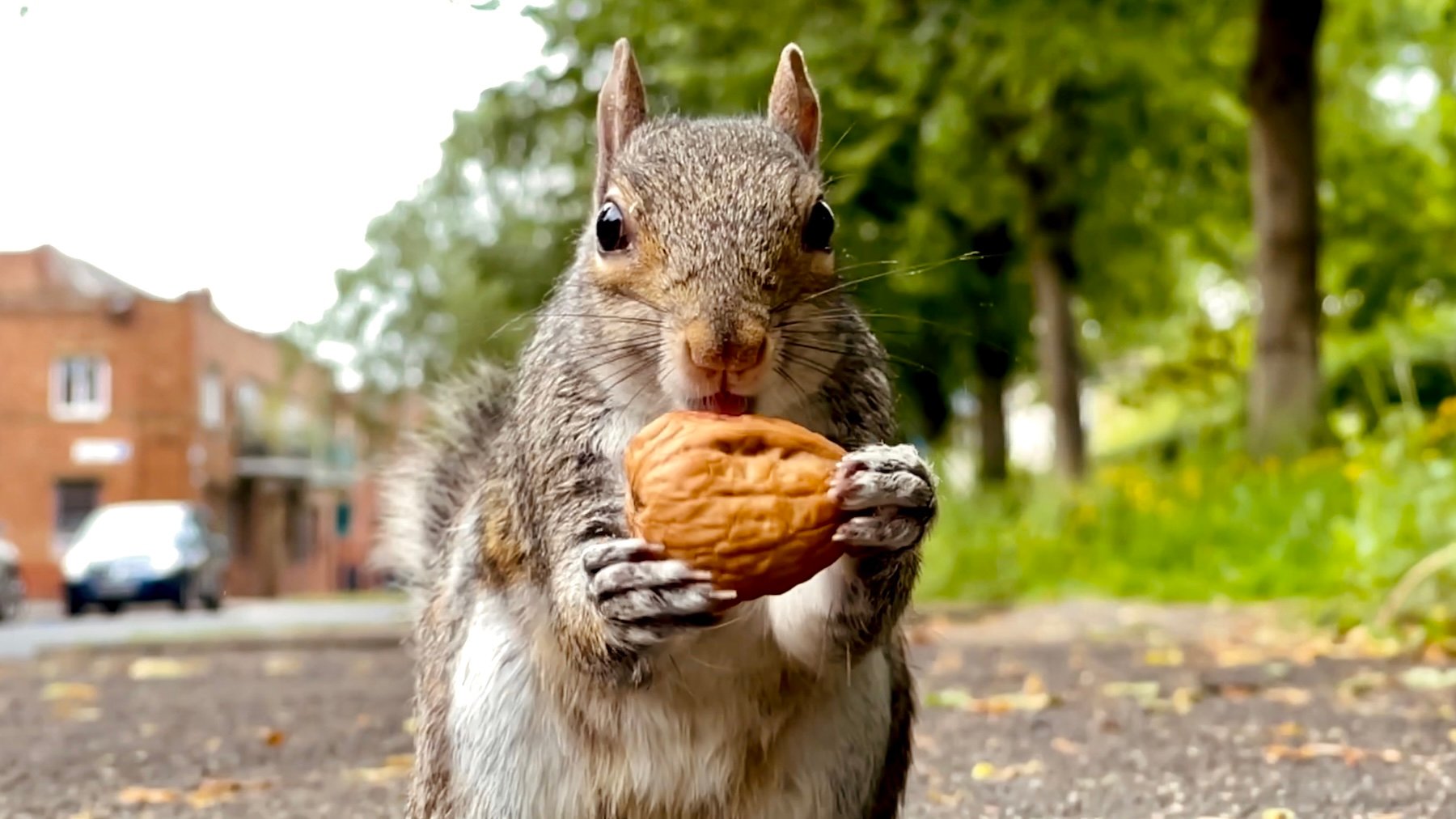
Few woodland behaviors have generated as much folklore as the caching habits of squirrels. The conventional narrative suggests that squirrels spend autumn frantically burying thousands of nuts across the forest floor, only to forget the vast majority of these locations. According to popular lore, this forgetfulness is nature’s primary mechanism for reforestation, as the abandoned nuts germinate and grow into mature trees. While it remains ecologically true that a small percentage of forgotten caches eventually sprout into forests, decades of behavioral science prove that squirrels are exceptionally accurate at recovering their hidden food stores.
Scientific inquiry into rodent memory dates back decades. A foundational 1991 study published in the journal Animal Behaviour by researchers at Princeton University evaluated captive grey squirrels and their ability to retrieve buried hazelnuts. When researchers introduced squirrels back to an area where they had previously buried nuts—subsequently substituting or removing specific items—the results were definitive. The squirrels successfully retrieved significantly more nuts from their own specific burial sites than from sites utilized by other squirrels or artificial controls. The study’s authors concluded that while grey squirrels can certainly utilize their acute sense of smell to locate buried resources beneath snow and soil, they rely heavily on precise spatial memory to recall the exact individual coordinates of the nuts they personally hid.
This cognitive capability is further reinforced by modern comparative studies. A 2023 investigation published in Urban Ecosystems by researchers in Poland compared the recovery rates of hazelnuts cached by squirrels versus those buried by humans in identical urban green spaces. The findings revealed that hazelnuts cached by squirrels were recovered at a significantly higher rate, indicating a sophisticated, targeted retrieval mechanism rather than random, haphazard hiding followed by widespread amnesia.
Broader Implications for Conservation and Public Education
The persistence of these winter wildlife myths highlights a broader challenge in science communication: the tendency to anthropomorphize and oversimplify complex ecological adaptations for educational accessibility. While simplifying animal behavior helps introduce younger audiences to the natural world, it can inadvertently foster misunderstandings that impact human-wildlife interactions during vulnerable seasons.
Understanding the genuine physiological states of winter wildlife carries significant implications for wildlife management, urban planning, and conservation policy. For instance, recognizing that black bears are metabolically active and potentially responsive during winter underscores the importance of minimizing human encroachment near dens during the colder months. Similarly, acknowledging that birds migrate due to food availability rather than ambient temperature emphasizes the ecological value of maintaining native flora and providing supplementary backyard feeding stations that support overwintering avian populations.
As climate change continues to alter seasonal timing, shifting the onset of winters and modifying traditional migration and hibernation triggers, accurate public understanding of wildlife biology becomes increasingly critical. By grounding our perception of nature in empirical research rather than folklore, society can better appreciate the remarkable evolutionary strategies that enable wildlife to navigate the harshest months of the year.