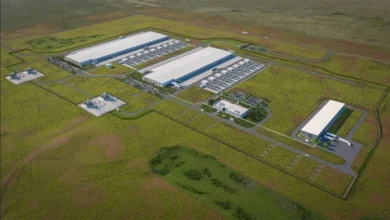
The rapid expansion of artificial intelligence infrastructure across the United States has ignited a fierce national debate, yet behind the promise of technological dominance lies a pattern of systemic inequity that is disproportionately impacting Black communities. As tech giants and government agencies race to build massive data center campuses to power the next generation of AI, the placement of these facilities is increasingly mirroring historic patterns of redlining and industrial zoning. Research reveals that majority-Black communities are more than twice as likely to host a data center than their majority-white counterparts, often facing these developments with little to no public oversight or opportunity for input.
The scale of this infrastructure boom is unprecedented. Driven by the federal government’s push for AI supremacy to maintain a competitive edge over global rivals, agencies have been directed to streamline construction and minimize environmental reviews. However, this acceleration has come at a significant cost to local populations. In Augusta, Georgia, residents like Zakiya Mabery discovered the existence of a $2 billion data center project—dubbed Project Eisenhower—only after local officials had already granted final approval. Situated just a 10-minute walk from her home in the Haynes Station development, the facility is being constructed in an area where two-thirds of the population is Black. For residents like Mabery, the project represents a profound violation of community agency, as the absence of a public hearing denied them the right to voice concerns regarding property values, noise, and environmental health.
The Anatomy of a Disenfranchised Expansion
The discrepancy in how data center projects are vetted is starkly defined by the racial demographics of the impacted areas. According to data compiled by researchers at Harvard University’s "Zoned Out" initiative, the presence of a public hearing is a decisive factor in the success of a development proposal. Communities that are granted a public hearing prior to construction are, on average, 80 percent white. Conversely, communities that are subjected to the same industrial development without any public discourse are roughly 60 percent people of color.

This lack of transparency is not accidental but is instead built into the current zoning architecture. In many jurisdictions, developers can circumvent public hearings by selecting sites that are already designated for industrial use. Given that historical segregation and urban planning policies have disproportionately left Black neighborhoods with high concentrations of industrial-zoned land, these areas have become the path of least resistance for tech firms. When a developer encounters vocal, organized opposition in a wealthy, white enclave, they often simply pivot to a neighboring county with a lower median income and a higher Black population, where officials are frequently more eager to promise job creation and tax revenue.
A notable case study involves a North Carolina project that was abandoned following thousands of citizen signatures in a 65 percent white community. Within weeks, the same developer shifted the site to a nearby county where the local population was predominantly Black and the median income was significantly lower. The project was subsequently fast-tracked with a 6-1 vote by local commissioners, illustrating how the current system facilitates a "leapfrog" effect that traps marginalized communities in cycles of industrial exposure.
Environmental and Health Implications
The environmental burden of these data centers is substantial and multifaceted. These facilities require massive amounts of electricity, often relying on onsite gas turbines or heavy-duty generators that emit nitrogen oxides and particulate matter (PM 2.5). Research consistently shows that Black Americans suffer from higher rates of death due to PM 2.5 exposure, which is linked to severe health outcomes, including respiratory failure, cardiovascular disease, dementia, and increased stroke risk.
Beyond the immediate local air quality concerns, the carbon footprint of the AI industry is staggering. The nation’s largest data centers are estimated to generate 25.7 million metric tons of carbon dioxide annually, a figure that surpasses the total emissions of entire nations such as Kenya or Guatemala. Despite the industry’s assertions that data centers are essential for technological progress, they are contributing to the intensification of climate change, with the most vulnerable populations often residing in the "heat islands" surrounding these sprawling, energy-intensive complexes.

The Myth of Economic Prosperity
Industry proponents frequently justify the placement of data centers by highlighting potential job growth and the expansion of the tax base. However, a comprehensive study conducted by researchers at George Washington University and American University suggests that these promises rarely materialize for the communities most burdened by the facilities.
When researchers controlled for variables such as income, land value, and proximity to power grids, the racial disparity in the placement of data centers persisted, confirming that race remains a primary factor in site selection. Furthermore, the data suggests that while high-profile campuses operated by major tech corporations do occasionally generate local benefits, they are significantly more likely to be located in white-majority neighborhoods.
Employment data further highlights the lack of equitable benefit. As of late 2026, Black workers comprised only 7 percent of the AI industry, despite representing roughly 13 percent of the U.S. population. On-the-ground observations of large-scale construction sites, such as the Meta data center in northern Louisiana, show a workforce demographic that is starkly disconnected from the local community, which is over 80 percent Black. In this region, local officials have even signed non-disclosure agreements with tech firms, further preventing residents from understanding the full scope of the environmental or financial impacts of the projects being built in their backyards.
Federal Policy and the Regulatory Shift
The current administrative climate has significantly altered the landscape for local activists. Under the current federal mandate to prioritize AI infrastructure, agencies have been instructed to exempt data center projects from rigorous federal environmental reviews. These directives effectively dismantle the few remaining guardrails that might have protected communities from unchecked development.

The policy shift is framed by the executive branch as a matter of national security, casting AI development as a zero-sum game against international competitors. By categorizing the construction of data centers as critical infrastructure, the administration has effectively limited the opportunities for public comment and oversight. This top-down approach has exacerbated the frustration of local residents who feel that their concerns about their own homes and health are being treated as secondary to the goals of global tech conglomerates.
A Call for Equitable Representation
Despite the systemic obstacles, resistance is growing. In Augusta, the local community successfully campaigned for a temporary moratorium on new data center development this past summer, though the project already underway was excluded. This effort, while limited, highlights the growing demand for meaningful engagement. Residents argue that "representation" should not be interpreted as a mere formality to satisfy bureaucratic requirements, but as a commitment to protecting the people who live, work, and raise families in the shadow of these massive industrial sites.
As the data center boom continues to reshape the American landscape, the intersection of technology and civil rights has never been more critical. The narrative of AI innovation is often presented as a neutral advancement, yet the reality on the ground in places like Memphis, Delhi, and Augusta suggests a more troubling trajectory. Unless federal and local governments take steps to ensure that the costs and benefits of this digital transformation are distributed equitably, the AI revolution threatens to entrench the same patterns of environmental racism that have defined American industrialization for decades. For residents like Zakiya Mabery, the path forward is clear: they are not asking for a halt to progress, but for a seat at the table and the fundamental right to protect their communities from further systemic harm.