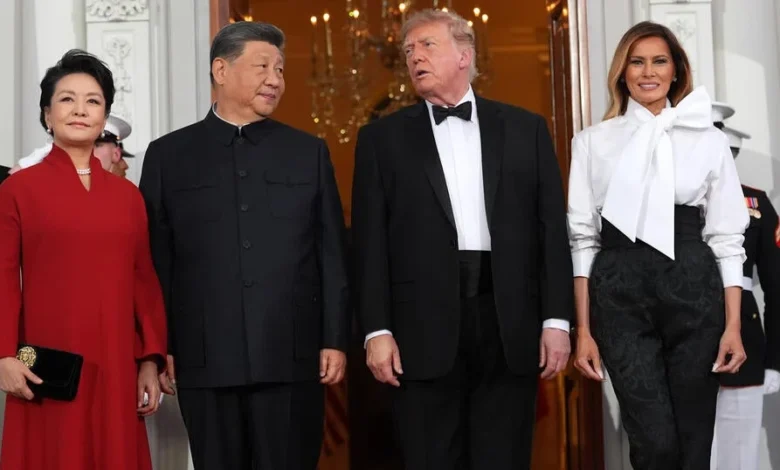
Chinese President Xi Jinping and President Donald Trump concluded a high-stakes state visit in Washington on Thursday, signaling a desire to stabilize the world’s most consequential bilateral relationship despite persistent tensions regarding trade, artificial intelligence, and regional security. During a lavish state dinner at the White House, President Xi remarked that he and President Trump held "sincere and in-depth exchanges" earlier in the day, asserting that the two leaders had "reached common understanding on many issues."
The visit, which marks the first time a Chinese leader has made a second formal state visit to the United States, underscored a complex dynamic characterized by both mutual reliance and intense systemic rivalry. While President Trump lauded the development of what he termed a "great friendship" built on mutual respect, the summit unfolded against a backdrop of ongoing friction, including military competition, human rights concerns, and the future of Taiwan.
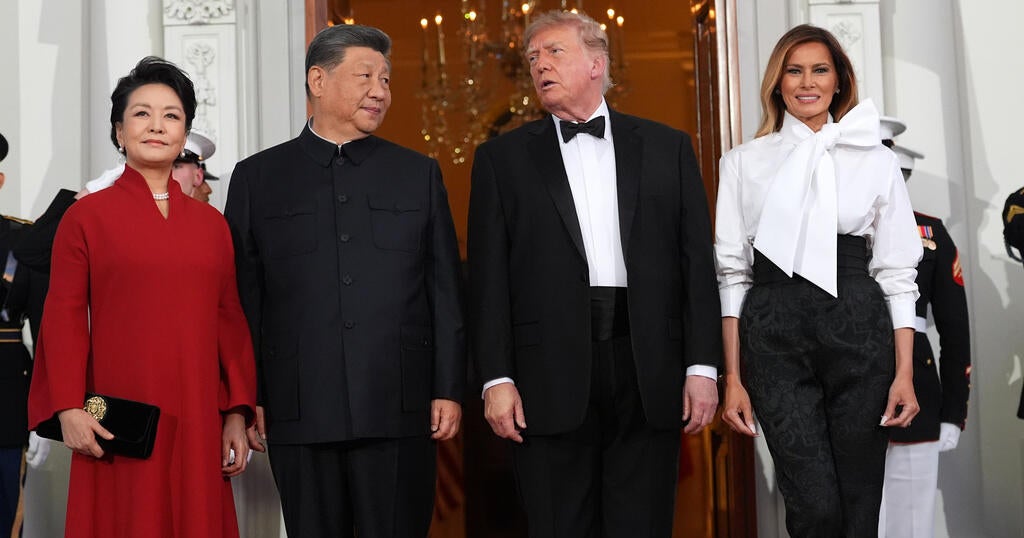
A Chronology of the State Visit
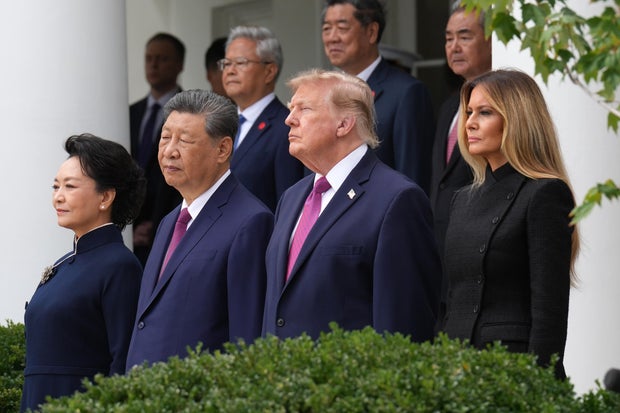
The diplomatic proceedings began in earnest on Wednesday evening, when President Xi and his wife, Peng Liyuan, arrived at Joint Base Andrews. The arrival was marked by a display of military pageantry, with the presidential jet passing an array of F-16 and F-22 fighter aircraft. President Trump and First Lady Melania Trump greeted the couple on the tarmac, setting the stage for a visit defined by heavy symbolism.
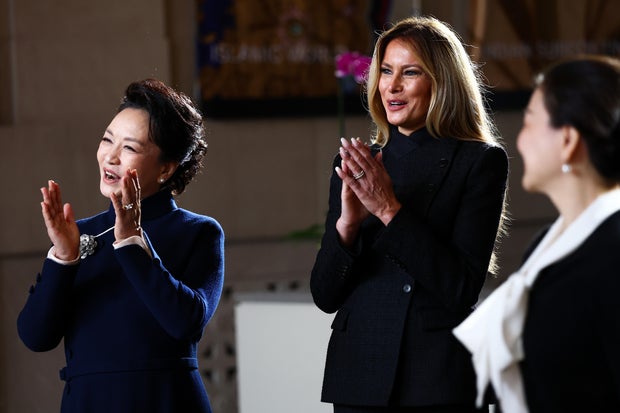
By Thursday morning, the atmosphere shifted to the White House. The formal arrival ceremony on the South Lawn featured a 21-gun salute, the United States Army Herald Trumpets, and a military flyover involving B-2 and F-22 aircraft. Following the ceremony, the two leaders proceeded to the Oval Office for bilateral discussions that lasted several hours. Throughout the day, the First Ladies conducted a separate cultural engagement at the Smithsonian National Museum of Asian Art, where they were entertained by a youth choir, further emphasizing the "people-to-people" ties that both administrations have highlighted as a bridge during periods of governmental strain.
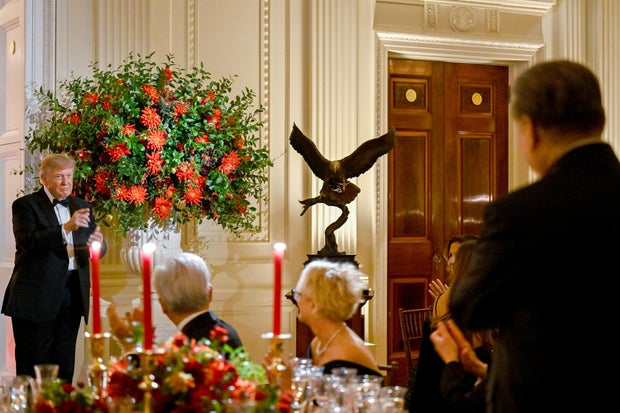
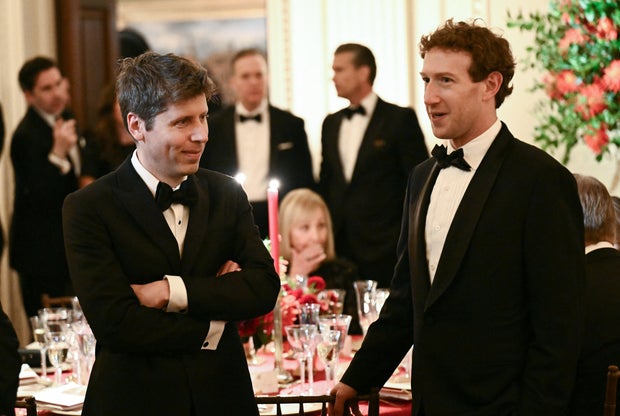
The day culminated in a state dinner held in the White House East Room. The guest list was a testament to the intersection of politics and global commerce, featuring key administration figures such as Vice President JD Vance and Secretary of State Marco Rubio, alongside titans of industry, including Elon Musk, Mark Zuckerberg, Tim Cook, Sundar Pichai, and Jeff Bezos.
Trade, Tariffs, and Economic Interdependence
A central focus of the summit was the management of economic relations. Earlier this week, Treasury Secretary Scott Bessent confirmed that the U.S. and China had agreed to extend a tariff truce by two months, delaying the expiration of existing agreements until January 2027. This extension provides a necessary window for negotiations to continue following a volatile period in 2025, during which trade barriers between the two nations escalated significantly.
The current economic framework relies on the "Busan arrangement," a deal struck in late 2026 to stabilize rare earth mineral exports and maintain Chinese agricultural purchases. However, Chinese officials have reportedly signaled an interest in a "bigger deal" that would move beyond the current limited truce. While the creation of a new U.S.-China "Board of Trade" has been proposed to insulate a small subset of consumer and agricultural goods from future disputes, experts remain cautious. The effectiveness of these measures depends on China’s willingness to adhere to past commitments, such as the purchase of U.S. soybeans, which has historically been a point of contention.
The AI Arms Race and Technological Competition
Artificial Intelligence emerged as perhaps the most significant strategic issue of the meetings. President Trump has repeatedly stated that the United States must outpace China in the development of "Super Intelligence," framing it as a critical national security imperative. In contrast, President Xi’s public comments emphasized the need for AI to remain "under human control" and expressed a hope for fair treatment of Chinese technology firms operating within the U.S. market.
The disparity in regulatory approaches remains a major pressure point. While the U.S. has restricted the export of advanced computer chips to China, the Trump administration has granted targeted exceptions for companies like NVIDIA to supply "approved customers." The proposal of a "notification system" to alert both nations to AI-related incidents affecting national security indicates a nascent attempt to build guardrails, though the scope of such cooperation remains limited by the prevailing climate of strategic mistrust.
Geopolitical Friction: Iran, Russia, and Taiwan
Beyond the economic and technological spheres, the summit addressed several flashpoints that continue to challenge the U.S.-China relationship. Taiwan remains the most volatile issue. China’s stated goal of reunification has led to increased military posturing, while the U.S. maintains its policy of "strategic ambiguity." Observers note that President Xi used the meetings to warn against the consequences of mismanaging the Taiwan issue, while the U.S. continues to provide arms to the island, viewing it as a critical hub for global semiconductor production.
Furthermore, the intersection of China’s foreign policy with the security interests of the U.S. and its allies—specifically regarding Russia’s invasion of Ukraine and reports of Chinese support for Iran—continues to draw bipartisan concern in Washington. Critics of the visit, including Republican Senator Thom Tillis, expressed alarm at the perceived warmth of the reception, arguing that such high-level pageantry might be misinterpreted as a tacit acceptance of Beijing’s regional actions.
Public Reaction and Internal Criticism
The state visit was not without domestic friction. Outside the White House, protesters gathered to voice opposition to the Chinese government’s policies regarding Hong Kong, Taiwan, and human rights. Inside the political sphere, the administration faced criticism for the focus on spectacle. Senator Roger Wicker, chairman of the Senate Armed Services Committee, suggested that the lavish nature of the visit was ill-advised given the ongoing tensions.
Simultaneously, the administration’s handling of the press—specifically the ongoing tensions with outlets like CNN and MSNBC—added an element of controversy to the event. The television pool’s refusal to cover the president’s movements in solidarity with excluded journalists highlighted the fragile state of media relations within the current White House. President Trump’s own remarks on Truth Social, where he criticized the media for not covering the "made for television" arrival ceremony, illustrated the president’s frustration with the news cycle surrounding his diplomatic efforts.
Implications and Future Outlook
The "common understanding" reached by the two leaders appears to be a commitment to maintaining a dialogue, even if substantive policy breakthroughs remain elusive. Analysts from organizations like the Quincy Institute for Responsible Statecraft and the Center for European Policy Analysis suggest that the primary function of this visit was to prevent the relationship from spiraling into further open conflict.
For the American public, the immediate implications of this summit center on the stability of the global economy and the development of AI. For the global community, the meeting represents a crucial attempt by two superpowers to establish a "new approach" for major country relations in the 21st century. Whether the promises of "coexistence in peace" will translate into meaningful policy shifts remains to be seen, as both nations continue to navigate the difficult path between necessary cooperation and inevitable competition.
As the visit concludes with a final meeting in the Red Room on Friday morning before the Chinese delegation departs, the world will be watching to see if the "historic juncture" cited by President Xi results in a de-escalation of the tensions that have defined the past year. With the trade truce extended into 2027 and a dialogue on AI initiated, the stage is set for a period of cautious diplomacy, though the fundamental differences in the two nations’ political and economic systems ensure that the path ahead will be neither simple nor certain.
Related posts: