The Quiet Revolution of Repair Cafes: Challenging the Culture of Disposable Consumption

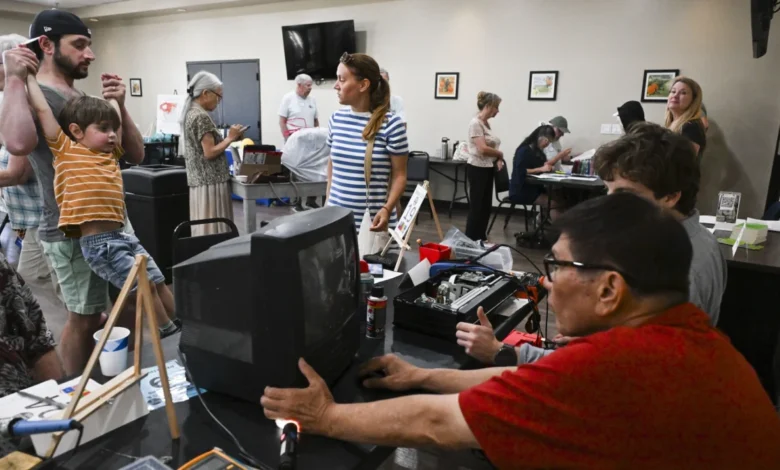
On a cool, rain-slicked Saturday in Decatur, Georgia, a quiet subversion of the modern consumer economy unfolds inside a nondescript warehouse. Residents arrive with arms laden with what many would dismiss as refuse: fractured dining chairs, unresponsive kitchen appliances, and glitching electronics. They are met not by retail clerks suggesting a replacement, but by a cadre of volunteer electricians, tailors, and carpenters armed with multimeters and wood glue. This gathering is a "Repair Cafe," a growing grassroots movement that is fundamentally challenging the "throw-away" culture that has defined global consumption for decades.
A Global Movement Against Planned Obsolescence
The Repair Cafe concept originated in the Netherlands in 2009, spearheaded by Martine Postma. A former journalist, Postma founded the organization as a direct response to the environmental degradation she saw linked to rampant consumerism. Today, the movement has expanded into an international network of over 4,000 locations, each operating on the principle that the lifecycle of a product should not end simply because a single component has failed.
The philosophy behind these cafes is rooted in the "Right to Repair" movement, which advocates for consumer rights against manufacturers who employ strategies to make products difficult or impossible to fix. According to the Federal Trade Commission (FTC) report "Nixing the Fix," these tactics—which include proprietary screws, software locks, and the refusal to provide service manuals—deliberately incentivize premature replacement. By facilitating the repair of household items, these community hubs provide a tangible alternative to this systemic pressure.
Economic and Environmental Stakes
The environmental implications of the current consumer model are staggering. The manufacturing, shipping, and disposal of consumer goods are significant drivers of global greenhouse gas emissions. When a product is discarded, its "embedded carbon"—the energy used to extract raw materials, manufacture the item, and transport it to the consumer—is effectively wasted.
Data provided by Repair Cafe International underscores the impact of these community interventions. In 2025 alone, the global network of cafes diverted nearly two million pounds of waste from landfills. This is equivalent to the weight of over 100 fully loaded Boeing 747 aircraft. Beyond waste diversion, the carbon emissions saved by extending the life of these products equate to the annual consumption of approximately 1,000 Dutch households.
However, the impetus for participating in these events is not purely environmental. In many communities, it is a matter of economic necessity. As inflation continues to impact household budgets and wage growth struggles to keep pace with the rising cost of goods, the ability to maintain one’s possessions has become a vital financial survival strategy.
Case Studies in Community Resilience
The experience of participants varies significantly based on local demographics. In affluent areas like Decatur, the motivation often leans toward sustainability and the preservation of sentimental items. Lilly Pettus, a local resident, recently sought help at the Decatur event for a dining room chair that had been a fixture of her family’s life for three decades. The chair, which had accompanied her family through multiple interstate moves, had suffered a cracked joint. For Pettus, the repair was an act of preserving personal history, a realization that the act of fixing an object creates a deeper connection to it than the passive act of buying a replacement.

Conversely, in the Collier Heights neighborhood of Atlanta, the atmosphere is more utilitarian. Here, the median household income is lower, and the priority is often the continued functionality of essential appliances. Gale Pines, a recent nursing school graduate, brought a broken air fryer to a repair cafe held in the basement of a local church. For Pines, the device was a necessary tool for daily life. With the cost of a new unit hovering around $100, a professional repair was out of reach, and a replacement was a financial burden. By collaborating with a volunteer who identified a faulty capacitor—a component costing pennies—the appliance was restored, illustrating how these cafes act as a bridge between technical skill and community need.
The Legislative Landscape
The success of these grassroots efforts has coincided with a significant shift in the legislative landscape. The "Right to Repair" movement has gained enough momentum to influence state and international law. In 2023, major legislative wins occurred in California, Colorado, Minnesota, and New York, where lawmakers passed bills requiring manufacturers to make parts, tools, and diagnostics available to independent repair shops and consumers.
The European Union followed suit in 2024 with a comprehensive directive aimed at curbing "planned obsolescence." While these laws represent a massive victory for consumer advocacy groups, organizers like Postma argue that the next step is fiscal policy. Proposals for taxes on raw materials have been floated as a means to internalize the environmental costs of production, which would theoretically make the "cheap" disposable model more expensive, thereby bolstering the viability of a circular economy.
Bridging the Knowledge Gap
A core component of the repair cafe experience is the transfer of knowledge. Unlike a traditional repair shop where a customer drops off an item and receives it back fixed, repair cafes emphasize "co-repair." Patrons are encouraged to observe, ask questions, and assist in the process.
Lew Lefton, a volunteer at a Georgia-based cafe, describes this as a "re-skilling" of the population. In an age dominated by artificial intelligence and digital abstraction, the physical act of troubleshooting a motor or soldering a circuit board is a profound reconnection with the material world. For many volunteers, the motivation is rooted in a desire to build community resilience against potential systemic shocks. As Lefton notes, there is a distinct, practical confidence gained from knowing how the things we rely on actually function.
Future Outlook and Implications
As the movement matures, the organizers are looking toward long-term sustainability. The challenge remains scaling these events without losing the hyper-local, community-driven nature that makes them effective. Furthermore, the complexity of modern electronics—increasingly reliant on proprietary software—poses an ongoing technical hurdle. While a mechanical chair or a simple heating element can be fixed with basic tools, modern smartphones and smart home devices are often designed to be "bricked" if opened by anyone other than an authorized service center.
Despite these hurdles, the growth of the movement suggests a cultural shift is underway. The "loneliness" of the modern consumer experience—a cycle of clicking "buy," waiting for a delivery, and eventually discarding the item—is being replaced by a more communal, collaborative approach to material life.
For participants like Pettus and Pines, the repair cafe is not just a place to fix a broken object. It is a space where the narrative of consumerism is interrupted. By choosing to mend rather than replace, they are participating in a broader, slow-motion revolution that values skill, sustainability, and human connection over the convenience of a disposable economy. As the global climate crisis continues to present unprecedented challenges, the simple act of tightening a clamp or replacing a capacitor has become a powerful, radical statement about the kind of future society chooses to build.
Related posts: