U.S. Marshals Service official placed on administrative leave following investigation into alleged racist incident targeting Black colleague

A high-ranking official within the United States Marshals Service (USMS) has been placed on administrative leave as the agency conducts an intensive internal investigation into allegations of workplace harassment and racial misconduct. Peter Marketos, who served as the assistant director of the Investigative Operations Division, was removed from his post following reports that a watermelon was left on the desk of a Black deputy assistant director who reported directly to him. The incident, which has been colloquially dubbed "watermelon-gate" by agency staff, has triggered an internal firestorm within the Department of Justice (DOJ) component, raising urgent questions regarding professional conduct and the culture of leadership within one of the nation’s most storied federal law enforcement entities.
The Incident and Immediate Personnel Changes
The incident, which reportedly occurred earlier this month, involved the discovery of a watermelon on the workstation of a Black colleague within the Investigative Operations Division. The symbolic nature of the item—a well-documented, centuries-old trope used to demean and dehumanize Black Americans—has caused significant distress among staff members.
In the immediate aftermath, the USMS took decisive steps to address the breach of conduct. Peter Marketos, a veteran of the agency with more than 20 years of service, was relieved of his duties pending the outcome of a formal inquiry. The agency acted swiftly to stabilize the leadership of the division; effective Monday, November 9, 2026, Don Snider—a seasoned official who previously served as the chief inspector and commander of the Capital Area Regional Fugitive Task Force—was appointed to assume leadership of the Investigative Operations Division. As part of this transition, all biographical information regarding Marketos has been purged from the official U.S. Marshals Service website, and reports from sources close to the investigation indicate that the agency is moving toward his termination.
Chronology of Marketos’ Career and Recent Assignments
Peter Marketos’ career trajectory has been characterized by rapid ascent and significant responsibility within the federal justice system. Joining the USMS as a deputy marshal in 2002, he steadily climbed the ranks, eventually overseeing some of the agency’s most sensitive and high-stakes operations, including fugitive apprehensions, tactical response units, and sex offender compliance programs.
His tenure in recent years saw him operating at the highest levels of the service:
- March 2023: Marketos was appointed acting U.S. marshal for the District of Columbia.
- Late 2023: He was promoted to the role of assistant director of the Investigative Operations Division, a critical unit responsible for the tracking and capture of the nation’s most dangerous fugitives.
- 2025–2026: Marketos held the designation of acting U.S. marshal for the Eastern District of Virginia and notably provided testimony before the Senate Judiciary Committee in September 2025 regarding federal law enforcement task force coordination in Washington, D.C.
His sudden removal marks a sharp reversal for an official who was, until last week, a central figure in the operational strategy of the Marshals Service.
Institutional Response and Internal Sentiment
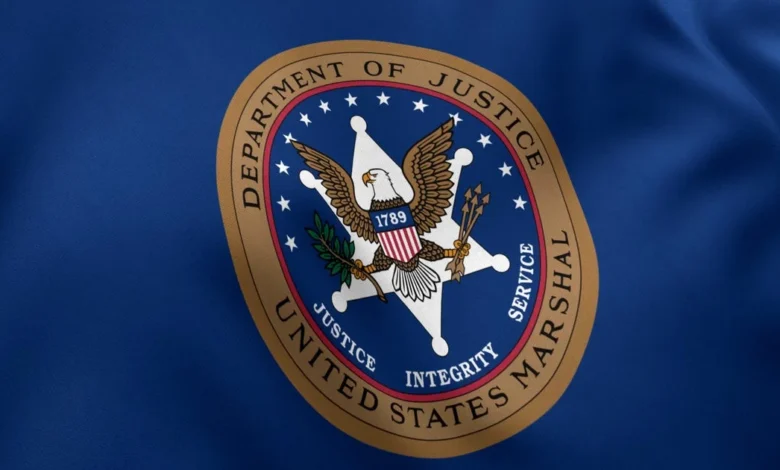
The U.S. Marshals Service has issued a statement emphasizing that it maintains a zero-tolerance policy for discriminatory conduct. A spokesperson for the agency stated, "The U.S. Marshals Service takes seriously any allegation of misconduct by USMS personnel. The alleged actions do not reflect the core values of the USMS: Justice, Integrity and Service. While we recognize the public interest in transparency and accountability, federal privacy laws prohibit discussion of personnel matters."
Internally, the reaction has been one of indignation. Multiple sources within the agency have described the mood among deputy marshals as one of profound disappointment. For many, the incident is viewed as a betrayal of the agency’s mission. The Investigative Operations Division, which serves as the backbone of the Marshals’ pursuit of fugitives, relies heavily on cohesion and mutual respect to function effectively in high-stress environments. The introduction of racially charged hostility into the office space is seen by many employees as a fundamental breakdown of the leadership’s duty to maintain a professional, inclusive environment.
Broader Implications for the Department of Justice
The incident occurs at a sensitive time for the broader Department of Justice, which has been navigating intense political scrutiny regarding its internal investigations and personnel. Notably, the situation has drawn secondary attention due to the familial ties of the accused. Peter Marketos’ sister, Rose Marketos, is an FBI agent currently assigned to a high-profile "grand conspiracy" investigation—a probe into allegations that intelligence officials during the Obama and Biden administrations conspired to prevent the election of Donald Trump.
While there is no evidence to suggest that the two matters are related, the juxtaposition of a high-ranking marshal facing termination for racial misconduct while his sibling works on a politically explosive case underscores the complex, often high-pressure environment within federal law enforcement agencies. The resignation of the top federal prosecutor in South Florida, who had been overseeing the same "grand conspiracy" probe, adds another layer of instability to the DOJ’s public image, creating a confluence of high-stakes personnel shifts.
Analysis of Workplace Culture in Federal Law Enforcement
The "watermelon-gate" incident provides a case study in the challenges of maintaining equitable workplace standards within federal law enforcement. Historically, agencies like the U.S. Marshals Service have struggled to diversify their leadership ranks and address implicit biases.
According to data on federal law enforcement demographics, while representation of minority groups has improved over the last two decades, the upper echelons of leadership remain predominantly homogeneous. When an individual in a position of authority engages in behavior that utilizes well-known racial stereotypes, it sends a damaging signal to the rank-and-file. Organizational psychologists often note that such incidents, if not addressed with absolute transparency and severe disciplinary action, can lead to a "chilling effect," where minority employees feel alienated, less likely to report future incidents, and less confident in the agency’s commitment to their career advancement.
Furthermore, the shift in leadership to Don Snider suggests that the agency is prioritizing a return to operational stability and the restoration of trust. Snider’s background with the Capital Area Regional Fugitive Task Force—a multi-agency partnership—indicates that the USMS intends to focus on inter-agency cooperation as it attempts to move past the controversy.
Conclusion and Future Outlook
The investigation into Peter Marketos is ongoing, and the final determination of his employment status remains the primary focus for the Department of Justice’s internal affairs units. As the USMS grapples with the fallout, the agency will likely face pressure from oversight committees in Congress to provide a full accounting of how such behavior was allowed to occur at the assistant director level.
The incident serves as a stark reminder that even within the highest levels of the American federal law enforcement apparatus, the challenges of racial sensitivity and professional conduct persist. The success of the Marshals Service in the coming months will depend on how effectively it can reconcile this internal failure with its stated mandate to provide "Justice, Integrity and Service" to the American public. The swift removal of Marketos and the installation of a new division head are initial steps in a process that will likely require a broader assessment of the agency’s internal culture and the efficacy of its anti-discrimination training protocols. For now, the Investigative Operations Division must pivot toward its core mission, even as the shadow of this controversy looms over its leadership transition.
Related posts: