Three Frontier Airlines passengers arrested after force-boarding flight during baggage fee dispute

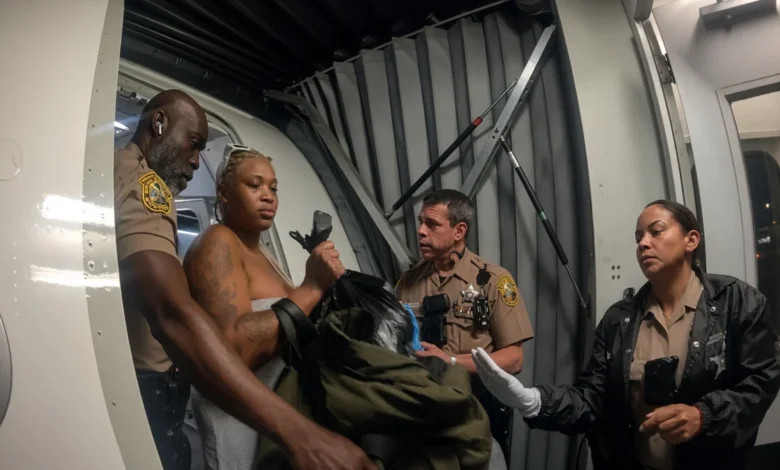
The incident aboard Frontier Airlines Flight 1204 on March 29 has recently garnered renewed public interest following the release of law enforcement body camera footage, which captures the chaotic removal of three passengers who bypassed gate security protocols. The confrontation, which occurred at Miami International Airport (MIA) prior to a scheduled departure for Philadelphia, originated from a standard airline policy regarding carry-on baggage fees. The subsequent escalation resulted in criminal charges, a physical struggle within the aircraft cabin, and a notable public reaction from fellow travelers.
Chronology of the Incident
The sequence of events began at the boarding gate, where three passengers were preparing to board the flight to Philadelphia. According to Frontier Airlines personnel, the group presented two carry-on bags but had only paid for one. Under Frontier’s strict “ultra-low-cost carrier” business model, passengers are required to pay for carry-on items that exceed the dimensions of a personal item. When airline staff informed the group that they would need to reconcile the payment for the second bag before proceeding, a verbal dispute ensued.
The interaction quickly deteriorated. Gate agents, citing the passengers’ behavior and refusal to comply with payment requirements, voided the group’s boarding passes and formally denied them boarding. In an act of defiance, one of the passengers was heard instructing her companions, “We don’t have to listen; let’s just go.” The three women then bypassed the gate staff, pushed through the boarding door, and proceeded down the jetbridge to board the aircraft without authorization.
Before the passengers reached the plane, a Frontier employee alerted local law enforcement stationed at the terminal. The employee relayed that the airline had officially canceled the passengers’ reservations and requested their removal. Furthermore, the staff member noted a suspicion of alcohol impairment, which, if confirmed, would have further complicated the passengers’ legal standing under Federal Aviation Administration (FAA) regulations regarding intoxicated passengers on commercial flights.
Upon entering the cabin, the women were intercepted by law enforcement officers. The subsequent footage, which has since circulated on social media platforms such as Reddit, shows the transition from the cabin to the jetbridge, where the situation turned physical. As deputies moved to escort the women off the aircraft, a struggle broke out. The footage captures a tense exchange between the authorities and the passengers, during which a deputy is heard stating, “We’re going to put cuffs on you whenever we want. We’re not going to tell you anything. You’re going to do what you’re told.” The encounter concluded with the women being removed from the flight, one of whom was observed on the cabin floor during the arrest.
Legal Ramifications and Charges
All three individuals were subsequently taken into custody and processed by Miami-Dade police. The legal charges filed against them reflect the severity of their actions. Each passenger was charged with trespassing and resisting an officer without violence. Additionally, one of the women faced a formal charge of battery after allegedly spitting on a Frontier Airlines employee during the altercation.
The defendants have entered pleas of not guilty. Their legal counsel will likely focus on the conduct of the responding officers, particularly the contentious language used during the handcuffing process. Legal experts suggest that while the initial trespass was a clear violation of airline and airport policy, the subsequent interaction between law enforcement and the civilians will be subject to intense scrutiny to determine if the use of force was proportionate to the threat posed.
Industry Context and Airline Policies
The conflict at Miami International Airport highlights the growing friction between passengers and airlines, particularly budget carriers that rely on ancillary revenue to maintain low base fares. Frontier Airlines, like many other ultra-low-cost carriers (ULCCs), has implemented stringent baggage policies to optimize cabin space and flight efficiency. While these policies are clearly outlined in the Terms and Conditions accepted by passengers at the time of purchase, they remain a frequent point of contention at the boarding gate.

Data from the Department of Transportation (DOT) has shown an increase in passenger-airline disputes over the past several years. While many of these disputes are settled through secondary payments at the gate, the rare instances where passengers attempt to forcibly board flights represent a significant security concern. Unauthorized access to an aircraft is a violation of Transportation Security Administration (TSA) regulations and carries severe penalties, including potential federal prosecution and placement on the "no-fly" lists of individual carriers.
Comparative Analysis of Passenger Behavior
This incident is not an isolated event for Frontier Airlines in Miami. The airport has seen similar disruptions in recent months, leading to questions regarding the effectiveness of current gate security protocols. Critics of the airline have occasionally argued that Frontier’s aggressive fee-collection tactics—such as charging for printing boarding passes or carry-on storage—can escalate minor administrative disagreements into volatile confrontations.
However, industry analysts maintain that the responsibility for adherence to flight safety protocols rests solely with the passenger. “When a passenger decides to bypass a gate agent, they are moving from a consumer service dispute into the realm of a security breach,” noted one aviation consultant. “Once the boarding pass is voided and the passenger is told to leave, remaining on the premises constitutes trespassing.”
Broader Implications for Airline Security
The use of body camera footage in this case provides a rare window into the realities of airport policing. The incident raises questions regarding the training of law enforcement in high-stress, low-threat environments. The deputy’s statement that they would apply restraints “whenever we want” has drawn criticism from civil liberties groups, who argue that even when individuals are non-compliant, law enforcement is held to a standard of professional conduct that mandates transparency and de-escalation.
Furthermore, the impact on fellow passengers is significant. The delay caused by the removal of the three women resulted in an inconvenience for the remaining travelers on Flight 1204, potentially causing missed connections and scheduling disruptions. The cheers captured on the body camera footage from other passengers suggest a level of collective frustration among the flying public regarding the behavior of unruly individuals in shared spaces.
Moving Forward
As the legal proceedings continue, the case serves as a reminder of the fragility of the air travel environment. Airlines, law enforcement, and airport authorities are currently evaluating whether current de-escalation strategies are sufficient to prevent minor fee disputes from becoming major security incidents.
Frontier Airlines has not issued a detailed statement regarding the specific security lapses that allowed the passengers to access the jetbridge, but the company continues to uphold its policy of strict fee enforcement. For the flying public, the incident serves as a stark warning: regardless of the perceived fairness of an airline fee, the proper venue for redress is through customer service channels or the Department of Transportation’s consumer protection office—not through physical confrontation or unauthorized boarding.
The intersection of aggressive revenue models, passenger entitlement, and law enforcement conduct remains a volatile combination. As air travel continues to reach pre-pandemic volumes, the industry will likely face increased pressure to ensure that boarding processes are not only efficient but also resilient against the growing trend of passenger-led disruptions. The final outcome of the court case for the three individuals will likely set a precedent for how such incidents are handled at Miami International Airport and beyond, potentially influencing future protocols for gate-side conflict resolution.
Related posts: