The Descent and Fall of Jontay Porter: Inside the NBA’s Most Shocking Gambling Scandal and the Destructive Reality of High-Stakes Addiction

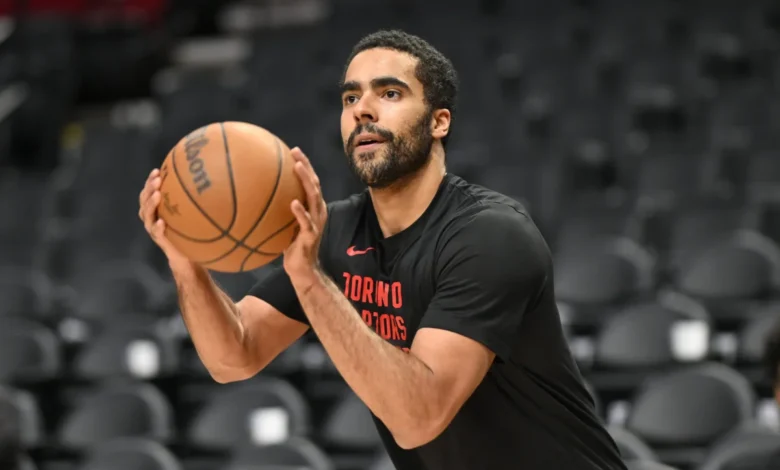
The professional sports landscape was permanently altered in 2024 when former Toronto Raptors forward Jontay Porter became the first major American league athlete to receive a lifetime ban for sports gambling violations since the U.S. Supreme Court struck down the Professional and Amateur Sports Protection Act (PASPA) in 2018. More than two years after the scandal rocked the National Basketball Association, comprehensive investigative reporting has brought to light the staggering depths of Porter’s financial ruin, psychological turmoil, and the frantic cycle of addiction that culminated in criminal charges and a federal investigation.
The Genesis of an Addiction: From Day-Trading to Massive Wagers
Porter’s descent into compulsive gambling did not begin on the hardwood of an NBA arena, but rather in the digital ether of day-trading and online casinos. While playing for the Memphis Hustle, the NBA G-League affiliate of the Memphis Grizzlies, Porter began exploring high-risk financial markets. When his time in the G-League concluded and his direct professional foothold in the basketball world temporarily faded, his speculative habits pivoted forcefully toward sports betting.
According to an extensive profile by journalist and former Missouri basketball player Nick Berardini for The New Yorker, Porter’s introduction to major sports wagering was both instantaneous and catastrophic. His inaugural high-stakes bet was a $125,000 wager on the Kansas City Chiefs against the Baltimore Ravens during Week 2 of the 2021 NFL season. The Chiefs held an 11-point lead entering the fourth quarter before collapsing, ultimately losing 36-35. The defeat obliterated Porter’s wager, yet paradoxically hooked him into the ecosystem of sports betting.
"I deleted the app, suspended my account that night and the next morning, I was mad and came back for vengeance," Porter recalled of the fateful weekend.
The vengeance quickly spiraled into a blur of compulsive behavior. Porter placed 144 wagers over a four-day span surrounding the Chiefs-Ravens matchup, accumulating a staggering total volume of $1.2 million. Remarkably, Porter later admitted that he retained no conscious memory of executing that volume of bets. Driven by digital accessibility and constant stimulation, his relationship with money and risk had fundamentally fractured.

Millions in Play: The FanDuel V.I.P. Pipeline and Russian Ping-Pong
Data analysis of Porter’s betting accounts revealed a financial operation of astonishing proportions. Over an 18-month span, the former collegiate standout wagered more than $50 million through mainstream sportsbook platforms, primarily FanDuel.
As his losses mounted, Porter’s methods of funding his habit became increasingly desperate. At one juncture, he secured a $500,000 home equity loan on a property he owned in Memphis. Within a remarkably short period, he exhausted the entire sum on gambling losses, forcing him to sell the residence entirely.
With his liquid capital depleted, Porter’s betting portfolio expanded into increasingly obscure markets. Desperate to chase his losses and secure a quick return, he began wagering astronomical sums on obscure international events, including Russian ping-pong matches. At one point during this erratic bender, Porter found himself up over $1 million betting on the niche sport.
This temporary windfall was heavily encouraged by structural incentives within the modern sports betting industry. Porter received numerous promotional bonus bets and personalized attention from a FanDuel V.I.P. host named Frank Cardenas. These perks fueled a relentless five-day bender that ultimately left Porter in the red by more than $400,000, compounding his financial liabilities with dangerous informal bookmakers.
"I think you’re addicted to the thrill of the in between, when you don’t know if it’s going to win or lose," Porter explained, describing the physiological toll of his compulsion. "Just that suspension where your whole outcome is in question—eyes bloodshot staring at a screen, your head is about to explode—and you win and it’s like ‘great I can keep going now’ and it feels really good for a second, but you want that feeling again."
The Rigged Games and the NBA Ban
Porter’s mounting debts to unauthorized bookies eventually created an untenable crisis. Trapped between criminal creditors and his dwindling financial resources, Porter utilized his position as an active professional basketball player to manipulate the outcomes of NBA games during his brief tenure with the Toronto Raptors in 2024.

By intentionally exiting games early under dubious injury pretexts, Porter allowed outside co-conspirators to cash in on specific under-prop bets tied to his statistical output. The unusual betting patterns immediately triggered integrity alerts across multiple major sportsbooks, prompting an immediate investigation by the NBA.
In April 2024, the league handed down its definitive punishment: a lifetime ban from the NBA. Investigators uncovered clear evidence that Porter had disclosed confidential health information to bettors and deliberately limited his own participation to influence specific wagers.
The fallout extended far beyond professional athletics. Porter pleaded guilty to a federal charge of conspiracy to commit wire fraud. Furthermore, federal prosecutors connected his case to a much broader sports gambling ring that surfaced across professional basketball in 2025, sweeping up high-profile figures including former player and coach Chauncey Billups, former assistant coach and player Damon Jones, and former player Terry Rozier. Porter now faces a potential prison sentence of up to 20 years, with his formal sentencing still pending.
A Near-Fatal Crisis and a Perspective on Ruin
The sudden exposure of the scandal precipitated an immediate psychological crisis for the disgraced athlete. Porter recounted that in the immediate aftermath of the public shaming and federal charges, his despair reached a catastrophic nadir. While visiting a shooting range to cope with the stress, he held a loaded firearm to his head.
"The only things holding me to this earth right now are my faith in God and my unborn son," Porter recalled thinking during the harrowing moment. "I can’t leave this earth without meeting him."
Miraculously, Porter stepped back from the brink. Reflecting on the totality of his downfall, he has expressed a counterintuitive sentiment regarding the severe professional and legal consequences he faced. Far from lamenting the loss of his career, Porter views the public exposure as a life-saving intervention.

"I’m glad all that stuff happened with the NBA and getting banned and the public shame and all my dirty laundry out on the table," Porter said. "If I didn’t lose my NBA job I would have lost my wife, I would have lost my family support, I might have even lost my life. If [the ban] didn’t happen, I wouldn’t be here today and if I was here I’d be on my phone trying to figure out the next place I can place a bet."
Broader Implications for Professional Sports and Betting Integration
The case of Jontay Porter remains a watershed moment for the intersection of legalized sports betting and professional athletics in the United States. Following the Supreme Court’s 2018 decision overturning PASPA, sports leagues forged lucrative multi-million-dollar partnerships with major sportsbooks, integrating betting odds into broadcasts, stadium sponsorships, and digital fan engagement tools.
While leagues and sportsbooks maintain sophisticated integrity monitoring systems designed to catch suspicious wagering anomalies in real-time, the Porter scandal exposed the profound vulnerability of athletes operating under financial distress or severe gambling addiction. The presence of V.I.P. host incentives, aggressive marketing campaigns, and 24-hour mobile access has raised urgent questions regarding the duty of care owed by sportsbook operators to high-volume bettors, particularly young professional athletes managing sudden wealth and high-pressure environments.
As federal authorities continue to pursue broader accountability through investigations involving multiple former players and coaches, the sports world is left to reckon with the human cost of unmitigated addiction. For Jontay Porter, the path forward involves criminal sentencing, restitution, and a permanent separation from the game he loved—outcomes he now accepts as the price of his survival.
Related posts: