Power Crunch Threatens Nebraska’s Economic Ambitions as Energy Demand Outstrips Grid Capacity


The modern American electrical grid is facing an unprecedented reckoning. Driven by an explosive boom in data center construction, the widespread electrification of transport and heating, and expanding industrial sectors, utilities nationwide are scrambling to secure adequate power generation. Nowhere is this tension more palpable than in eastern Nebraska, where the Omaha Public Power District (OPPD) finds itself confronting a severe energy deficit. Serving roughly 419,000 customers across the region, OPPD is rapidly running out of the surplus power capacity required to support new or expanding economic development projects. This looming energy shortage poses a direct threat to Nebraska’s long-term economic growth, job creation, and tax revenue goals, forcing local leaders, utility executives, and state officials into a high-stakes debate over the future of the state’s power infrastructure.
The Roots of the Crisis: Winter Storm Uri and Reserve Margins
To understand how Nebraska arrived at this precarious juncture, it is necessary to examine the cascading grid reliability crises that have shaken the central United States in recent years. In February 2021, Winter Storm Uri swept across much of the country, driving extreme sub-zero temperatures and triggering an unprecedented surge in demand for electricity and natural gas.
During the height of the storm, utilities nationwide scrambled to keep pace as power consumption spiked. Simultaneously, the grid faced severe transmission constraints and widespread generation failures driven by frozen fuel supplies and mechanical malfunctions at legacy power plants. To prevent a catastrophic, system-wide collapse of the electrical grid, the Southwest Power Pool (SPP)—the regional transmission organization that manages grid reliability across all or part of 14 central states—mandated emergency measures. In Nebraska, this resulted in OPPD implementing emergency rolling blackouts to preserve overall grid integrity.
The fallout from Winter Storm Uri fundamentally changed how grid operators view risk. In the aftermath, the SPP instituted stringent new planning reserve margins, requiring member utilities to maintain a much higher buffer of excess power capacity to protect against extreme weather events and unexpected demand spikes. While these regulations successfully reduced the vulnerability of the grid to catastrophic failures, they simultaneously soaked up existing surplus capacity, leaving regional utilities with significantly less flexibility to accommodate new large-scale commercial and industrial customers.
A Narrowing Window: OPPD’s Current Capacity Constraints
Today, OPPD’s available capacity for new or expanding large-scale commercial customers has dwindled to less than 100 megawatts. To contextualize this figure, a modern hyperscale data center frequently requires as much as 1,000 megawatts of continuous power—equivalent to the output of a large nuclear or coal-fired power plant. Meanwhile, industrial manufacturing facilities can range anywhere from a few megawatts to upwards of 100 megawatts.
While OPPD leadership maintains that the utility has sufficient energy to support typical residential and commercial growth, the pinch on large-scale economic development is acute. Outgoing OPPD President and CEO Javier Fernandez, whose departure from the utility is slated for the end of the year, noted that any new commercial or industrial development requiring 2 megawatts or more may face substantial delays in receiving electrical service.
This capacity crunch comes at a particularly vulnerable time for Nebraska’s state budget. With a projected state budget deficit of $208 million for the upcoming fiscal year—compounded by state income tax revenues that dropped by $703 million over a single year—local and state leaders have leaned heavily on economic development, corporate recruitment, and industrial expansion to bolster tax rolls and create jobs. Instead, local chambers of commerce and economic development agencies find themselves constrained by an invisible yet immovable barrier: a lack of available electricity.
The Industrial Shift: Data Centers Versus Traditional Manufacturing
The transformation of OPPD’s load profile over the past decade illustrates the sheer magnitude of the demand shift. Historical data from the utility reveals a traditional customer base split relatively evenly: industrial customers historically accounted for roughly 32 percent of peak demand, residential customers made up 41 percent, and commercial enterprises constituted 27 percent.
However, long-term forecasts project a dramatic reconfiguration of the grid. By 2035, industrial customers alone are expected to represent a staggering 52 percent of peak demand on OPPD’s system. Fernandez explicitly identified the primary driver behind this structural shift: “Clearly, data centers have been a very, very big force on that increase.”
The influx of data center proposals has created intense internal competition for the remaining megawatts on the grid. Traditional manufacturing companies, which have long served as the backbone of regional economic stability, now find themselves competing directly with massive technology infrastructure projects for limited electricity capacity.
Larry Gigerich, chair of the Site Selectors Guild, noted that this dynamic is playing out nationwide. “The competition for electricity with data centers is causing manufacturing companies now to be more proactive and to use their voice more directly with utilities versus the way they have done it for decades,” Gigerich said. “Now it’s a true competition, and we can’t generate enough new power fast enough to meet everybody’s needs.”
The Greater Omaha Chamber of Commerce has voiced alarm over these limitations. In September, chamber leadership sent a formal letter to the OPPD board urging the utility to look beyond its standard planning horizon and aggressively build out future capacity. Paul West, chair of the chamber’s board, emphasized that recruiting and expanding manufacturing remains critical to solving regional challenges such as brain drain, property tax pressures, and economic diversification. Yet, energy availability has rapidly climbed to become one of the top two reasons the chamber loses prospective corporate deals to competing regions.
The Planning Dilemma: Building Too Much Versus Building Too Little
As OPPD charts its long-term energy strategy over a 10-year planning horizon, its board faces a high-stakes balancing act. The utility’s initial planning models outline a wide spectrum of potential generation growth: on the conservative end, OPPD could add roughly 1,000 megawatts to its existing 4,583-megawatt portfolio. On the aggressive end, the utility might need to more than double its current capacity.
The stakes of this decision are immense. According to a September customer growth update presented to the utility, companies representing nearly 2,000 megawatts of active economic development projects are currently sitting in OPPD’s queue through 2031. Furthermore, an additional 5,000 megawatts of potential projects are actively considering the Omaha metropolitan area.
While utility executives recognize that not all speculative projects in the queue will ultimately materialize, the margin for error is razor-thin. Building too little generation will choke off Omaha’s economic momentum and leave the region at a permanent competitive disadvantage. Conversely, building too much generation—should projected corporate demand fail to materialize—will leave OPPD’s existing residential and commercial ratepayers to absorb the multi-million-dollar costs through higher utility rates.
“The biggest question my board is likely going to have to answer is going to be how big of a plan we approve,” Fernandez told Grist. “And that is going to be informed by state, counties, cities, chambers: How much do you want us to grow?”
The Generation Hurdle: Natural Gas, Renewables, and Local Opposition
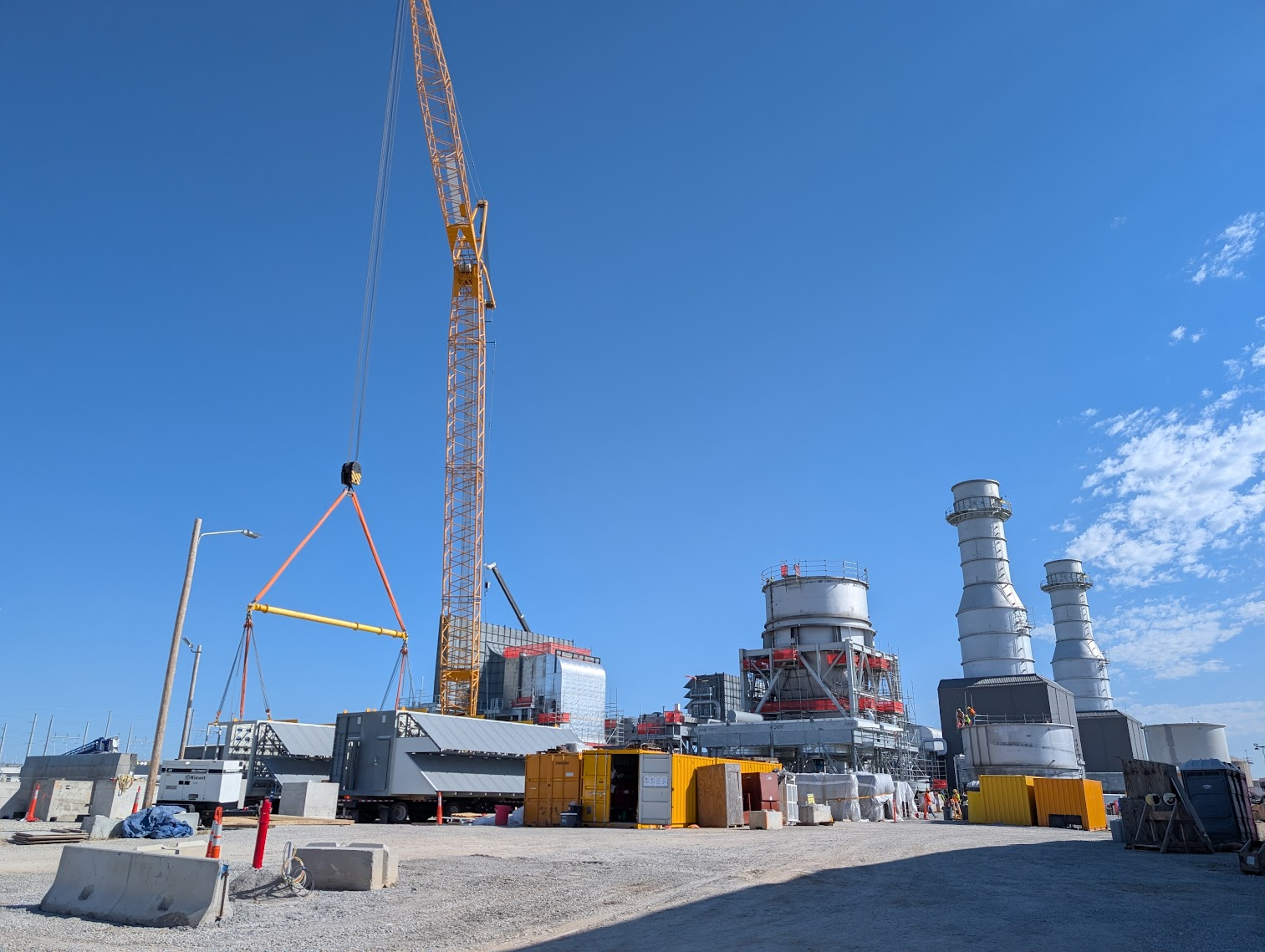
Even if OPPD’s board approves an aggressive expansion plan, translating those projections into physical infrastructure presents a formidable array of regulatory, supply chain, and social hurdles. To meet rising demand while maintaining affordability, the utility is examining a mix of new natural gas generation and renewable energy sources. Both pathways present distinct obstacles.
Natural gas facilities offer reliable, dispatchable power capable of buffering intermittent renewable sources, but the nationwide popularity of gas turbine construction has severely constrained the global equipment supply chain. Procuring major generation hardware now requires extended lead times, delaying potential in-service dates by years.
Renewables, meanwhile, offer the lowest operational costs over the lifetime of the assets and are crucial for meeting corporate sustainability mandates. However, deploying utility-scale wind and solar projects in Nebraska has run into fierce local resistance. Over the past several years, tension has mounted across rural and suburban Nebraska as developers have pursued clean energy projects. Misinformation, coupled with instances where developers initially kept project details quiet, has fueled deep distrust among rural landowners.
Communities across the state have increasingly mobilized to reject wind and solar proposals, citing concerns over potential fire risks, degradation of prime agricultural land, and strains on local infrastructure. This creates a severe policy contradiction: local leaders and municipal officials frequently demand more power capacity and economic development, yet local communities simultaneously block the very renewable energy infrastructure required to generate that power.
“Everyone is saying no, and then we end up in a really bad place,” Fernandez warned.
Broader Implications for Nebraska’s Future
The energy crunch facing OPPD is a microcasm of a national macro-trend. As the American economy undergoes its most significant structural transformation in half a century—replacing fossil fuels with electricity while simultaneously absorbing the insatiable power demands of the artificial intelligence and data center revolutions—utilities are finding their historical mandate tested to its absolute limits.
For Nebraska, the resolution of this crisis will dictate the economic trajectory of the state for decades. Economic development leaders, municipal officials, and utility regulators must forge a unified vision that balances aggressive infrastructure expansion with community acceptance and fiscal responsibility. Without deliberate coordination, the state risks stalling out just as its economic potential reaches a critical threshold.
“If Omaha doesn’t grow, if Omaha doesn’t prosper, the rest of the state very likely won’t,” Fernandez concluded. “What the state wants versus what the city wants versus what the chambers want — well, they all want different things. But the one common denominator that I keep hearing is jobs and income.”
Related posts: