Ashton and Michael Kutcher Open Up About Lifelong Bond, Health Crises, and Sibling Rifts in Rare Joint Interview

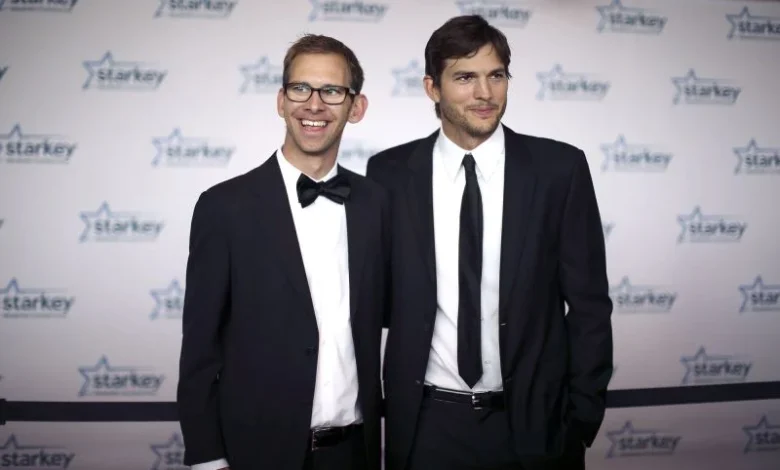
The complex and profound dynamics of twin brotherhood took center stage in a rare and emotionally charged joint interview featuring actor Ashton Kutcher and his twin brother, Michael Kutcher. Appearing on the Paramount+ medical docuseries The Checkup with Dr. David Agus, the brothers offered a deeply candid retrospective on their shared upbringing, the terrifying health emergencies that nearly tore their family apart, the psychological weight of survivor’s guilt, and the inevitable frictions of navigating drastically different paths in adulthood.
Dr. David Agus, who serves as Ashton Kutcher’s personal physician, initially sat down with the That ’70s Show star to discuss his private battle with vasculitis—a rare and debilitating autoimmune condition that severely impacted his vision, hearing, and equilibrium. However, the conversation soon expanded into a broader exploration of family health history when Michael joined the discussion. The brothers reflected on Michael’s lifelong journey with cerebral palsy, a near-fatal viral myocarditis infection during their youth, and the emotional fault lines that momentarily drove them apart as they transitioned into adulthood.
A Childhood Defined by Medical Emergencies and Miracles
The early lives of the Kutcher twins were overshadowed by profound medical hurdles that forged an intense, protective bond between them. Born in Cedar Rapids, Iowa, the brothers experienced a stark divergence in physical health early on. While Ashton developed into an active, healthy child, Michael was diagnosed with cerebral palsy—a group of disorders that affect movement and muscle tone—and faced continuous developmental challenges.
The defining crisis of their youth occurred when the boys were teenagers. Michael contracted viral myocarditis, a severe inflammation of the heart muscle caused by a viral infection. The condition caused his heart to enlarge dangerously and ultimately fail.
During a recent appearance on Dr. Agus’s program, both brothers visibly choked up as they recalled the harrowing day Michael’s heart stopped while Ashton was visiting him in the intensive care unit. Fighting back tears, Ashton described entering the hospital room and immediately recognizing the unmistakable auditory warning of a flatlining monitor.
“I go in the room and I’m like, ‘Whoa,’” Ashton recounted, his voice trembling. “‘Everything is not ok.’ And he flatlines in the room, and I know that noise because now I’ve been visiting occasionally.”
In a moment of sheer desperation and adolescent panic, Ashton contemplated jumping off a hospital balcony in the belief that his own healthy heart could be harvested and transplanted to save his twin. Fortunately, medical intervention averted that tragedy. Within 24 hours of his heart failing, a suitable donor heart became available, and Michael successfully underwent a heart transplant.
The medical ordeal, however, was far from over. Years later, Michael was forced to undergo open-heart surgery after doctors discovered a dangerous blood clot, presenting yet another grueling hurdle for the young family to navigate.
The Burden of Success and the Weight of Survivor’s Guilt
While Michael endured a gauntlet of intensive surgeries and ongoing physical limitations imposed by cerebral palsy, Ashton’s life took a dramatically different trajectory. In the late 1990s, Ashton entered the modeling and entertainment industries, swiftly securing high-profile roles that launched him into global stardom. He became a fixture of American pop culture through his work on television and film, most notably starring as Michael Kelso in the hit sitcom That ’70s Show.
Despite his rising fame and financial success, Ashton experienced profound psychological distress, grappling with intense survivor’s guilt. He frequently questioned why fate had dealt such contrasting hands to identical twins.
“How do I get to be this lucky?” Ashton recalled thinking as his career skyrocketed. Reflecting on his brother’s continuous medical battles, he added, “For my brother… to be born with cerebral palsy, then have a heart transplant, then have this random blood clot, these things that you’re just like, ‘Who has to go through that?’”
This dynamic created an unintended emotional barrier between the brothers. Out of deep empathy, Ashton often walked on eggshells around Michael, projecting a constant sense of pity that ultimately strained their relationship.
The turning point arrived when Michael directly confronted his brother about this patronizing sympathy. During a candid exchange, Michael rebuked the actor for viewing him through a lens of permanent fragility.
“He looked at me and he said, ‘Every time you feel sorry for me, you make me less,’” Ashton shared during the interview. “He said, ‘This is the only life I’ve ever known, so stop feeling sorry for the only thing I have.’ And that then created an entire shift back to where I think we are today, which is straight up equals again.”
Navigating Sibling Jealousy and Public Boundaries
While Ashton wrestled with guilt, Michael faced his own internal struggles with resentment and jealousy. As Ashton’s face began appearing on billboards, television screens, and magazine covers worldwide, Michael found it difficult to process the vast disparity in public attention.
In the interview with Dr. Agus, Michael openly acknowledged the friction that developed during the height of his brother’s early television success.
“There was a moment when I viewed him as receiving more attention than I was,” Michael admitted. “That kind of drove me down to a place where I was jealous.”
The road to reconciliation required deliberate communication and a conscious stripping away of external pressures. Michael noted that by removing the complicating factors of fame and public perception from the equation, they were able to repair their fraternal foundation and rediscover their mutual respect.
Compounding these interpersonal challenges was an inadvertent breach of privacy regarding Michael’s medical history. Early in Ashton’s career, the actor publicly disclosed that his brother had cerebral palsy during a television interview—a detail Michael had previously chosen to keep private. Ashton confessed during the recent docuseries segment that he was entirely unaware he was revealing a deeply personal secret that his brother was not yet ready to share with the public domain. Despite this misstep, the brothers worked through the boundary violation, utilizing it as another lesson in communication and mutual understanding.
Broader Impact and Advocacy for the Disabled Community
Today, the relationship between Ashton and Michael Kutcher serves as a testament to resilience, emotional maturity, and the complex realities of navigating physical differences within a family. Both brothers have leveraged their personal experiences to effect positive change in the broader public sphere.
Michael Kutcher has transitioned into a prominent and vocal advocate for individuals living with disabilities, working tirelessly to raise awareness for cerebral palsy and championing the critical importance of organ donation. His survival following the 24-hour donor match stands as a powerful narrative highlighting the lifesaving impact of organ registry programs—a cause both brothers have actively supported throughout their public platforms.
Meanwhile, Ashton Kutcher has continued his advocacy in health and technology, speaking openly about his own struggles with vasculitis to destigmatize chronic autoimmune conditions and encourage proactive medical care. By pulling back the curtain on their personal lives through platforms like Dr. Agus’s series, the Kutcher twins have humanized the struggles of chronic illness, sibling dynamics, and the psychological complexities of fame, offering an inspiring blueprint for familial reconciliation and unwavering support.