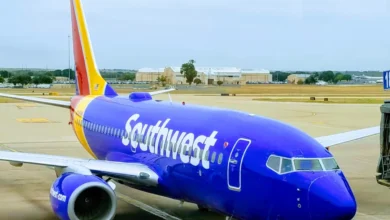
Dramatic Dashcam Footage Captures High-Speed Pursuit Culminating in Breach of San Antonio International Airport Security Perimeter

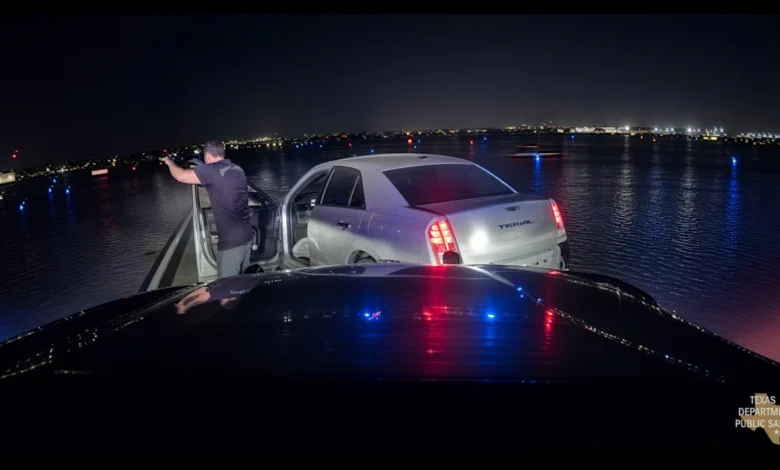
Newly released footage from the Texas Department of Public Safety (DPS) has provided a harrowing look into a high-speed pursuit that culminated in a security breach at the San Antonio International Airport. The incident, which occurred in the early hours of August 22, underscores the persistent challenges law enforcement faces when dealing with suspects who prioritize flight over public safety, even when their vehicles are visibly disintegrating under the strain of a high-speed chase.
The Texas DPS, as part of its ongoing "CAUGHT in Central Texas" public awareness initiative, published the dashcam and body camera recordings to illustrate the tactical realities of such pursuits. The video chronicles a 2012 Chrysler sedan as it weaves through urban traffic, dragging a detached rear bumper across the pavement, before forcing its way through a restricted access gate and onto the airfield.
Chronology of the Pursuit
The sequence of events began at approximately 1:30 a.m. on August 22, when a state trooper attempted a routine traffic stop in the vicinity of Loop 410 and Babcock Road. Rather than complying with the officer’s signals, the driver of the Chrysler chose to accelerate, initiating a dangerous flight through city streets.
As the pursuit intensified, the suspect’s vehicle sustained significant mechanical damage. Dashcam footage shows the rear bumper cover trailing behind the vehicle, scraping against the asphalt and emitting sparks. The driver exhibited erratic behavior, at one point navigating onto the wrong side of a median before swerving back into the correct lane, creating a volatile environment for any civilian motorists who may have been on the road at that hour.
The pursuit eventually led toward the San Antonio International Airport, specifically targeting a perimeter access point off Jones Maltsberger Road. Despite the presence of staggered orange traffic barriers designed to prevent unauthorized vehicular access, the driver navigated the obstacles with reckless determination. Upon reaching the gate, the suspect rammed through the barrier, forcing his way into a narrow, fenced maintenance corridor.
The pursuing trooper followed the suspect onto the airfield’s pavement. Recognizing that the vehicle had been effectively immobilized by the force of the gate collision, the suspect surrendered shortly after entering the airfield. The entire transition from street pursuit to the apprehension on the tarmac took mere seconds, with the driver exiting the vehicle and raising his hands approximately 16 seconds after the breach of the airfield.
Legal Implications and Charges
Following the vehicle’s immobilization, the scene transitioned from a vehicular pursuit to a high-stakes arrest. Body camera footage captured by the responding trooper shows the suspect being taken into custody with a handgun drawn, a necessary precaution given the nature of the breach and the subsequent discovery of a firearm within the vehicle.
While initial reports focused on the charges of evading arrest and the unlawful carrying of a weapon, official court records later detailed a more comprehensive list of six criminal charges. The suspect, whose identity has been processed through the Bexar County court system, remains in custody with his bond set at $59,500. The complexity of the charges reflects not only the act of fleeing but also the possession of a firearm during the commission of a felony and the endangerment of public infrastructure.
The Vulnerability of Airport Perimeters
The breach of the San Antonio International Airport perimeter has prompted a review of security protocols. While no commercial flights or airport operations were disrupted during the incident, the ease with which a passenger vehicle managed to navigate through a gate raises broader questions regarding the hardening of aviation infrastructure.
Airport perimeters are designed with a "defense-in-depth" philosophy. This includes physical barriers, electronic surveillance, and rapid-response protocols. In this instance, the gate functioned as intended by containing the vehicle after the breach, but the ability of the suspect to navigate the initial barrier system suggests that physical security measures are always subject to the extreme measures taken by determined individuals.
According to data from the Transportation Security Administration (TSA) and the Federal Aviation Administration (FAA), incidents involving unauthorized vehicles on airfield surfaces are relatively rare but statistically significant in the context of airport safety. These agencies emphasize that while runways are generally secure, the maintenance and perimeter access roads remain the most vulnerable points of entry for unauthorized individuals.
Law Enforcement and Public Safety Perspective
The Texas DPS’s decision to release the footage serves two purposes: transparency and public deterrence. By showcasing the erratic nature of the suspect’s driving and the mechanical failure of the getaway vehicle, the agency highlights the inherent futility of attempting to outrun state patrol vehicles.
Law enforcement experts suggest that pursuits like the one in San Antonio represent a "worst-case scenario" for officers. The decision to continue a pursuit onto airport property is a high-stakes tactical calculation. Troopers must weigh the risk of allowing a suspect to remain at large—especially one potentially armed and prone to erratic, dangerous behavior—against the risk of a high-speed crash on an active airfield. In this case, the pursuit ended with the driver being apprehended before he could reach the active taxiways or runways, effectively neutralizing the threat to aviation safety.
Impact on Airport Operations
A primary concern following any breach of an airport facility is the potential for mass delays or cancellations. Because the San Antonio International Airport maintains strict separation between its public areas and its movement areas, the breach was contained to a maintenance or access road.
Airport authorities confirmed that at no point during the incident did the suspect come into contact with commercial aircraft or civilian passengers. The operational integrity of the airport remained intact, and flights continued to arrive and depart on schedule. This outcome is attributed to the swift response of the state troopers and the internal layout of the airport, which acted as a natural containment zone.
Broader Context of Vehicular Pursuits in Texas
The San Antonio incident is a microcosm of a larger trend in Texas, where vehicular pursuits have seen an increase in frequency over the past several years. Factors such as the state’s expansive highway network and the increasing number of urban centers lead to high-speed chases that frequently cross multiple jurisdictions.
Texas DPS guidelines for high-speed pursuits are stringent, emphasizing the need to balance public safety with the duty to apprehend suspects. Troopers are trained in "PIT" (Precision Immobilization Technique) maneuvers and are supported by air units when available, though urban chases often necessitate reliance on ground units and dashcam documentation.
The inclusion of this incident in the "CAUGHT in Central Texas" series is part of a broader push to educate the public on the consequences of criminal behavior. The DPS often uses these videos to demonstrate the professionalism of its officers and the sophisticated surveillance technology currently employed to track and apprehend suspects.
Conclusion
The incident at the San Antonio International Airport serves as a stark reminder of the unpredictable nature of law enforcement duties. While the suspect’s attempt to reach the airfield ended in failure, the event highlights the necessity of maintaining robust, adaptive, and layered security measures at critical infrastructure sites.
As the case moves through the judicial process, the focus will likely shift to the suspect’s motives and the legal arguments surrounding the charges. Meanwhile, the San Antonio International Airport and local law enforcement agencies continue to review the event to identify potential improvements in perimeter security and inter-agency communication. For the public, the dashcam video serves as a visceral reminder of the dangers posed by those who choose to defy the law, and the resolute response of the officers who stand between that danger and the public.