The Great Clock Debate: Unraveling the History, Myths, and Future of Daylight Saving Time

As autumn settles in and the final days of October draw to a close, millions of individuals across the globe brace themselves for an annual ritual embedded in modern civil society: the shifting of the clocks. On the final weekend of October or the first Sunday of November, depending on the jurisdiction, timepieces are turned backward by one hour. This transition, commonly known as "falling back," grants weary citizens an extra hour of sleep and an illusion of reclaimed time on a Sunday morning. However, it simultaneously plunges evening commutes into premature darkness and signals the commencement of months defined by truncated daylight hours.
Complaints regarding Daylight Saving Time (DST) are nearly as ancient as the practice itself. Across dining tables, corporate boardrooms, and legislative assemblies, public sentiment remains deeply fractured. While some champions of the biannual shift praise the extended summer evenings that afford recreational opportunities and stimulate retail economies, detractors point to a litany of public health hazards, economic disruptions, and logistical headaches. Intertwined with this enduring debate are persistent cultural myths—misconceptions involving agricultural pioneers and founding fathers that continue to cloud public understanding of how, why, and when humanity decided to manipulate the hands of time.
Historical Origins: The True Impetus Behind the Clock Shift
Popular mythology frequently attributes the invention and implementation of Daylight Saving Time to agrarian interests. According to this widespread narrative, farmers—whose livelihoods depend intimately on the arc of the sun and the rhythms of the natural world—campaigned heavily for an institutionalized method to maximize daylight hours for fieldwork.
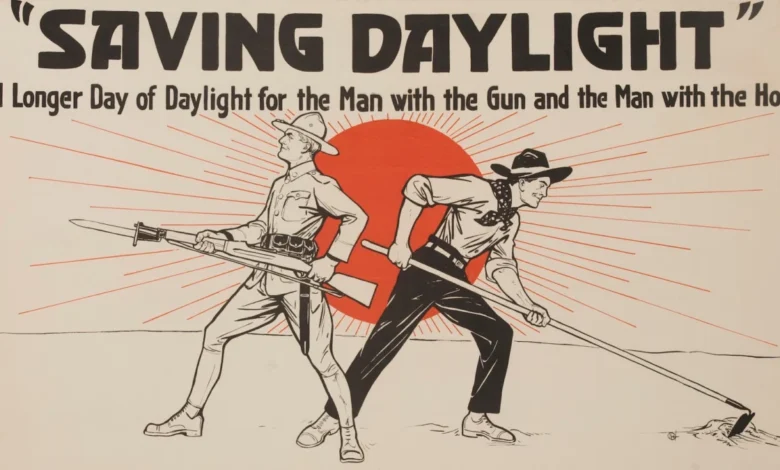
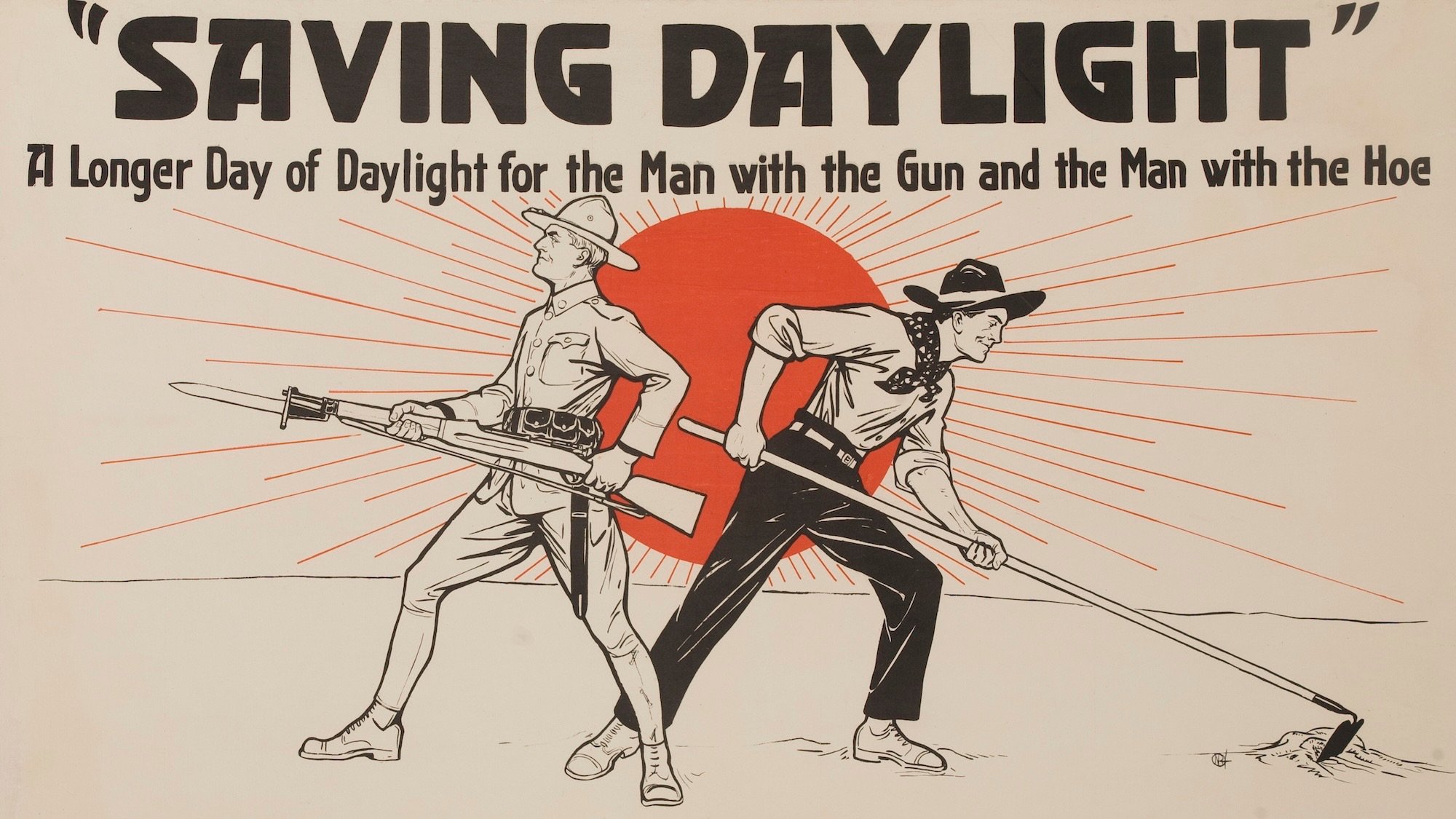
Historical archives, however, tell an entirely different story. Far from being the architects of DST, agricultural producers were among its most vehement opponents when the practice was first introduced on a national scale. During the crucible of World War I, governments sought innovative methods to conserve energy, particularly coal, which was desperately needed to fuel industrial military production. Shifting the clock forward by one hour during the spring and summer months aligned waking hours with daylight, theoretically reducing the demand for artificial indoor lighting and preserving vital fuel reserves.
When the United States implemented DST in 1918 as an emergency wartime measure, the American agricultural sector revolted. According to documentation preserved by the Library of Congress, the farming community fiercely opposed the measure because agricultural schedules are dictated by the sun, dew points, and the biological needs of crops and livestock, rather than arbitrary numerical designations on a wall clock. Cows, for instance, refuse to adjust their milking schedules simply because a federal statute mandates a new time.
The tension between industrial priorities and agricultural realities became glaringly apparent in the immediate aftermath of World War I. Congress passed legislation to repeal the wartime DST mandate, successfully navigating both legislative chambers. However, President Woodrow Wilson vetoed the repeal bill, prioritizing industrial efficiency over rural convenience. In his official message to the House of Representatives returning the unsanctioned bill, Wilson conceded the point, writing, "I realize the very considerable and in some respects very serious inconveniences to which the daylight-saving law subjects the farmers of the country."
Although Congress ultimately overrode Wilson’s veto, the repeal fragmented the temporal landscape of the United States. For decades, DST was practiced haphazardly on a localized, patchwork basis. Municipalities and states adopted or rejected the time change independently. Notably, urban centers such as New York City observed daylight saving, while rural counties mere miles away remained on standard time—a clear contradiction of the myth that farmers championed the system.
Deconstructing the Benjamin Franklin Legend
Another deeply entrenched urban legend credits Benjamin Franklin with the invention of Daylight Saving Time. Generations of school children have been taught that the multifaceted American polymath, inventor, and statesman conceived the modern clock-shifting mechanism while serving as an American envoy in Paris.
Museum curators and historians have repeatedly attempted to debunk this notion. The Franklin Institute, an institution dedicated to preserving and celebrating Franklin’s scientific and intellectual legacy, explicitly states that the founding father did not invent daylight saving time. Crucially, the United States did not formally adopt a nationwide daylight saving system until 1918—more than a century after Franklin’s death in 1790.
The origin of this persistent myth can be traced to a satirical essay Franklin penned in 1784 for the Journal de Paris. Writing anonymously, Franklin humorously suggested that the citizens of Paris could economize significantly on candle usage if they simply altered their sleep schedules to wake up earlier with the sun. To enforce this behavioral shift, the essay jokingly proposed a series of absurd measures: a tax on window shutters, the rationing of tallow and wax candles, the prohibition of private carriages after sunset, and the sounding of church bells at dawn every morning to rouse sleeping residents.
While Franklin’s essay was a brilliant piece of satirical commentary on human laziness and economic efficiency, it was never intended as a serious blueprint for horological legislation.
The true intellectual lineage of modern Daylight Saving Time belongs to New Zealand entomologist and astronomer George Hudson. In 1895, Hudson presented a paper to the Wellington Philosophical Society proposing a two-hour shift in seasonal time. As an avid collector of insects, Hudson valued the extended evening daylight, which allowed him to conduct field research after finishing his regular workday. A few years later, in 1908 independently, British builder William Willett campaigned aggressively for British adoption of clock changes, motivated by his own frustrations with sleeping through the sunny morning hours during his horseback rides.
The 1970s Energy Crisis and the Experiment with Permanent DST
While the debate typically centers on the biannual transition, contemporary political discourse frequently pivots toward the elimination of standard time altogether in favor of year-round Daylight Saving Time. Legislative efforts, such as the periodically resurrected Sunshine Protection Act, reflect a growing legislative appetite to lock the clocks forward permanently.
However, modern policymakers often overlook a critical historical precedent: the United States has already attempted year-round daylight saving time, and the public overwhelmingly rejected it.
At the height of the 1970s global energy crisis, signed into law by President Richard Nixon, the Emergency Daylight Saving Time Energy Conservation Act of 1973 instituted year-round DST beginning in January 1974. The goal was to reduce national energy consumption and alleviate pressures caused by the Arab oil embargo.
Initially, public enthusiasm was remarkably high. According to polling data highlighted by contemporary reports in The New York Times, approximately 79 percent of the American public favored the permanent shift in December 1973. Citizens welcomed the promise of bright winter afternoons and an energized social atmosphere.
That enthusiasm, however, evaporated with the arrival of cold, dark winter mornings. By February 1974, public support plummeted by 37 points to just 42 percent. The primary driver of this rapid sentiment reversal was parental anxiety and child safety. Across northern states, children were forced to walk to school or wait at bus stops in pitch-black conditions during the bitter cold of January and February mornings. The surge in near-miss traffic accidents and pedestrian hazards involving children led to a furious public backlash.

The experiment, originally scheduled for a two-year duration, was truncated after less than a year. Congress rushed to pass remedial legislation, and President Gerald Ford signed a bill returning the nation to standard time for the winter months in October 1974.
Subsequent evaluations by federal agencies validated the public’s grievances. A comprehensive 1975 study conducted by the U.S. Department of Transportation concluded that the energy savings realized by permanent daylight saving time were negligible, while the social costs—particularly concerning morning commuter safety and student welfare—were substantial. The DOT report recommended an optimized compromise: an eight-month DST schedule running from March through October. This hybrid framework served as the blueprint for American timekeeping for decades, until the Energy Policy Act of 2005 further extended DST to its current span, running from the second Sunday in March to the first Sunday in November.
Economic, Health, and Societal Implications
As modern lawmakers revisit the prospect of permanent standard time or permanent daylight saving time, contemporary researchers across medical, economic, and transportation sectors continue to weigh in with empirical data.
The medical community has grown increasingly vocal in its opposition to the biannual clock changes. Neurologists, sleep researchers, and cardiologists point to a robust body of literature indicating that the abrupt disruption of circadian rhythms—even by a single hour—triggers measurable spikes in adverse health events. Studies consistently demonstrate a statistical increase in acute myocardial infarctions (heart attacks), ischemic strokes, and traffic fatalities during the initial week following the spring transition to DST. Conversely, the autumn transition, while granting an extra hour of rest, introduces long-term psychological challenges associated with the sudden loss of evening sunlight, frequently correlating with seasonal affective symptoms and depressive episodes.
Economists offer a more nuanced assessment. While retailers and the leisure industry historically advocate for DST due to increased consumer spending driven by extended evening daylight, other sectors report productivity losses. The phenomenon known as "social jetlag" reduces workplace efficiency, increases rates of industrial accidents, and costs the global economy billions of dollars annually in lost output during the transition weeks.
Furthermore, technological advancements have altered the equation since the 1970s. Modern energy grids rely less on simple residential lighting consumption and more on sophisticated, automated heating, ventilation, and air conditioning (HVAC) systems. Consequently, the energy conservation arguments that originally justified wartime and crisis-era clock shifts have largely diminished in contemporary relevance.
Navigating the Future of Civil Timekeeping
The debate over Daylight Saving Time ultimately exposes a fundamental tension between human social infrastructure and planetary astronomy. While society operates according to standardized, synchronized clocks to facilitate global commerce, communication, and governance, human biology remains fundamentally tethered to the rotation of the Earth and the cycle of natural light.
Whether future legislatures will muster the political will to abolish the biannual ritual remains an open question. Proposals like the Sunshine Protection Act demonstrate a persistent legislative desire to end the disruption of changing the clocks twice a year. However, historical precedent serves as a cautionary tale: whether lawmakers opt for permanent standard time or permanent daylight saving time, they must navigate a complex matrix of public safety concerns, economic trade-offs, and deeply ingrained human habits.
As citizens once again turn their clocks backward on a crisp autumn evening, they participate in a century-old compromise born of wartime emergency, sustained by industrial momentum, and scrutinized by modern science. Until a consensus emerges from the halls of government and the laboratories of researchers, the dance between standard time and daylight saving time will continue to mark the changing of the seasons, reminding humanity of its delicate, imperfect dominion over time itself.