Iowa Gubernatorial Nominee Rob Sand Condemns Alleged Democratic Vote-Siphoning Tactics Amid High-Stakes Alaska Senate Contest

The high-stakes battle for control of the United States Senate has expanded beyond traditional legislative policy debates into a complex and contentious legal arena, drawing sharp rebukes from politicians across the country. At the center of the latest controversy is Alaska’s fiercely contested Senate race, where allegations of vote-siphoning through ballot confusion have prompted intervention from the federal government. Among those weighing in on the national implications of the dispute is Iowa Democratic gubernatorial nominee Rob Sand, who has openly criticized the alleged electoral tactics, arguing that manipulating the political system in such a manner damages public trust in democratic institutions.
The controversy highlights the increasing frequency of ballot engineering allegations in competitive midterm and general election cycles nationwide. As both major political parties accuse one another of employing procedural trickery to alter electoral outcomes, the situation in Alaska has elevated concerns regarding candidate naming conventions, voter intent, and the growing involvement of federal agencies in state-run elections.
The Core Controversy in Alaska: Similar Names and Alleged Vote-Siphoning
The controversy in America’s largest state centers on an unexpected similarity between two candidates appearing on the ballot for the U.S. Senate. Incumbent Republican Senator Dan S. Sullivan is running for re-election, facing a formidable challenge from Democratic opponent Mary Peltola. However, the electoral landscape was upended when an unaffiliated candidate, Daniel J. Sullivan Jr., successfully filed to run for the same seat.
Republicans and campaign strategists quickly raised alarms, arguing that the presence of a candidate with a nearly identical name was not a coincidence. Instead, they accused Democratic operatives of covertly elevating or encouraging the alternative candidate’s run specifically to siphon crucial votes away from the GOP incumbent. In tightly contested elections where margins of victory can be razor-thin, even a minor fraction of confused voters casting ballots for the wrong candidate could dramatically alter the final outcome.

Daniel J. Sullivan Jr. has consistently denied allegations that he is a Democratic plant or acting in coordination with any political party. Meanwhile, Democratic leaders and campaign representatives have pushed back forcefully against the accusations, contending that the alternative candidate is a legitimate independent participant exercising his constitutional right to run for public office.
Rob Sand Speaks Out: Bipartisan Condemnation of Systemic Manipulation
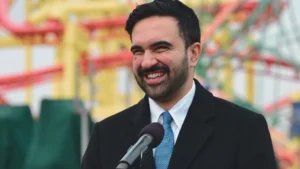
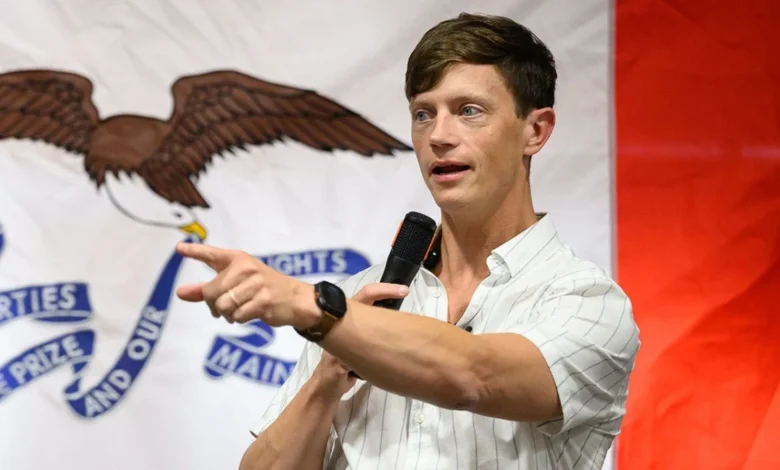
Weighing in on the national debate, Iowa Democratic gubernatorial nominee Rob Sand offered a blunt assessment of the tactics alleged in Alaska. In an exclusive interview, Sand addressed the broader implications of electoral maneuvering, emphasizing that the practice of attempting to siphon votes through confusing ballot alternatives undermines the integrity of democratic elections.
"Both parties are doing it and neither party should be doing it," Sand told reporters. "To me, it’s manipulating the political system and it’s not a good thing to do."
Sand’s remarks stand out within his party, as he openly rebuked tactics often defended or minimized by partisan strategists during high-stakes election cycles. By calling out actions across both sides of the political aisle, Sand positioned himself as a proponent of institutional transparency, a recurring theme in his public career as a statewide elected official in Iowa. Analysts note that Sand’s willingness to criticize tactics that could theoretically benefit Democrats reflects a broader voter fatigue with procedural gamesmanship and backroom political engineering.
Federal Intervention and Escalating Legal Battles
The dispute in Alaska has long since moved past the campaign trail, escalating into a federal legal battle that has drawn the attention of the U.S. Department of Justice and top administration officials. Alarmed by the potential for widespread voter confusion, the Trump administration intervened in the controversy, with the Justice Department filing a lawsuit seeking to block the official certification of the Alaska Senate race results should the Republican incumbent lose to Peltola under disputed circumstances.

Attorney General Todd Blanche defended the administration’s legal challenge, framing the lawsuit as a necessary measure to protect the integrity of the ballot and ensure that election results accurately reflect the true intent of Alaska voters. Blanche emphasized that the Department of Justice has a vested interest in preventing deceptive ballot structures or anomalies that could disenfranchise voters through confusion.
The administration’s intervention, however, has triggered immediate and furious pushback from Democratic leadership. Senate Minority Leader Chuck Schumer did not mince words when addressing the federal lawsuit, labeling the legal challenge an outrage.
"This is an outrage," Schumer posted on social media. "It shows they know they’re going to lose. We will fight tooth and nail. And we will win."
Democratic candidate Mary Peltola similarly condemned the Justice Department’s involvement, characterizing the lawsuit as an act of flagrant corruption designed to interfere with a legitimate state election. Peltola’s campaign legal team has formally asked a federal judge to dismiss the administration’s case, arguing that Alaska voters are fully capable of distinguishing between the candidates on the ballot and that federal intrusion into state election certification sets a dangerous precedent.
Chronology of Events in the Alaska Senate Showdown
The timeline of the Alaska Senate race and the concurrent legal battles illustrates how quickly administrative disputes can escalate into constitutional confrontations:

- Initial Filing Period: Unaffiliated candidate Daniel J. Sullivan Jr. officially files his paperwork to run for the U.S. Senate in Alaska, setting the stage for ballot placement alongside incumbent Republican Senator Dan S. Sullivan and Democratic challenger Mary Peltola.
- Campaign Season Escalation: As campaigning intensifies, Republican strategists flag the potential for voter confusion stemming from the identical surnames and similar middle initials, leveling accusations of a coordinated Democratic scheme to siphon votes.
- Federal Legal Action: The U.S. Department of Justice intervenes, filing a lawsuit that seeks to block the certification of the election results if the incumbent GOP senator is defeated, citing risks to voter accuracy.
- National Political Reactions: High-profile figures nationwide weigh in. Senate Minority Leader Chuck Schumer condemns the DOJ lawsuit as political interference, while Attorney General Todd Blanche defends the administration’s actions as a safeguard for voter intent.
- Mid-Cycle Statements: Iowa Democratic gubernatorial nominee Rob Sand addresses the national trend of electoral manipulation during an exclusive interview, criticizing the use of vote-siphoning tactics by both major political parties.
- Current Judicial Status: Peltola’s campaign files a motion in federal court seeking the dismissal of the Justice Department’s lawsuit, while legal briefs and arguments continue as Election Day approaches.
Broader Implications for American Elections
The controversy surrounding the Alaska Senate race and the subsequent fallout involving figures like Rob Sand point to a deeper, systemic vulnerability in modern American electoral politics. As campaign technology, data analytics, and political consulting become increasingly sophisticated, parties on both sides are continuously searching for competitive advantages, sometimes testing the legal and ethical boundaries of ballot access laws.
Electoral experts note that the use of spoiler candidates, nominal duplicates, or strategic candidate recruitment is not entirely new in American history. However, the convergence of hyper-polarized national politics, close legislative majorities, and direct federal intervention marks a dangerous escalation. When federal law enforcement agencies and executive branch departments become active participants in local election disputes, questions regarding the separation of powers and the neutrality of federal institutions inevitably arise.
Furthermore, the public discourse generated by candidates like Rob Sand demonstrates that internal party dissent regarding election tactics is beginning to surface. Voters increasingly demand accountability and transparency from their elected representatives, and procedural maneuvering that appears designed to trick the electorate can carry significant political costs for candidates associated with it.
As the legal challenges in Alaska proceed through the federal court system and campaigns enter their final stretches, the outcome of the race will likely serve as a major precedent. Whether the courts uphold the administration’s intervention or allow the state-certified results to stand without federal interference, the Alaska Senate contest has already cemented its place as one of the most legally and politically complex elections of the cycle.