Digital Resilience in the Age of Political Volatility: Global Scientists Race to Safeguard Climate Data

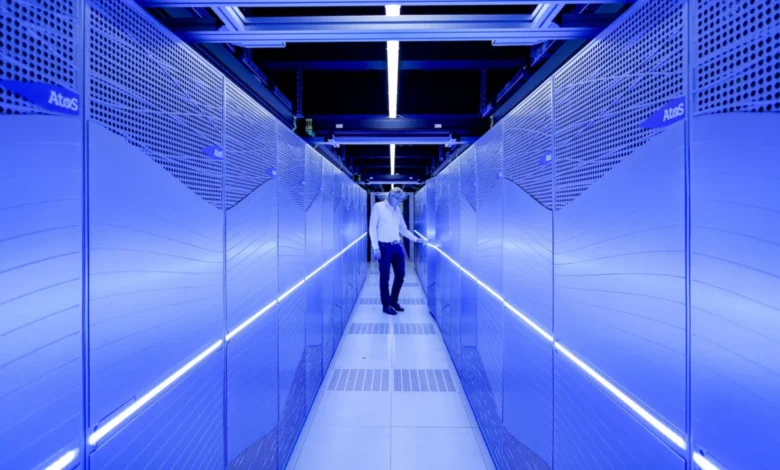
In the heart of Hamburg, Germany, the German Climate Computing Center (DKRZ) is currently executing an unprecedented logistical operation. Technicians are installing high-capacity server racks alongside the existing infrastructure of one of the world’s primary repositories for climate simulation data. This expansion is not merely for local research; it is a defensive maneuver designed to host backup versions of climate simulations originating from the United States. As the U.S. administration under President Trump continues to restrict federal funding for climate research, bury scientific reports, and dismantle digital archives, the international scientific community has shifted from passive collaboration to active data preservation.
The initiative represents a fundamental change in how global science is organized. For decades, scientific datasets—the backbone of empirical research—were stored on local hard drives or institution-specific servers, under the assumption that public, government-funded data would remain permanently accessible. That assumption has been shattered by recent political developments, forcing researchers to adopt a "data sovereignty" mindset that prioritizes geographical decentralization to protect against political interference, cyberattacks, and regional conflict.
A Chronology of Declining Scientific Access
The impetus for this global backup movement is rooted in a series of administrative actions taken in the United States throughout 2025.
- January 2025: The United States formally withdraws from the UN Intergovernmental Panel on Climate Change (IPCC) and the UN Framework Convention on Climate Change, signaling a departure from global climate governance.
- April 2025: The Department of Government Efficiency (DOGE), led by Elon Musk, executes a systemic removal of over 300 datasets from NASA’s Socioeconomic Data and Applications Center (SEDAC). These files, built over decades, bridged the gap between Earth science and human population studies.
- June 2025: Reports confirm that over 100 federal climate studies have been discontinued, and references to human-caused climate change are systematically scrubbed from multiple government agency websites.
- September 2025: The administration moves to restrict satellite-based climate monitoring, raising fears that critical real-time weather and environmental data will be lost to history.
- Late 2025: The German Research Foundation (DFG) establishes a $35 million "Data Resilience" program to provide a digital safe haven for endangered U.S. datasets.
The Anatomy of Data Loss
Data is not merely information; it is the currency of modern science. The "Keeling Curve," which tracks atmospheric carbon dioxide concentrations at Hawaii’s Mauna Loa Observatory, is an example of a long-term, critical dataset that requires decades of consistent observation. When political actors threaten to defund such observatories, they do not just threaten a budget line; they threaten the continuity of the scientific record.
The technical challenges of this preservation effort are immense. Moving petabytes of data—where a single petabyte holds the equivalent of 200 million high-resolution images—requires massive bandwidth. When fiber-optic costs are prohibitive, scientists rely on "sneakernet," physically shipping hard drives and magnetic tapes across borders to ensure that if a server is deleted in Washington, the information persists in Hamburg, Berlin, or elsewhere.
Official Responses and the Role of the AGU
The American Geophysical Union (AGU), representing over 60,000 scientists, has taken a lead role in resisting these trends. When the U.S. government barred American experts from participating in IPCC meetings, the AGU bypassed the administration by forming the U.S. Academic Alliance for the IPCC. This independent body nominated nearly 300 U.S. scientists to serve as authors for the 2029 assessment, ensuring that American research remains part of the global discourse despite state-level obstruction.
"We have engaged in triage efforts to ensure data remains usable and accessible," said Ben Zaitchik, president-elect of the AGU, during a recent summit in Berlin. "But we have arrived at a moment where we must fundamentally reimagine data organization and maintenance for long-term viability."
Broader Implications: Beyond the U.S. Border
The vulnerability of scientific data is a global concern that extends far beyond the current U.S. political climate. The ongoing war in Ukraine serves as a grim case study. Russian bombardments have physically destroyed research institutes and university archives, erasing years of local environmental records. In response, international consortia have digitized historical meteorological observations from the 19th century and transferred them to servers at the University of Giessen in Germany.
Similarly, the Senckenberg Natural History Museum in Frankfurt has begun archiving biodiversity data from war-torn regions like Yemen. These actions reflect a growing consensus that data is an international asset that must be shielded from the whims of national leadership.
Fact-Based Analysis of Risks
The shift toward distributed, mirrored data storage carries both benefits and significant risks. While decentralization ensures that "deletion is not an option," it creates new challenges:
- Cybersecurity: As datasets are mirrored across multiple international nodes, they become targets for state-sponsored cyberattacks. Hackers frequently target research institutions, blocking access to files in exchange for ransoms.
- Metadata Integrity: Data is useless without the accompanying software and protocols required to interpret it. Organizations like Pangaea are now working to ensure that along with the raw data, the "instructions" for analysis are preserved indefinitely.
- Political Contagion: Experts warn that the U.S. situation is a warning for other nations. With the rise of political movements that openly reject scientific consensus—such as the AfD in Germany—European scientists are now questioning whether their own domestic infrastructure is truly secure.
The Future of "Digital Pipelines"
The ultimate goal of the current movement is the creation of a global, interconnected network of climate data, often described as "digital pipelines." Researchers like Christopher Kadow of the DKRZ envision a future where, at the first sign of a threat to a specific repository, the data can be instantly replicated elsewhere.
However, the transition from a collection of isolated archives to a unified, global "data cloud" is hindered by budget constraints, technological barriers, and legal hurdles regarding intellectual property and national data sovereignty. The current "triage" phase, while necessary, is an expensive and labor-intensive substitute for a stable, long-term funding environment.
Professor Frank Oliver Glöckner, who manages the Pangaea repository, suggests that the current political turmoil has inadvertently catalyzed a necessary, if painful, evolution in scientific practice. By making it impossible for scientists to ignore the fragility of their work, the current climate has forced the field to abandon the dangerous habit of "data hoarding" in single locations.
As the 2029 U.N. climate assessment approaches, the success of these global backup initiatives will determine the accuracy of our understanding of the planet’s future. The race is no longer just about collecting new data; it is about ensuring that what we already know is not lost to the forces of political change or historical neglect. The laboratory, once defined by its physical walls, has now become a virtual, global, and highly distributed entity, fighting to keep the record of human knowledge intact in an increasingly uncertain world.