Alaska Airlines Expands Atmos Rewards Program with New Bank of America Points Transfer Capabilities

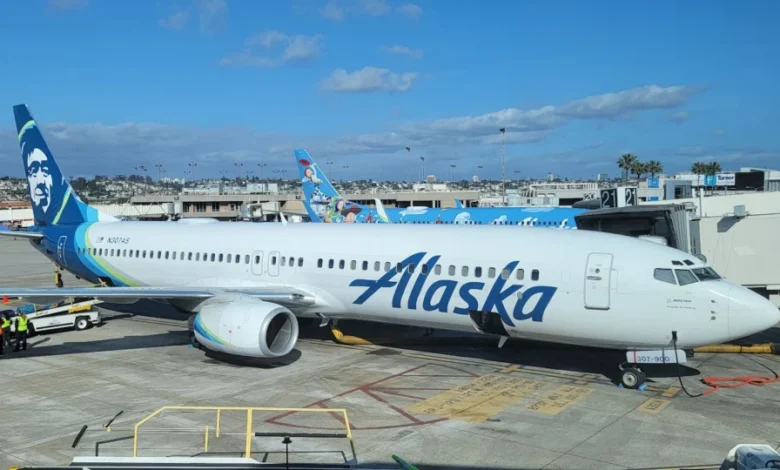
Alaska Airlines has officially announced a significant evolution of its loyalty program, Atmos Rewards, signaling a major shift in how the airline manages its currency and interacts with financial partners. The headline development is the introduction of a points-transfer mechanism scheduled to launch in 2027, which will allow holders of eligible Bank of America credit card products to convert their rewards directly into Atmos Rewards miles. This strategic move, framed as a method to deepen the existing co-brand partnership between the two entities, represents a departure from the traditional earn-and-burn model that has defined the Alaska Airlines Mileage Plan for years.
A Chronology of the Atmos Rewards Evolution
The transition to the Atmos Rewards branding and the integration of flexible point transfers did not occur in a vacuum. For decades, Alaska Airlines maintained a relatively closed-loop loyalty system. Unlike major U.S. carriers such as United, American, or Delta, which historically relied on massive credit card portfolios and diverse transfer partners to fuel their loyalty economies, Alaska remained conservative.
The timeline of this shift can be traced back to the airline’s recent rebranding efforts and the consolidation of its loyalty infrastructure. In early 2025, industry analysts noted that Alaska began preparing for a broader "global relevance" strategy. By late 2026, the airline formalised the Atmos Rewards identity, moving away from the generic "Mileage Plan" moniker to a more encompassing ecosystem. The announcement made today regarding the 2027 expansion into Bank of America transferability is the latest milestone in a three-year roadmap aimed at increasing the airline’s share of the travel rewards market.
Analyzing the Bank of America Partnership
The relationship between Alaska Airlines and Bank of America has long been one of the most exclusive in the aviation industry. Currently, the Bank of America Alaska Visa Signature card is the primary engine for consumer-based mile accumulation outside of flying. However, this partnership has been geographically and operationally limited by its exclusivity.
Under the terms of the new agreement, Bank of America cardholders who do not currently carry the co-branded Alaska card will gain access to the airline’s rewards ecosystem. This provides Bank of America with a competitive advantage against other issuers, such as JPMorgan Chase or American Express, which have historically dominated the "transferable points" market. For Alaska, the move creates a new, high-margin revenue stream. By selling these miles directly to Bank of America at a wholesale price, the airline generates liquid capital without the immediate liability of a flight redemption.
The Economics of Points Transfers
From a macroeconomic perspective, the introduction of transfer partners introduces a complex set of variables for airline loyalty programs. Historically, Alaska Airlines has sold its miles at a premium compared to its competitors. This high valuation has supported the program’s reputation for providing outsized value on premium cabin awards, particularly with international partners like Japan Airlines, Qatar Airways, and Qantas.
When a loyalty program introduces widespread points transfers, it must reconcile the cost of those points with the underlying value of the inventory they purchase. In the United States, where interchange fees are relatively high, the economics of 1:1 transfers are often sustainable. However, in international markets—where Alaska intends to expand its transfer capabilities—interchange fees are significantly lower. This creates a structural challenge: if the airline offers 1:1 transfers in foreign markets, it may be forced to either subsidize the cost of those miles or devalue the redemption rate to maintain profitability.
Industry experts suggest that to preserve the integrity of the Atmos Rewards currency, Alaska may adopt one of three strategies:
- Tiered Transfer Ratios: Implementing ratios worse than 1:1 for international partners to compensate for lower interchange fee revenue.
- Dynamic Redemption Pricing: Adjusting the cost of award flights in real-time to align with the fluctuating market value of the miles being transferred.
- Premium Inventory Controls: Restricting the availability of high-value international award seats to members who earn miles primarily through organic flight activity, rather than through financial transfers.
Broader Impact on the Loyalty Landscape
The entry of Alaska Airlines into the broader points-transfer market signals a consolidation of the loyalty space. As major banks continue to build their own proprietary ecosystems, airlines are increasingly forced to choose between remaining independent or becoming a "transfer partner" for global financial institutions.

For the average consumer, this development is a double-edged sword. While it provides more ways to utilize credit card points for travel, it historically correlates with a softening of award charts. When points become easier to earn, they typically become easier to spend—and, consequently, less valuable per unit. The "excitement" surrounding the announcement, as noted by various industry commentators, is centered on the utility of the points. However, the long-term impact on the "sweet spots" that have made Alaska Airlines a favorite among frequent flyers remains to be seen.
Official Stance and Market Reaction
While official statements from Alaska Airlines have focused on the "global relevance" and "revenue opportunities" provided by the expansion, the airline has remained silent on potential changes to its award charts. In their official communication, executives emphasized that the partnership with Bank of America is designed to be a long-term revenue driver.
"The new capability will give Bank of America cardholders another path into Atmos Rewards while creating an additional revenue opportunity for Alaska through the sale of points," the airline stated in its announcement. This language underscores the corporate priority: the monetization of the loyalty database. By leveraging the scale of Bank of America’s customer base, Alaska is positioning itself to compete more aggressively with the "Big Three" U.S. carriers, who have long used their banking partners to dominate the travel rewards landscape.
Future Implications for Consumers
As 2027 approaches, observers of the loyalty industry will be watching for two specific indicators of the program’s health:
- The Treatment of Bilt Rewards: Alaska’s existing relationship with Bilt Rewards—a program that allows for rent payments to earn airline miles—serves as a case study for the airline’s premium pricing model. Since its inception, there have been no "transfer bonuses" for Bilt to Alaska, suggesting that the airline is firm on the value of its currency.
- International Expansion: The commitment to add global financial institutions to the transfer network suggests that Alaska is looking to capture a segment of the market that it previously ignored. If these international partnerships launch with favorable ratios, it would represent a significant aggressive move to capture global market share.
In conclusion, the decision to open Atmos Rewards to broader points transfers marks a fundamental pivot in Alaska Airlines’ corporate strategy. While the immediate effect is an increase in utility for cardholders, the long-term consequence will likely be a re-evaluation of the program’s redemption values. For a program that has long been lauded for its relative stability and high-value awards, this expansion represents a significant risk-reward calculation that will be closely monitored by both investors and the frequent flyer community. The challenge moving forward for Alaska will be to successfully integrate these new revenue streams without diluting the brand loyalty that has sustained the program for decades.
Related posts: