With one of the world’s most diverse and historically significant food cultures, China presents a landscape so vast that codifying a definitive list of the “best” dishes is a task of immense complexity. From the frigid northern plains to the subtropical southern coast, Chinese cuisine is defined by regional shifts in climate, agriculture, and historical migration patterns. For the uninitiated traveler or the aspiring home cook, understanding this culinary geography requires moving beyond the homogenized versions of Chinese food found in Western takeout outlets. To navigate this complexity, one must view Chinese cuisine as a collection of distinct regional pillars, each with its own methodology, flavor profile, and historical narrative.

The Imperial Legacy: Peking Duck and the Art of Roasted Poultry
Peking Duck stands as a testament to the intersection of imperial history and gastronomic refinement. Originating in Nanjing over 1,500 years ago during the Southern Dynasties, the preparation of roast duck became a staple of the imperial court. When the capital was relocated to Beijing in the 15th century, the Ming dynasty emperors brought with them the master chefs of the southern regions. It was in the kitchens of the Forbidden City that the technique of air-drying and roasting the duck until the skin reached a glass-like crispness was perfected.
Modern analysis of the dish reveals its complexity: the duck is typically force-fed to ensure a specific fat content, then roasted in a hanging oven fueled by fruitwood, such as jujube or pear, which imparts a subtle aromatic quality to the meat. The presentation—thin, steamed pancakes, scallions, cucumber, and a sweet bean sauce—is designed to balance the intense richness of the rendered fat. While Beijing remains the spiritual home of the dish, Nanjing residents continue to assert their claim as the true "duck capital," pointing to their own traditions of salted duck and duck-blood vermicelli soup, a dish that utilizes the entire bird, including offal, to minimize waste and maximize flavor.

The Spice Routes: Sichuan and Hunan Cuisines
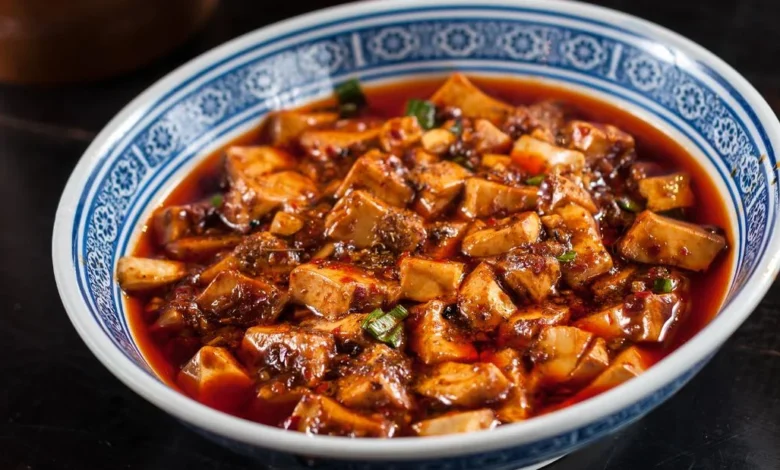
Sichuan and Hunan provinces are the primary engines of China’s global reputation for spicy food, yet their approaches differ significantly. Sichuan cuisine, or Chuan cai, is defined by the use of the Sichuan peppercorn, which produces a numbing sensation known as mǎlà. This sensation is not merely a spice but a chemical reaction involving hydroxy-alpha-sanshool, which interacts with tactile receptors on the tongue. Dishes like Mapo Tofu—traditionally made with Hanyuan peppercorns and Pidu broad bean paste—exemplify this balance.
In contrast, Hunan cuisine, or Xiang cai, relies on "dry heat," utilizing fresh, pickled, and sun-dried chilies to create a sharp, pungent heat that cuts through the humidity of the region. The signature dish, duo jiao yu tou (steamed fish head with chopped salted chili), serves as a perfect example of this philosophy. The fish head is preserved in a ferment of salt, ginger, garlic, and baijiu, a clear grain spirit, for at least a week, resulting in a depth of flavor that a simple chili sauce cannot replicate.

The Evolution of Noodle Culture and Street Food
Noodles in China are far more than a carbohydrate source; they are a historical record of social and economic conditions. Dan dan mian, a street food staple of the 19th century, gets its name from the dan dan (carrying pole) used by vendors to transport their cooking equipment. The dish’s evolution—from a simple dry mix of noodles, minced pork, and spices to the broth-heavy versions found in international restaurants—highlights the regional adaptations of Sichuanese flavor profiles.
In the northern coastal regions, particularly Tianjin, jian bing stands represent the efficiency of urban breakfast culture. These crepes, made from mung bean flour and eggs, are wrapped around guozi (deep-fried crisps), creating a texture profile that is essential to the local palate. Historically, these street foods provided affordable nutrition for the growing industrial workforce, and today they remain a critical component of China’s urban culinary identity, with thousands of vendors operating in major metropolitan areas like Beijing and Shanghai.

Dim Sum and the Cantonese Philosophy of Freshness
Cantonese cuisine, particularly the practice of dim sum, is rooted in the "teahouse" culture of Guangdong and Hong Kong. Dim sum—meaning "to touch the heart"—is a systematic approach to small-plate dining that emphasizes variety and social cohesion. It is not a single dish but a service style that includes everything from har gow (prawn dumplings) to char siu bao (barbecue pork buns).
The technical mastery required for these dishes is significant. For example, xiaolongbao (soup dumplings) requires a wrapper thin enough to be translucent but strong enough to hold a gelatinized broth that melts into soup upon steaming. This requires precise knowledge of flour protein content and steaming duration. Similarly, Cantonese steamed fish demands a level of timing that borders on the scientific; overcooking the fish by even thirty seconds can destroy the delicate texture of the protein.

Preserved Flavors and Regional Specialties
The preservation of ingredients is a cornerstone of Chinese home cooking, dictated by the need to survive harsh winters and the historical lack of refrigeration. Chinese preserved sausages, or laap cheung, represent this intersection of preservation and flavor. These sausages, cured with sugar, soy sauce, and high-proof wine, are distinct from European charcuterie because they are intended to be cooked—usually steamed or fried—to rehydrate the meat and release the concentrated umami notes.
This technique extends to the Hakka tradition of mei cai, a pickled mustard green used to balance the heavy fat content of pork belly. The Hakka people, who migrated from northern China to the south, developed this dish as a means of ensuring flavor and nutrition during long periods of travel. Today, the dish is a staple of southern Chinese comfort food, representing a history of resilience and culinary adaptation.

Data and Socio-Economic Implications
The impact of these culinary traditions on the Chinese economy is profound. According to data from the National Bureau of Statistics of China, the catering industry consistently generates trillions of yuan annually, with significant growth in the "fast-casual" sector driven by the urban middle class. The preservation of these traditional dishes is not merely a cultural project; it is an economic necessity.
However, the industry faces challenges, including the standardization of traditional cooking methods in a rapidly urbanizing society. The "breath of the wok" (wok hei), a phenomenon created by the high-temperature stir-frying of rice and vegetables, is increasingly difficult to replicate in modern, regulation-heavy kitchens, leading to ongoing debates about the preservation of "authentic" techniques versus the adoption of safer, more efficient kitchen technologies.

Conclusion: A Culinary Geography
To experience the full breadth of Chinese cuisine, one must view it through the lens of its regional diversity. Whether it is the cold, umami-forward seafood dishes of the Chaozhou coast, the therapeutic herbal soups of Guangdong, or the robust, spice-laden braised pork of Hunan, each dish serves as a map to a specific part of the country’s history.
For the international observer, the takeaway is clear: China’s culinary identity is not a static monolith but a fluid, evolving dialogue between geography, history, and innovation. As the global interest in these dishes continues to grow, the importance of maintaining the integrity of these traditional methods becomes ever more paramount. By understanding the origins and technical requirements of these essential eats, one gains not only a better dining experience but a deeper appreciation for the civilization that created them.